



Early Life Education Famous Works and Nobel Prize of Ernest Hemingway
Ernest Hemingway was one of the most influential American writers of the twentieth century. Known for his simple yet powerful writing style, he captured themes of courage, war, love, loss, and human endurance. His novels and short stories, such as The Old Man and the Sea and A Farewell to Arms, made him a leading figure in modern literature. The Ernest Hemingway biography is important for students because it highlights how personal experiences, especially war and travel, shaped his literary voice and global reputation.
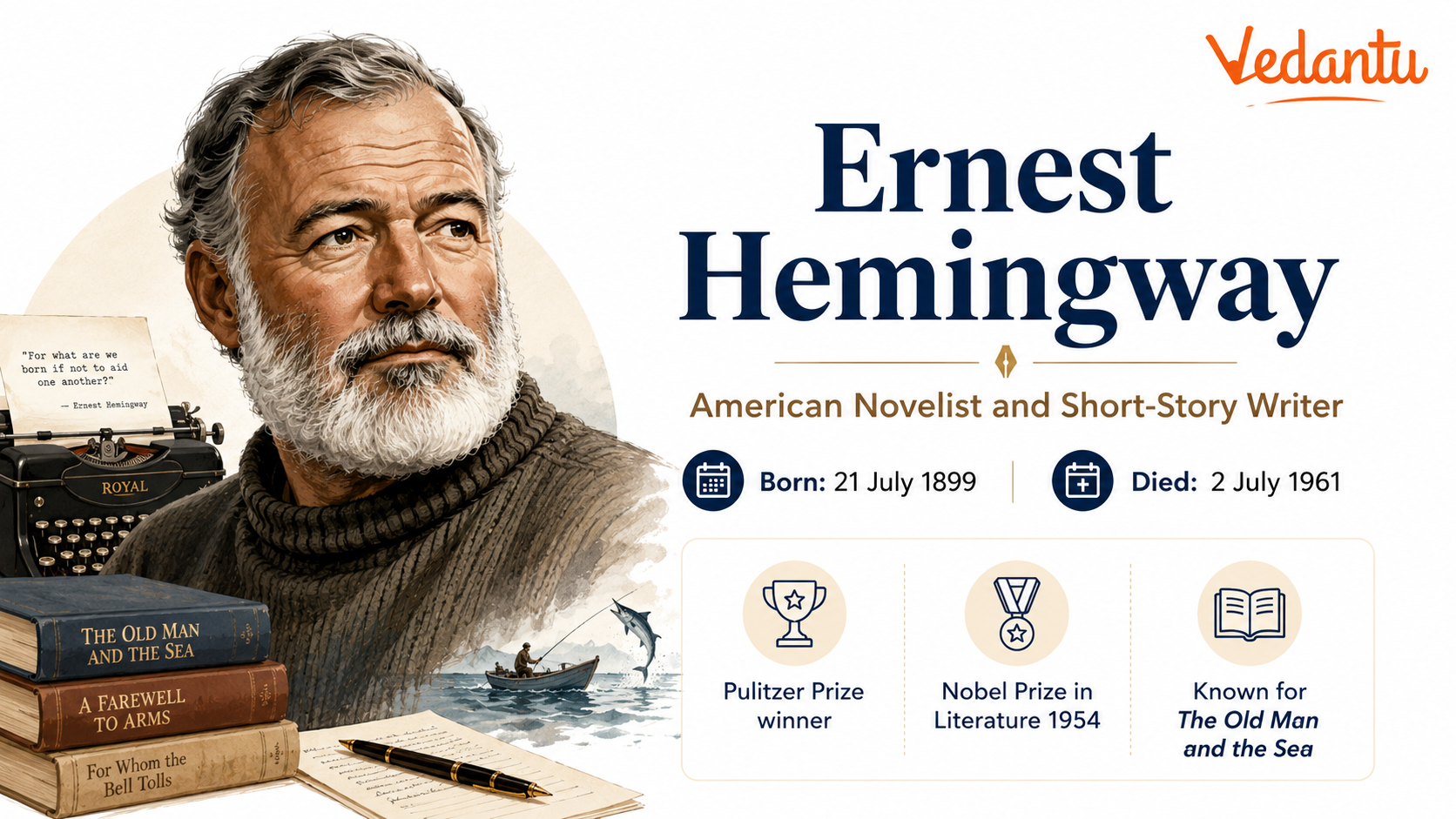
Basic Information About Ernest Hemingway
| Detail | Information |
|---|---|
| Full Name | Ernest Miller Hemingway |
| Date of Birth | 21 July 1899 |
| Place of Birth | Oak Park, Illinois, United States |
| Nationality | American |
| Profession | Novelist, Short Story Writer, Journalist |
| Famous For | The Old Man and the Sea, A Farewell to Arms, concise writing style |
| Major Award | Nobel Prize in Literature (1954) |
| Date of Death | 2 July 1961 |
Who is Ernest Hemingway?
Ernest Miller Hemingway was a celebrated American author and journalist. He is regarded as one of the greatest writers of modern literature. His unique style, known for short sentences and clear language, influenced many writers around the world. The Ernest Hemingway life history reflects adventure, war experiences, journalism, and global travel. He is widely studied in schools and universities for his contribution to fiction, especially his portrayal of bravery and the human struggle against nature and fate.
Early Life and Family Background
The Ernest Hemingway early life played an important role in shaping his personality and interests.
- Born on 21 July 1899 in Oak Park, Illinois.
- Father - Dr. Clarence Edmonds Hemingway, a physician.
- Mother - Grace Hall Hemingway, a musician.
- He grew up in a middle-class family with strong cultural and religious values.
- From childhood, he enjoyed outdoor activities like fishing and hunting, which later influenced his stories.
His early exposure to nature and adventure deeply shaped the themes of courage and survival seen in his works.
Education and Early Interests
Ernest Hemingway completed his schooling at Oak Park and River Forest High School.
- He was active in school magazines and wrote for the school newspaper.
- He developed a strong interest in English literature and writing.
- Instead of attending college, he chose to work as a journalist after graduation.
His early training in journalism helped him develop a direct and concise writing style that became his trademark.
Career Journey and Major Life Events
Early Journalism Career
In 1917, Hemingway began working as a reporter for The Kansas City Star. The newspaper’s style guide encouraged short sentences and simple language, which greatly influenced his literary style.
World War I Experience
During World War I, Hemingway served as an ambulance driver for the Red Cross in Italy. He was seriously injured in 1918. His war experiences later inspired novels like A Farewell to Arms.
Paris Years and Literary Growth
In the 1920s, he moved to Paris, where he met famous writers such as Gertrude Stein and F. Scott Fitzgerald. This period shaped his growth as a novelist. His first major novel, The Sun Also Rises (1926), brought him international fame.
Major Literary Success
Hemingway continued to publish successful works, including:
- A Farewell to Arms (1929)
- For Whom the Bell Tolls (1940)
- The Old Man and the Sea (1952)
His novella The Old Man and the Sea earned him the Pulitzer Prize and later contributed to his Nobel Prize recognition.
Timeline of Important Events
| Year | Event |
|---|---|
| 1899 | Born in Illinois, USA |
| 1917 | Began journalism career |
| 1918 | Injured during World War I |
| 1926 | Published The Sun Also Rises |
| 1953 | Won Pulitzer Prize |
| 1954 | Awarded Nobel Prize in Literature |
| 1961 | Passed away in Idaho, USA |
Major Achievements of Ernest Hemingway
- Won the Pulitzer Prize (1953) for The Old Man and the Sea.
- Received the Nobel Prize in Literature (1954).
- Developed a distinctive minimalistic writing style.
- Published several novels and short stories that became classics.
- Influenced modern fiction and journalism writing techniques.
Contributions of Ernest Hemingway
Contribution to Literature
- Introduced the Iceberg Theory - a writing technique where deeper meaning lies beneath simple language.
- Portrayed realistic war experiences and emotional struggles.
- Highlighted themes of bravery, dignity, and endurance.
Contribution to Journalism
- Promoted clear and direct reporting style.
- Worked as a war correspondent during major global conflicts.
Ideology, Thoughts, and Values
Hemingway believed in courage, strength, and grace under pressure. His characters often face difficult situations with dignity.
- Valued simplicity in language and expression.
- Focused on realism and human emotions.
- Believed in writing from personal experience.
Challenges and Struggles
- Suffered serious injuries during World War I.
- Faced criticism for his bold themes and writing style.
- Struggled with health issues in his later years.
Famous Works of Ernest Hemingway
| Work | Importance |
|---|---|
| The Sun Also Rises (1926) | Established him as a major writer of the Lost Generation |
| A Farewell to Arms (1929) | War novel based on World War I experiences |
| For Whom the Bell Tolls (1940) | Set during the Spanish Civil War |
| The Old Man and the Sea (1952) | Won Pulitzer Prize and led to Nobel Prize |
Awards and Honours
| Award | Year |
|---|---|
| Pulitzer Prize | 1953 |
| Nobel Prize in Literature | 1954 |
Later Life and Death
In his later years, Hemingway faced declining health and personal difficulties. He lived in Idaho, USA.
- Passed away on 2 July 1961 in Ketchum, Idaho.
- His death marked the end of a significant literary career.
Legacy and Historical Significance
- Considered a pioneer of modern American fiction.
- His works are studied worldwide in schools and universities.
- Inspired generations of writers with his clear and powerful style.
- Remains a central figure in twentieth-century literature.
Lessons Students Can Learn from Ernest Hemingway
- Importance of discipline and practice in writing.
- Courage to express personal experiences honestly.
- Facing hardships with strength and determination.
- Value of simplicity and clarity in communication.
Quick Facts About Ernest Hemingway
| Field | Details |
|---|---|
| Full Name | Ernest Miller Hemingway |
| Born | 21 July 1899 |
| Died | 2 July 1961 |
| Nationality | American |
| Profession | Writer and Journalist |
| Major Award | Nobel Prize in Literature |
Interesting Facts About Ernest Hemingway
- He served as an ambulance driver in World War I.
- He survived two plane crashes in Africa in 1954.
- He was known for his adventurous lifestyle.
- His writing style is called the Iceberg Theory.
- The Old Man and the Sea was written in Cuba.
- Many of his works were inspired by real-life experiences.
Conclusion
The Ernest Hemingway biography reflects the journey of a writer who transformed modern literature with his clear and powerful style. His life history shows how personal experiences, especially war and travel, shaped his creative vision. Through his famous works and lasting legacy, Ernest Hemingway continues to inspire students, writers, and readers across the world. His achievements and contributions ensure that his name remains significant in literary history.
FAQs on Ernest Hemingway Life History and Literary Legacy
Ernest Hemingway was an American novelist and short story writer known for his simple writing style and powerful themes of courage and survival. Born on July 21, 1899, in Oak Park, Illinois, he became one of the most influential literary figures of the 20th century. His biography reflects a life of adventure, war reporting, and literary innovation that shaped modern American literature.
Ernest Hemingway is famous for his distinctive writing style and classic novels that explore war, love, and human endurance. His life history and literary career gained worldwide recognition due to:
- The Old Man and the Sea
- A Farewell to Arms
- For Whom the Bell Tolls
- His role as a war correspondent
His concise prose style, often called the Iceberg Theory, made him a central figure in modern literature and exam syllabi worldwide.
Ernest Hemingway’s early life was shaped by outdoor activities, discipline, and exposure to literature. He grew up in Oak Park, Illinois, in a well-educated family. His father was a doctor, and his mother was a musician. From a young age, Hemingway developed a love for:
- Fishing and hunting
- Adventure and travel
- Writing for school newspapers
These early experiences later influenced his themes of nature, bravery, and survival in his literary works.
Ernest Hemingway completed his schooling at Oak Park and River Forest High School but did not attend college. Instead of pursuing university education, he began working as a reporter for The Kansas City Star in 1917. His journalism career helped him develop a clear, direct writing style that became a key feature of his literary achievements.
Ernest Hemingway’s major achievements include his global literary recognition and prestigious awards. Some of his most important accomplishments are:
- Winning the Pulitzer Prize in 1953 for The Old Man and the Sea
- Receiving the Nobel Prize in Literature in 1954
- Becoming a leading voice of the Lost Generation
These achievements highlight his lasting contribution to world literature and his historical significance.
Ernest Hemingway wrote several famous novels and short stories that are widely studied in schools and universities. His most notable works include:
- The Old Man and the Sea (1952)
- A Farewell to Arms (1929)
- For Whom the Bell Tolls (1940)
- The Sun Also Rises (1926)
These literary works explore themes of war, loss, love, courage, and human dignity.
Ernest Hemingway faced many personal and professional struggles throughout his life. He served as an ambulance driver in World War I and was seriously wounded. He also experienced:
- Physical injuries from wars and accidents
- Multiple marriages and personal conflicts
- Periods of depression and health problems
These challenges influenced his writings, which often focus on pain, resilience, and the human struggle for meaning.
Ernest Hemingway is known for his simple, direct, and concise writing style known as the Iceberg Theory. This literary technique suggests that deeper meanings remain beneath the surface of the text. His style is characterized by:
- Short, clear sentences
- Minimal description
- Strong dialogue and action
This unique style greatly influenced modern fiction and is often discussed in literature exams and essays.
Ernest Hemingway died on July 2, 1961, in Ketchum, Idaho. His death was ruled a suicide. In the later years of his life, he struggled with serious health issues and mental stress. His passing marked the end of a significant literary career but did not diminish his global influence and legacy.
Ernest Hemingway’s legacy lies in his lasting impact on modern literature and storytelling techniques. He shaped the style of 20th-century fiction and influenced countless writers around the world. His biography is important for:
- Understanding modern American literature
- Studying themes of war and human endurance
- Exam preparation, essays, and literary analysis
Hemingway remains a symbol of literary excellence and continues to be widely read and studied globally.
