




Process of Sexual Reproduction in Flowering Plants with Stages and Diagram
Sexual reproduction in plants involves two parent organisms contributing genetic information to produce offspring. Each parent provides specialised sex cells or gametes (male and female). These gametes fuse during fertilisation, leading to the formation of a zygote, which eventually develops into a new plant. This process allows for greater genetic variation in the offspring compared to asexual reproduction.
Characteristics of Sexual Reproduction
Involvement of Two Parents: Both male and female organisms (or reproductive parts) produce gametes.
Gamete Formation and Fusion: Male and female gametes fuse to form a zygote.
Genetic Variation: Since genetic material from two parents mixes, offspring often show differences in physical and genetic traits.
Slower Process: Sexual reproduction generally takes more time as it involves pollination, fertilisation, and seed formation.
Adaptability: Variations can help plant species adapt to changing environments.
These characteristics of sexual reproduction highlight why it is an important mode of reproduction in many organisms, including plants.
Male and Female Reproductive Parts in a Flower
Most flowering plants have a specialised structure called the flower, which is the main site of sexual reproduction. A complete flower typically has four parts: sepals, petals, stamen, and pistil (also known as carpel).
Stamen (Male Part)
Anther: Produces and stores pollen grains, which contain the male gametes.
Filament: A stalk-like structure supporting the anther.
Pistil (Female Part)
Stigma: Receives pollen grains, usually sticky to help pollen adhere.
Style: A tubular structure connecting the stigma to the ovary.
Ovary: Contains ovules, each housing the female gamete (egg cell). After fertilisation, the ovary develops into the fruit.
A Flower Can Be:
Unisexual: Has either stamen or pistil (e.g. papaya, cucumber).
Bisexual: Has both stamen and pistil (e.g. rose, china rose).
Pollination
For fertilisation to occur, pollen grains from the anther must reach the stigma. This transfer of pollen is called pollination. It can be of two types:
Self-Pollination: Pollen transfers from the anther to the stigma of the same flower or another flower on the same plant.
Cross-Pollination: Pollen transfers from the anther of one plant to the stigma of a different plant of the same species.
Pollination often relies on pollinators such as insects (bees, butterflies), birds, wind, and water.
Fertilisation
Once pollen grains land on the stigma, they germinate to form a pollen tube that grows down through the style, reaching the ovary. The male gametes travel through this tube and fuse with the egg (female gamete) inside the ovule. This fusion is known as fertilisation, resulting in the formation of a zygote. The zygote divides repeatedly to become an embryo, which eventually matures into a seed.
Formation of Seeds and Fruits
After Fertilisation:
Each ovule develops into a seed, containing the embryo and stored food for its initial growth.
The ovary transforms into a fruit, protecting the seeds until they are dispersed.
When conditions are favourable, seeds germinate to produce new plants, thereby completing the life cycle.
Sexual Reproduction in Plants Diagram
Below is a simplified outline of how sexual reproduction occurs in a typical flower:
Stamen releases pollen.
Pollen lands on the stigma (pollination).
Pollen tube grows towards the ovary.
Male gamete fuses with the egg cell (fertilisation).
Zygote develops into an embryo.
Ovule becomes a seed, ovary becomes a fruit.
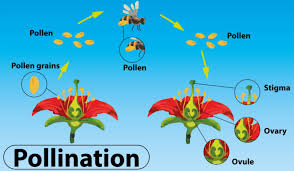
This sexual reproduction in plants diagram helps visualise the key stages involved.
10 Examples of Plants That Reproduce Sexually
Many flowering plants rely on sexual reproduction. Here are 10 examples of plants that reproduce sexually:
Rose
China rose (Hibiscus)
Sunflower
Papaya
Tomato
Pea plant
Cucumber
Apple tree
Mango tree
Coconut palm
These examples of sexual reproduction in plants show a diverse range of species with distinct modes of pollination and fertilisation.
Quick Quiz (With Answers)
1. Which part of the flower produces pollen?
Answer: Anther (part of the stamen).
2. Name the female reproductive part of a flower.
Answer: Pistil (carpel), which consists of stigma, style, and ovary.
3. What is fertilisation in plants?
Answer: The fusion of male and female gametes inside the ovule.
4. Give one difference between self-pollination and cross-pollination.
Answer: Self-pollination occurs within the same flower or plant, while cross-pollination involves different plants of the same species.
5. What does the ovary develop into after fertilisation?
Answer: The ovary develops into a fruit.
Related Topics


FAQs on Sexual Reproduction in Plants Explained
1. What is sexual reproduction in plants?
Sexual reproduction in plants is the process by which male and female gametes fuse to form a zygote, leading to the formation of a new plant. In flowering plants, this process occurs in the flower and involves:
- Production of male gametes in the anther
- Production of female gametes in the ovule
- Fusion of gametes through fertilization
- Development of the zygote into a seed
2. What are the male and female reproductive parts of a flower?
The male reproductive part of a flower is the stamen, and the female reproductive part is the pistil (carpel).
- Stamen consists of:
- Anther – produces pollen grains
- Filament – supports the anther
- Pistil (Carpel) consists of:
- Stigma – receives pollen
- Style – connects stigma to ovary
- Ovary – contains ovules
3. What is pollination in plants?
Pollination is the transfer of pollen grains from the anther to the stigma of a flower. It is the first step in sexual reproduction in flowering plants and occurs in two main types:
- Self-pollination – pollen is transferred within the same flower or plant
- Cross-pollination – pollen is transferred between different plants of the same species
4. What is the difference between pollination and fertilization in plants?
Pollination is the transfer of pollen to the stigma, while fertilization is the fusion of male and female gametes. The key differences are:
- Pollination occurs on the stigma and does not involve gamete fusion
- Fertilization occurs inside the ovule and forms a zygote
- Pollination precedes fertilization
5. How does fertilization occur in flowering plants?
Fertilization in flowering plants occurs when the male gamete fuses with the female gamete inside the ovule to form a zygote. The process involves:
- Pollen grain germinates on the stigma
- Formation of a pollen tube through the style
- Male gametes travel through the pollen tube
- One male gamete fuses with the egg cell forming a zygote
6. What is double fertilization in angiosperms?
Double fertilization is a unique process in angiosperms where two fusion events occur inside the ovule. It includes:
- One male gamete fuses with the egg to form a diploid zygote
- The second male gamete fuses with two polar nuclei to form a triploid endosperm
7. What happens after fertilization in plants?
After fertilization, the zygote develops into an embryo and the ovule transforms into a seed. The major changes include:
- Zygote develops into an embryo
- Ovule becomes a seed
- Ovary develops into a fruit
- Endosperm provides nourishment
8. What is the structure of a pollen grain?
A pollen grain is the male gametophyte of flowering plants and contains the male reproductive cells. Its main parts are:
- Exine – tough outer wall made of sporopollenin
- Intine – inner cellulose wall
- Generative cell – forms two male gametes
- Vegetative cell – forms the pollen tube
9. What is the role of the ovule in sexual reproduction in plants?
The ovule is the female reproductive structure that contains the egg cell and develops into a seed after fertilization. It consists of:
- Embryo sac containing the egg cell
- Integuments that form the seed coat
- Micropyle – opening for pollen tube entry
10. Why is sexual reproduction important in plants?
Sexual reproduction in plants is important because it produces genetic variation and increases adaptability. Its significance includes:
- Creation of genetic diversity through recombination
- Improved adaptation to environmental changes
- Formation of seeds for dispersal and survival
- Evolution and long-term survival of species



