




What is Sterilization Definition Types Methods and Applications
Sterilisation is a vital process in microbiology that ensures objects and media are free of all living microorganisms, including both vegetative forms and spores. In this article, we explore the sterilisation meaning, of sterilisation definition, and detailed sterilisation methods that are crucial in both laboratory and industrial settings. Our discussion is designed in a clear and engaging style so that even school students can grasp the concepts with ease.
Introduction
Sterilisation in microbiology refers to the complete elimination of all forms of microorganisms. Unlike disinfection, which only reduces microbial numbers, sterilisation ensures that there is no viable microbe remaining on the object. This process is indispensable in creating aseptic conditions for medical instruments, culture media and many other sensitive applications.
Understanding these terms helps in recognising why various types of sterilisation are applied in different situations.
Classification of Sterilisation
The classification of sterilisation falls into two major categories:
Physical Sterilisation Methods
Chemical Sterilisation Methods
Each method has its advantages and is chosen based on the nature of the object to be sterilised and its sensitivity to heat or chemicals.
Physical Methods of Sterilisation
Physical methods of sterilisation are based on utilising energy or physical forces to destroy microbial cells. Below are the key methods:
1. Heat Sterilisation
Heat is one of the most effective means to achieve sterilisation in microbiology. The sterilisation methods using heat can be divided into:
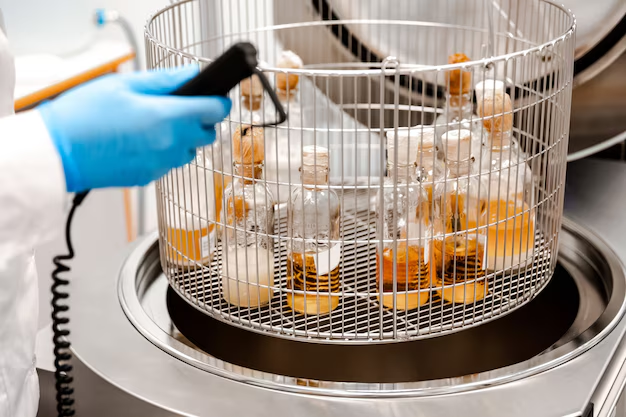
Moist Heat Sterilisation: This method uses an autoclave to produce steam under pressure at 121–134℃ with a pressure of 15 psi. The moist heat causes coagulation of proteins in the microorganisms, effectively killing them. This is the most commonly used method when a high level of sterility is required.
Dry Heat Sterilisation: When objects are sensitive to moisture, dry heat is preferred. The principle here is conduction – the heat is transferred from the surface inward, denaturing and oxidising proteins until the microbe dies. Instruments such as hot air ovens and incinerators are typically used.
2. Filtration
Filtration is a mechanical sterilisation method that uses membranes with tiny pores to remove microorganisms from liquids and gases. The three key steps involved are:
Sieving: Trapping large particles.
Adsorption: Microbes adhere to the filter.
Trapping: Final retention of micro-organisms.
3. Irradiation
Irradiation involves exposing objects to radiation to achieve sterilisation. There are two main forms:
Non-Ionising Radiation: Ultraviolet (UV) light is used, causing the formation of pyrimidine dimers in microbial DNA, leading to replication errors and cell death.
Ionising Radiation: Gamma rays and X-rays are employed to create reactive oxygen species (such as hydrogen peroxide), which damage essential cellular components and result in microbial death.
4. Sound Waves Vibration
This method employs ultrasonic waves (typically in the 20–40 kHz range) that create alternating compressive and tensile forces in a liquid. The resulting cavitation (formation and collapse of microscopic bubbles) effectively disrupts and removes microorganisms. This innovative sterilisation method is particularly useful in cleaning delicate instruments and in industrial applications.
5. Fractional Sterilisation (Tyndallisation)
Fractional sterilisation is used for media containing heat-sensitive components like gelatin or sugar. The process involves exposing the medium to 100℃ for 20 minutes on three successive days. The principle is that initial exposure kills vegetative cells, and any spores that germinate in the intervals are then destroyed by subsequent heating.
Chemical Methods of Sterilisation
Chemical methods are essential when high temperatures or physical methods cannot be used. These methods are particularly important for sterilising plastic instruments and biological specimens.
1. Gaseous Sterilisation
In this approach, objects are placed in a closed chamber where they are exposed to gaseous chemical agents under controlled conditions. Common gases used include:
Ethylene oxide: Highly effective against all microorganisms.
Formaldehyde, nitrogen dioxide and ozone: These gases interact with microbial cell components to ensure complete sterilisation.
2. Liquid Sterilisation
Liquid sterilisation involves immersing objects in a sterilising solution. Although considered less potent than gaseous methods, it is still highly useful for decontaminating surfaces and materials. Frequently used liquid agents include:
Hydrogen peroxide
Glutaraldehyde
Hypochlorite solution
Unique Insights on Sterilisation in Microbiology
In addition to the standard methods, Vedantu’s comprehensive guide on sterilisation in microbiology offers some unique insights:
Advantages and Limitations:Each sterilisation method comes with its own set of benefits and constraints. For instance, while moist heat sterilisation is highly effective, it is unsuitable for heat-sensitive items. Conversely, chemical methods can be applied to a broader range of materials but may leave chemical residues.
Emerging Technologies: Recent advances in technology have led to the development of low-temperature sterilisation systems that combine chemical and physical processes, ensuring safety for both the material and the user. Such innovative methods are being explored in fields such as tissue engineering and pharmaceuticals.
Practical Applications in Daily Life: Beyond the laboratory, sterilisation methods are used in everyday life – from ensuring the safety of packaged foods to sterilising surgical tools. Understanding these processes can help demystify everyday products and encourage informed choices about health and safety.
Environmental Considerations: With increasing focus on sustainable practices, newer sterilisation methods are being designed to minimise environmental impact. For example, research is underway to develop eco-friendly chemical sterilants and energy-efficient autoclaves.
Conclusion
Sterilisation is more than just a laboratory process; it is a critical component in maintaining hygiene and safety across various fields. From the sterilisation meaning and definition to the diverse methods of sterilisation—including moist heat, dry heat, filtration, irradiation, sound waves, and chemical approaches—the types of sterilisation are chosen based on the object’s sensitivity and the desired level of microbial control. Vedantu’s guide not only covers all the fundamental information but also introduces unique aspects and emerging trends, making it an essential resource for students and professionals alike.


FAQs on Sterilization in Biology Complete Guide to Principles and Methods
1. What is sterilization in biology?
Sterilization is the complete elimination or destruction of all forms of microbial life, including bacteria, viruses, fungi, and spores. It ensures that an object or medium is entirely free of living microorganisms.
In biology and microbiology, sterilization is important for:
- Preventing contamination in laboratory cultures
- Ensuring safety in medical instruments
- Maintaining aseptic conditions in experiments
2. What is the difference between sterilization and disinfection?
The main difference between sterilization and disinfection is that sterilization destroys all microorganisms including spores, while disinfection reduces or eliminates most pathogenic microbes but not necessarily spores.
- Sterilization: Complete removal of all microbial life
- Disinfection: Kills most harmful microorganisms
- Spores: Destroyed by sterilization but may survive disinfection
3. What are the main methods of sterilization?
The main methods of sterilization include physical and chemical techniques used to eliminate all microorganisms. The choice depends on the material being sterilized.
- Moist heat sterilization (autoclaving)
- Dry heat sterilization (hot air oven)
- Filtration (membrane filters)
- Radiation (UV or gamma rays)
- Chemical sterilization (ethylene oxide, glutaraldehyde)
4. How does autoclaving sterilize materials?
Autoclaving sterilizes materials using high-pressure steam at 121°C for a specific time to destroy all microorganisms and spores. Moist heat denatures proteins and disrupts cell membranes.
- Standard condition: 121°C at 15 psi for 15–20 minutes
- Effective against bacterial endospores
- Commonly used for culture media, glassware, and surgical tools
5. What is dry heat sterilization?
Dry heat sterilization is a method that uses hot air, typically at 160–180°C, to kill microorganisms by oxidative damage and protein denaturation. It requires higher temperatures and longer exposure than moist heat.
- Performed in a hot air oven
- Used for glassware, metal instruments, and powders
- Less effective for heat-sensitive materials
6. How does filtration sterilization work?
Filtration sterilization works by physically removing microorganisms from liquids or gases using a membrane filter with very small pore size. It does not kill microbes but separates them from the fluid.
- Common pore size: 0.22 µm for bacteria removal
- Used for heat-sensitive solutions like antibiotics and enzymes
- Also applied in air purification systems
7. What is chemical sterilization?
Chemical sterilization uses strong chemical agents to destroy all forms of microbial life, including spores. It is mainly used for heat-sensitive medical and laboratory equipment.
- Ethylene oxide gas
- Glutaraldehyde
- Hydrogen peroxide vapor
8. Why is sterilization important in microbiology?
Sterilization is important in microbiology because it prevents contamination and ensures accurate experimental results. Without sterilization, unwanted microbes can interfere with cultures and data.
- Maintains aseptic conditions
- Protects researchers from infections
- Ensures pure microbial cultures
9. Can radiation be used for sterilization?
Yes, radiation can be used for sterilization by damaging microbial DNA and preventing replication. Both ionizing and non-ionizing radiation are applied in different settings.
- Gamma radiation: Used for medical equipment and disposable syringes
- UV radiation: Used for surface and air sterilization
- Effective without high temperatures
10. What are bacterial endospores and why are they important in sterilization?
Bacterial endospores are highly resistant dormant structures formed by certain bacteria that can survive extreme heat, chemicals, and radiation. They are critical in sterilization because their destruction confirms true sterilization.
- Produced by genera like Bacillus and Clostridium
- Resistant to drying, heat, and disinfectants
- Used as biological indicators in autoclave testing



