


When Is Diwali 2026 in India?
Diwali 2026 will be celebrated on Sunday, 8 November in India, not 9 November. Although Amavasya Tithi continues until 12:31 PM on 9 November, Lakshmi Puja is observed on 8 November because Amavasya is present during the evening Pradosh Kaal. According to Drik Panchang, the Lakshmi Puja Muhurat in New Delhi is 5:54 PM to 7:50 PM.
Also known as Deepavali or the Festival of Lights, Diwali celebrates the victory of light over darkness and is associated with Lord Rama's return to Ayodhya, the worship of Goddess Lakshmi, and several regional traditions.
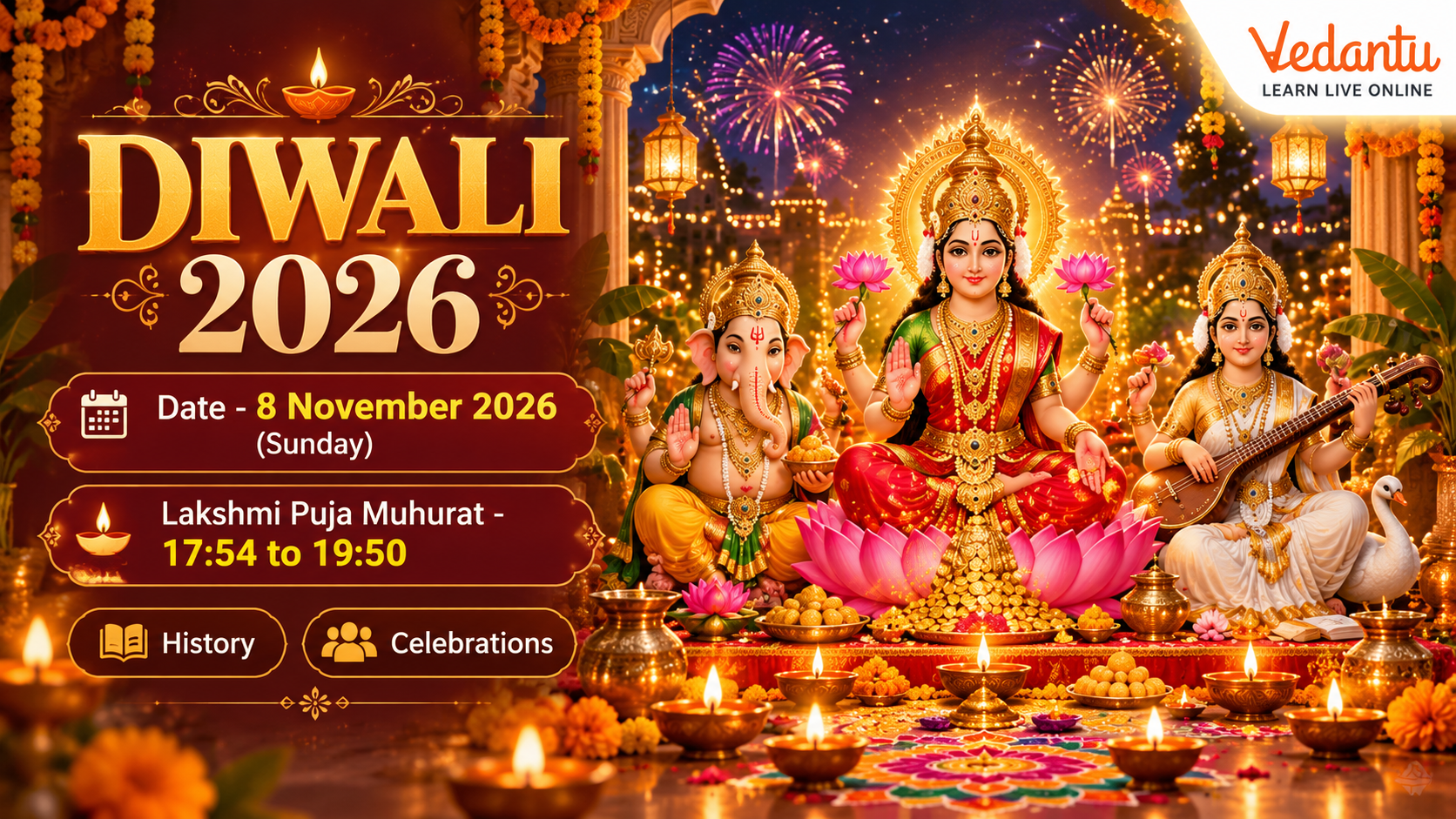
If you are searching for "Diwali kab hai 2026?" or "2026 mein Diwali kab hai?", the answer is 8 November 2026, Sunday (रविवार).
The main Diwali celebration falls on Kartik Amavasya in the North Indian lunar calendar. The date changes each year because it follows the lunar calendar rather than a fixed Gregorian date.
Diwali is associated with the triumph of light over darkness, goodness over evil and hope over difficulties.
Diwali 2026 Date and Important Details
The puja timings above are for New Delhi according to Drik Panchang. Muhurat timings depend on location, so families in other cities should check their local panchang.
Diwali 2026 Date: Is Diwali on 8 or 9 November?
Diwali 2026 will be celebrated on Sunday, 8 November, not 9 November. According to Drik Panchang, Amavasya Tithi begins at 11:27 AM on 8 November and ends at 12:31 PM on 9 November 2026.
Since Amavasya Tithi is present during Pradosh Kaal on the evening of 8 November, this is the day observed for the main Diwali festival and Lakshmi-Ganesha Puja.
For New Delhi, the auspicious Lakshmi Puja muhurat is 5:54 PM to 7:50 PM on 8 November 2026. Puja timings vary by city.
Diwali 2026 Puja Muhurat and Amavasya Timing
The main Diwali Lakshmi Puja in 2026 is observed on Sunday evening, 8 November.
According to Drik Panchang for New Delhi:
Lakshmi Puja Muhurat: 5:54 PM to 7:50 PM
Pradosh Kaal: 5:31 PM to 8:09 PM
Amavasya Tithi Begins: 11:27 AM on 8 November
Amavasya Tithi Ends: 12:31 PM on 9 November
Many families perform Lakshmi-Ganesha Puja during the evening Pradosh period, traditionally associated with welcoming prosperity and well-being.
Students should remember that the date of Diwali and the exact puja time are different types of information. The festival date can be stated nationally, while muhurat timings should be city-specific.
Diwali 2026 Lakshmi Puja Vidhi: Step-by-Step Guide
Lakshmi-Ganesha Puja is traditionally performed during the evening of Diwali. In New Delhi, the Lakshmi Puja Muhurat on 8 November 2026 is from 5:54 PM to 7:50 PM.
Prepare the Puja Area: Clean the worship space and place images or idols of Goddess Lakshmi and Lord Ganesha.
Arrange Offerings: Keep flowers, fruits, sweets, diyas and other traditional puja items ready.
Light a Diya: Begin the worship by lighting a lamp safely.
Offer Prayers: Worship Lord Ganesha and Goddess Lakshmi according to your family tradition.
Perform Aarti: Complete the prayers with aarti and distribute prasad.
Decorate the Home: Arrange diyas or decorative lights safely to celebrate the Festival of Lights.
Puja practices vary between families and regions. For a detailed explanation, read Vedantu's Diwali Lakshmi Puja guide.
5 Days of Diwali 2026: Dates, Rituals and Significance
Diwali is commonly described as a five-day festival, although the order and naming of some observances vary across regions and years.
Important: Narak Chaturdashi Abhyang Snan falls on the morning of 8 November 2026 in the Delhi calendar. This is why different websites may show Choti Diwali-related observances on 7 or 8 November.
Govardhan Puja falls on 10 November, so the five principal observances extend across six calendar dates in 2026.
Learn more about the significance of each festival in Five Days of Diwali.
Why Is Diwali Celebrated? History and Significance?
Diwali is celebrated for several religious, historical and cultural reasons. Its meaning differs among communities, but the festival commonly represents hope, goodness, prosperity and new beginnings.
Return of Lord Rama to Ayodhya
According to the Ramayana tradition, people of Ayodhya welcomed Lord Rama, Goddess Sita and Lakshmana after their return from exile and Lord Rama's victory over Ravana.
Lighting lamps symbolises the joy of their return and the victory of righteousness.
Worship of Goddess Lakshmi
Many Hindu families worship Goddess Lakshmi, associated with wealth and prosperity, along with Lord Ganesha, associated with wisdom and auspicious beginnings.
Homes are cleaned and decorated, and families gather for evening prayers.
Lord Krishna and Narakasura
In several traditions, Narak Chaturdashi commemorates the defeat of Narakasura. The festival is observed through rituals that vary by region, including early-morning oil baths.
Diwali Across Different Communities
For Jains, Diwali commemorates the nirvana of Lord Mahavira. Many Sikhs observe Bandi Chhor Divas around Diwali, remembering the release of Guru Hargobind. Regional Buddhist and Hindu communities also have their own traditions.
These different associations reflect India's cultural diversity.
Why Do We Light Diyas on Diwali?
Lighting diyas is one of the most meaningful traditions of Diwali. These small oil lamps represent the victory of light over darkness, knowledge over ignorance, and good over evil. Families place diyas near doors, windows, balconies, and prayer spaces to welcome positivity and celebrate the Festival of Lights.
The tradition of lighting diyas has different meanings across India:
Lord Rama's Return: According to popular Hindu tradition, the people of Ayodhya lit lamps to welcome Lord Rama, Sita, and Lakshmana after their 14-year exile.
Welcoming Goddess Lakshmi: Many families light diyas during Lakshmi Puja as a symbol of prosperity, happiness, and good fortune.
Spreading Hope and Positivity: The light of a diya reminds people to overcome negativity and practise kindness.
Family Traditions: Lighting diyas together brings families closer and helps children understand the cultural significance of Diwali.
Beyond decoration, diyas reflect the central message of Diwali: even a small light can brighten the darkness.
How Is Diwali Celebrated in Different States of India?
Diwali is celebrated across India with lights, prayers, sweets, and family gatherings. However, the traditions and reasons for celebrating can differ from one region to another. These regional customs make Diwali one of India's most culturally diverse festivals.
Uttar Pradesh: Diwali is closely associated with Lord Rama's return to Ayodhya. Homes and temples are decorated with diyas, and families celebrate with prayers and sweets.
Maharashtra: Families observe traditions such as Vasubaras, Dhanteras, Narak Chaturdashi, Lakshmi Puja, and Bhau Beej. Early morning oil baths and festive foods are important customs.
Gujarat: Diwali is especially important for business communities. Chopda Pujan is associated with worshipping account books, while the Gujarati New Year is celebrated around this festival.
West Bengal: Many families celebrate Kali Puja during Diwali, offering prayers to Goddess Kali and decorating homes and temples with lamps.
Tamil Nadu: Deepavali is strongly associated with Narakasura's defeat. Many families begin celebrations early in the morning with oil baths, new clothes, and traditional sweets.
Karnataka: Naraka Chaturdashi, Lakshmi Puja, and Bali Padyami are important parts of the festive period in many communities.
Although the rituals differ, Diwali brings people together through family traditions, gratitude, generosity, and the celebration of light.
These examples describe common regional practices. Customs may vary between families and communities within the same state.
How Is Diwali Celebrated?
Diwali celebrations bring families, neighbours and communities together.
People often begin by cleaning their homes, making rangoli designs and arranging diyas or decorative lights. In the evening, many families perform Lakshmi Puja and share sweets.
Children enjoy making drawings, decorating classrooms and learning stories associated with the festival.
Popular Diwali Traditions
Lighting Diyas: Symbolises hope and the removal of darkness.
Making Rangoli: Welcomes guests with colourful floor decorations.
Lakshmi-Ganesha Puja: A traditional prayer for prosperity and wisdom.
Sharing Sweets: Encourages friendship and family bonding.
Exchanging Gifts: Expresses affection and goodwill.
Helping Others: Encourages generosity during the festive season.
Families can make their celebrations more comfortable for children, older adults, animals and neighbours by choosing quieter, safer activities.
For ideas, explore Rangoli Designs for Diwali and Ways to Celebrate Green Diwali.
Is Diwali 2026 a Public Holiday in India?
Yes. Diwali 2026 falls on Sunday, 8 November, and is listed as a gazetted holiday in India's Central Government holiday calendar. Since it falls on a Sunday, many schools, banks and government offices may already be closed for their weekly holiday.
However, holiday arrangements vary by state and institution. Some regions observe Deepavali-related holidays on Narak Chaturdashi or another festival date.
Will Banks and Schools Be Closed on Diwali 2026?
Students, parents and customers should check official local holiday notices before planning travel or visits.
Eco-Friendly Diwali 2026: Celebration Ideas for Students
An environmentally responsible celebration can be enjoyable without excessive waste, noise or smoke.
Students can choose reusable decorations, make paper lanterns, decorate with traditional diyas under adult supervision, and share homemade sweets.
They can also prepare Diwali greeting cards, organise family games or participate in community activities.
Read How to Celebrate Diwali Without Crackers for more ideas.
Choti Diwali vs Badi Diwali: Dates and Differences in 2026
Choti Diwali refers to celebrations around Narak Chaturdashi and Kali Chaudas, while Badi Diwali generally means the main Lakshmi Puja festival observed on Amavasya.
In 2026, Kali Chaudas is on 7 November, Narak Chaturdashi's morning bathing observance is on 8 November, and Badi Diwali is also on 8 November.
The regional differences are important when answering questions about Choti Diwali.
Read Choti Diwali and Naraka Chaturdashi for further details.
When Is Dev Diwali 2026?
Dev Diwali, also called Dev Deepawali, will be observed on Tuesday, 24 November 2026.
It is celebrated especially in Varanasi on Kartik Purnima, with illuminated ghats, prayers and Deep Daan.
Dev Diwali is a separate observance and should not be confused with the main Diwali festival on 8 November.
Learn more in Dev Diwali.
Diwali Kab Hai 2026? दिवाली 2026 कब है?
2026 में दिवाली कब है?
साल 2026 में दिवाली 8 नवंबर, रविवार को मनाई जाएगी। इस दिन कार्तिक अमावस्या के अवसर पर भगवान गणेश और माता लक्ष्मी की पूजा की जाती है।
दिवाली को दीपावली या रोशनी का त्योहार भी कहा जाता है। लोग अपने घरों को दीपक, रंगोली और फूलों से सजाते हैं।
बड़ी दिवाली कब है 2026 में? बड़ी दिवाली 8 नवंबर 2026 को है।
Diwali 2026: Key Dates and Celebration Highlights
Diwali 2026 falls on Sunday, 8 November. The festival celebrates light, hope, togetherness and cultural traditions across India.
Whether students are learning about Diwali's history, preparing a school essay or helping their families decorate, the festival offers an opportunity to practise kindness, cooperation and respect.
FAQs on Diwali 2026: Date, Lakshmi Puja Muhurat, 5 Days and Significance
1. Diwali kab hai 2026 mein?
Diwali 2026 mein 8 November, Sunday ko hai. यानी 2026 में दिवाली 8 नवंबर, रविवार को मनाई जाएगी।
2. When is Diwali in 2026 in India?
Diwali will be celebrated on Sunday, 8 November 2026, in India.
3. Badi Diwali kab hai?
Badi Diwali 2026 is on Sunday, 8 November. It is the main Lakshmi Puja day.
4. When Does Diwali Start in 2026?
The five-day Diwali festival in 2026 begins on Friday, 6 November 2026, with Dhanteras and continues with Choti Diwali, the main Diwali celebration, Govardhan Puja, and Bhai Dooj.
Diwali 2026 Festival Dates:
Dhanteras: Friday, 6 November 2026
Choti Diwali (Narak Chaturdashi): Saturday, 7 November 2026
Main Diwali (Lakshmi Puja): Sunday, 8 November 2026
Govardhan Puja (Annakut): Tuesday, 10 November 2026
Bhai Dooj: Wednesday, 11 November 2026
Although Diwali is traditionally described as a five-day festival, the dates of individual celebrations may vary according to regional customs and the Hindu Panchang.
5. दिवाली क्यों मनाई जाती है?
दिवाली, जिसे दीपावली भी कहा जाता है, भारत के प्रमुख त्योहारों में से एक है। यह त्योहार अंधकार पर प्रकाश, बुराई पर अच्छाई और अज्ञान पर ज्ञान की विजय का प्रतीक है। दिवाली हर साल हिंदू पंचांग के अनुसार कार्तिक मास की अमावस्या को मनाई जाती है।
दिवाली मनाने के पीछे कई धार्मिक, पौराणिक और सांस्कृतिक मान्यताएँ हैं। हिंदू, जैन और सिख धर्म में इस अवसर का विशेष महत्व है।
दिवाली मनाने के प्रमुख कारण:
भगवान श्रीराम की अयोध्या वापसी: हिंदू मान्यताओं के अनुसार, भगवान श्रीराम 14 वर्षों का वनवास पूरा करने और रावण का वध करने के बाद माता सीता और भाई लक्ष्मण के साथ अयोध्या लौटे थे। उनके स्वागत में अयोध्यावासियों ने घी के दीपक जलाकर पूरे नगर को रोशन किया था। इसी खुशी में दिवाली मनाने की परंपरा मानी जाती है।
माता लक्ष्मी और भगवान गणेश की पूजा: दिवाली की रात माता लक्ष्मी और भगवान गणेश की पूजा की जाती है। मान्यता है कि समुद्र मंथन के दौरान माता लक्ष्मी प्रकट हुई थीं। इस दिन भक्त सुख, समृद्धि, धन और बुद्धि का आशीर्वाद प्राप्त करने के लिए लक्ष्मी-गणेश की पूजा करते हैं।
भगवान श्रीकृष्ण द्वारा नरकासुर का वध: पौराणिक कथाओं के अनुसार, भगवान श्रीकृष्ण ने नरकासुर नामक राक्षस का वध करके उसकी कैद में बंद लोगों को मुक्त कराया था। इस विजय की स्मृति में दिवाली के आसपास नरक चतुर्दशी या छोटी दिवाली मनाई जाती है।
भगवान विष्णु और राजा बलि की कथा: कुछ हिंदू परंपराओं में दिवाली का संबंध भगवान विष्णु के वामन अवतार और राजा महाबलि की कथा से भी है। मान्यता के अनुसार, भगवान विष्णु ने वामन रूप धारण करके राजा बलि के अहंकार को दूर किया और उन्हें पाताल लोक का अधिपति बनाया।
जैन धर्म में भगवान महावीर का निर्वाण: जैन धर्म के अनुयायी दिवाली को भगवान महावीर स्वामी के निर्वाण दिवस के रूप में मनाते हैं। जैन मान्यता के अनुसार, इसी दिन 24वें तीर्थंकर भगवान महावीर ने मोक्ष प्राप्त किया था।
सिख धर्म में बंदी छोड़ दिवस: सिख समुदाय दिवाली के अवसर पर बंदी छोड़ दिवस मनाता है। यह दिन छठे सिख गुरु, श्री गुरु हरगोबिंद साहिब जी की ग्वालियर किले से रिहाई की स्मृति में मनाया जाता है। यह अवसर स्वतंत्रता, न्याय और मानवता का संदेश देता है।
सरल शब्दों में, दिवाली केवल दीपक जलाने और मिठाइयाँ बाँटने का त्योहार नहीं है, बल्कि यह प्रेम, खुशहाली, एकता, सकारात्मकता और अच्छाई का संदेश देता है। यह त्योहार हमें अपने जीवन से बुरे विचारों को दूर करके ज्ञान, दया और सद्भावना का प्रकाश फैलाने की प्रेरणा देता है।
6. Why is Diwali on 8 November instead of 9 November in 2026?
Diwali falls on 8 November 2026 because Amavasya Tithi is present during the evening Pradosh Kaal on that day. Although Amavasya continues until 12:31 PM on 9 November, the main Lakshmi Puja is observed on 8 November.
7. Why is Diwali celebrated?
Diwali celebrates the victory of good over evil and light over darkness. Different communities associate it with Lord Rama, Goddess Lakshmi, Lord Mahavira and other traditions.
8. How many days is Diwali celebrated?
Diwali is commonly described as a five-day festival, although exact observances and their spacing differ across regional calendars.
9. What is the Lakshmi Puja time for Diwali 2026?
For New Delhi, the Lakshmi Puja muhurat is 5:54 PM to 7:50 PM on 8 November 2026. Other cities have different local timings.
10. When is Dev Diwali 2026?
Dev Diwali falls on Tuesday, 24 November 2026, and is celebrated prominently in Varanasi.
11. When is Diwali in 2027?
Diwali 2027 is on Friday, 29 October, according to the New Delhi festival calendar.
12. How can students celebrate Diwali safely?
Students can make rangoli, prepare greeting cards, help decorate with adult supervision, enjoy family activities and avoid excessive noise and smoke.


