



The Dark History of Jallianwala Bagh Massacre
The Jallianwala Bagh Massacre is one of the most tragic and defining events in India’s freedom struggle. It took place on April 13, 1919, in Amritsar, when British troops opened fire on thousands of unarmed Indians gathered peacefully.
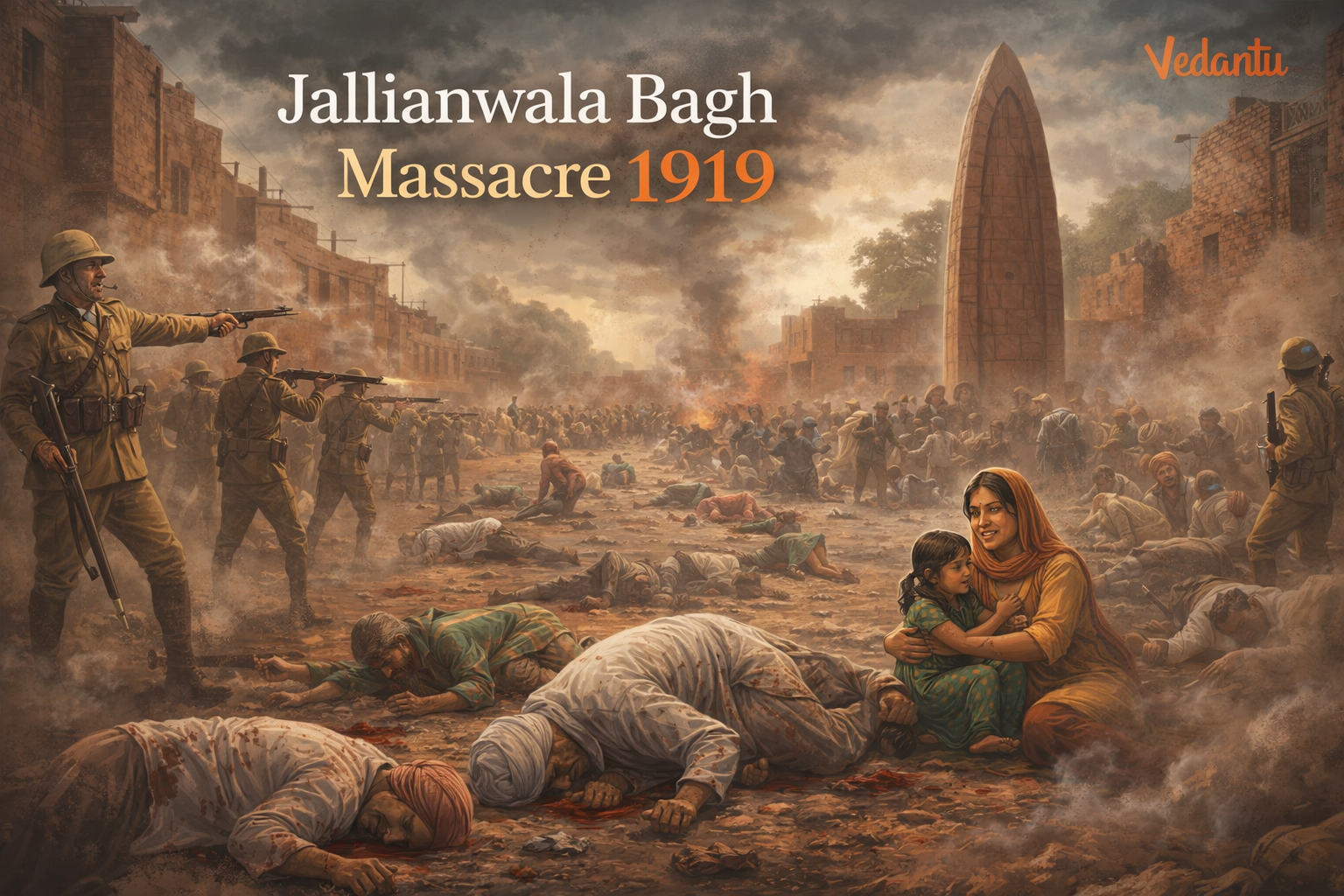
This brutal incident, ordered by Reginald Edward Harry Dyer, resulted in hundreds of deaths and marked a turning point in India’s fight for independence. The massacre exposed the harsh reality of British rule and strengthened the national movement led by Mahatma Gandhi.
Jallianwala Bagh Massacre Date and Overview
Background of Jallianwala Bagh Massacre
The massacre did not happen suddenly; it was the result of rising tensions between Indians and the British government.
In 1919, the British passed the Rowlatt Act, allowing arrest without trial
This led to widespread protests across India
Mahatma Gandhi launched the Satyagraha movement
Leaders like Dr. Saifuddin Kitchlew and Dr. Satyapal were arrested in Amritsar
Their arrest triggered protests, leading to a public gathering at Jallianwala Bagh.
What Happened on April 13, 1919
On the day of Baisakhi, thousands of people gathered at Jallianwala Bagh. The gathering included:
Peaceful protesters
Villagers visiting for the festival
Women and children
General Reginald Edward Harry Dyer arrived with troops and:
Blocked the only exit
Gave no warning to disperse
Ordered soldiers to open fire
The troops fired around 1,650 rounds for nearly 10 minutes until ammunition was exhausted.
Many people died instantly, while others jumped into a well (Martyrs’ Well) to escape bullets.
Why the Jallianwala Bagh Massacre Happened
The main causes include:
Repressive British policies like the Rowlatt Act
Growing nationalist movements
Fear of rebellion among British officials
Ban on public gatherings in Punjab
The British saw the gathering as a threat, even though it included civilians and festival attendees.
Aftermath of the Massacre
The impact of the massacre was immediate and widespread:
Martial law imposed in Punjab
Public punishments and humiliations introduced
Nationwide outrage against British rule
Rabindranath Tagore renounced his knighthood in protest.
Mahatma Gandhi intensified the freedom struggle by launching the Non-Cooperation Movement (1920–22).
Hunter Commission Report
The British government formed the Hunter Commission to investigate the incident.
General Dyer was criticized for excessive force
However, British authorities justified martial law
Dyer was removed from his post but not severely punished
This created anger among Indians, as justice was not properly served.
Role of Indian Revolutionaries
The massacre inspired revolutionary movements:
Udham Singh assassinated Michael O’Dwyer in 1940 as revenge
Freedom fighters like Bhagat Singh were deeply influenced
The incident strengthened both non-violent and revolutionary movements.
Jallianwala Bagh Memorial Today
Today, Jallianwala Bagh is a national memorial featuring:
Bullet-marked walls
Martyrs’ Well
Museum galleries
Light and sound show
The memorial was inaugurated in 1961 by Dr. Rajendra Prasad and serves as a reminder of the sacrifice of innocent people.
Significance of Jallianwala Bagh Massacre
The massacre is considered a turning point because:
It exposed the brutality of British rule
Strengthened India’s independence movement
United Indians against colonial rule
Inspired future revolutionaries
It changed the course of Indian history and intensified the demand for freedom.
Conclusion
The Jallianwala Bagh Massacre remains one of the darkest chapters in Indian history. It not only revealed the brutal nature of colonial rule but also united Indians in their fight for independence.
Even today, the memorial in Amritsar stands as a symbol of sacrifice, reminding future generations of the cost of freedom and the importance of justice.
FAQs on Jallianwala Bagh Massacre 1919 Date History Causes and Significance
1. What was the Jallianwala Bagh Massacre?
It was a tragic incident on April 13, 1919, when British troops fired on unarmed Indians in Amritsar.
2. When did the Jallianwala Bagh Massacre happen?
The massacre took place on April 13, 1919, during the Baisakhi festival.
3. Who ordered the Jallianwala Bagh Massacre?
The attack was ordered by Reginald Edward Harry Dyer.
4. Why did the Jallianwala Bagh Massacre happen?
It happened due to protests against the Rowlatt Act and British fear of rebellion.
5. How many people died in Jallianwala Bagh Massacre?
Official reports say 379 people died, but actual numbers were believed to be much higher.
6. Why is Jallianwala Bagh important in Indian history?
It marked a turning point in India’s freedom struggle and exposed British cruelty.
