



Importance of India’s National Handloom Heritage Day for Students
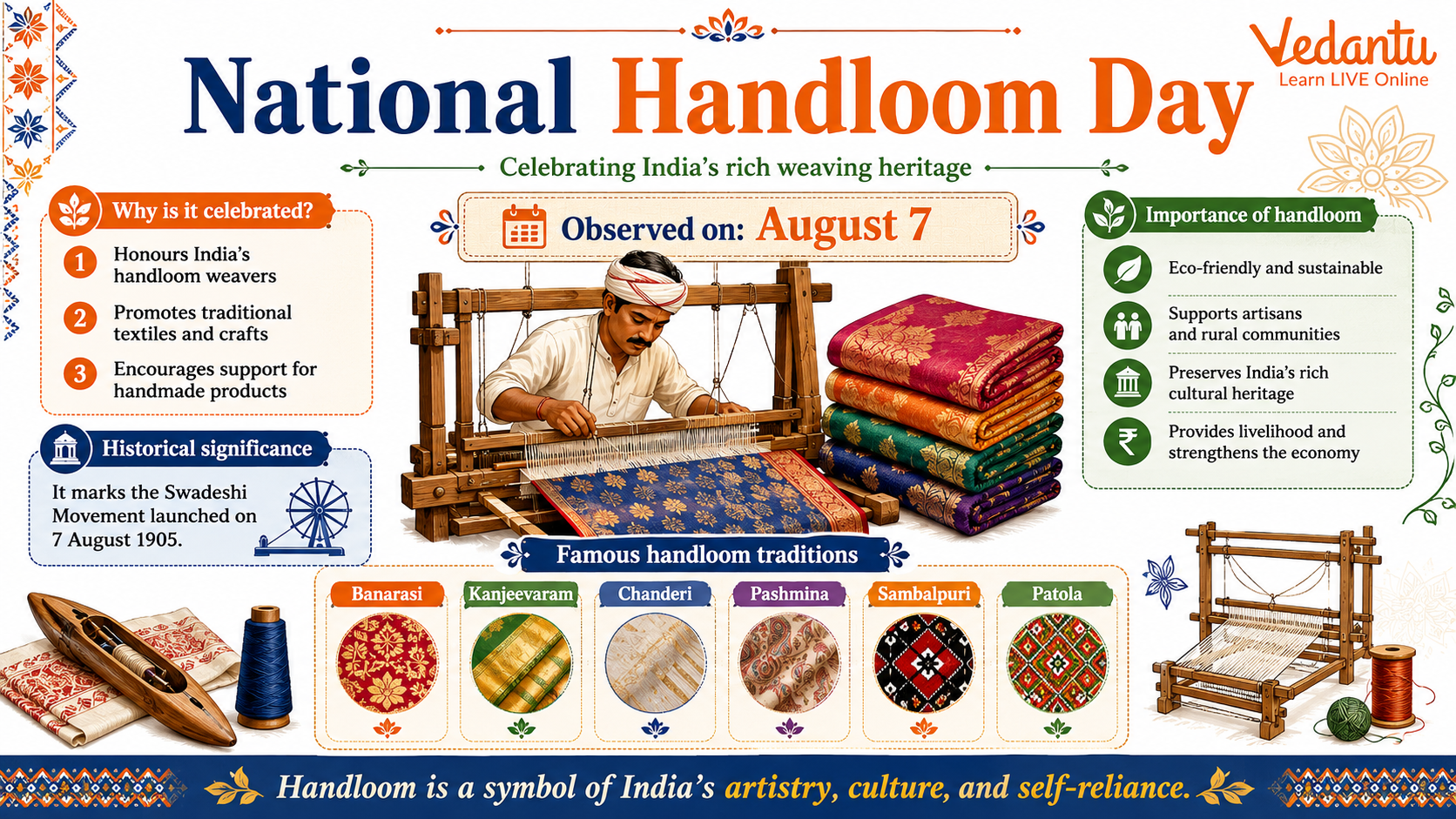
National Handloom Day is observed every year on 7 August in India to honor the contribution of handloom weavers and to promote the rich cultural heritage of Indian handloom products. The day highlights the importance of the handloom sector in providing employment, preserving traditional skills, and strengthening the rural economy. It also encourages people to support local artisans by choosing handwoven products.
About National Handloom Day
National Handloom Day was first celebrated on 7 August 2015. The date was chosen to commemorate the Swadeshi Movement, which was launched on 7 August 1905. The movement promoted the use of indigenous goods and encouraged Indians to boycott foreign products. The handloom industry became a symbol of self-reliance and economic independence during this period.
- Observed on 7 August every year
- First celebrated in 2015
- Commemorates the Swadeshi Movement of 1905
- Promotes Indian handloom products and artisans
Importance of National Handloom Day
The handloom sector is one of the largest sources of employment in India after agriculture. It provides livelihood to millions of weavers and allied workers, many of whom belong to rural and economically weaker sections. National Handloom Day recognizes their hard work and contribution to the nation’s economy and cultural identity.
- Generates employment in rural and semi-urban areas
- Preserves traditional weaving techniques
- Promotes sustainable and eco-friendly production
- Supports the concept of Vocal for Local
Objectives of Celebrating National Handloom Day
The celebration of this day aims to spread awareness about the significance of the handloom sector and encourage the younger generation to value traditional crafts.
- To recognize the contribution of handloom weavers
- To promote the use of handloom products among citizens
- To generate awareness about government schemes for weavers
- To strengthen the domestic textile industry
Major Handloom Products of India
India is known for its diverse handloom traditions across different states. Each region has unique weaving styles, patterns, and fabrics that reflect local culture and history.
Famous Indian Handloom Products
| State | Handloom Product | Special Feature |
|---|---|---|
| Uttar Pradesh | Banarasi Saree | Rich silk with zari work |
| Assam | Muga Silk | Natural golden silk |
| Tamil Nadu | Kanchipuram Saree | Heavy silk with traditional motifs |
| West Bengal | Baluchari Saree | Mythological designs |
| Gujarat | Patola | Double ikat weaving technique |
These products not only represent artistic excellence but also contribute significantly to exports and the national economy. Supporting such products helps sustain traditional craftsmanship.
Government Initiatives for Handloom Sector
The Government of India has launched various schemes to support handloom weavers and promote their products in domestic and international markets.
- National Handloom Development Programme
- Weaver Mudra Scheme
- India Handloom Brand initiative
- Marketing and Export Promotion Schemes
Theme of National Handloom Day
Every year, National Handloom Day is celebrated with a specific theme to focus on different aspects of the handloom sector such as sustainability, empowerment of women weavers, and promotion of local crafts. The theme encourages awareness campaigns, exhibitions, and workshops across the country.
Role of Handloom in Indian Economy
The handloom industry plays a vital role in India’s economy by providing large-scale employment and contributing to textile exports. It is a labor-intensive sector that requires minimal capital investment, making it suitable for rural development. Many women are actively involved in weaving activities, which helps in women empowerment and financial independence.
Conclusion
National Handloom Day is a significant observance that celebrates India’s rich textile heritage and honors the dedication of handloom weavers. By promoting handwoven products, citizens can support sustainable development, preserve traditional skills, and contribute to the growth of the rural economy. Understanding the importance of this day helps students and competitive exam aspirants appreciate the cultural and economic value of the handloom sector in India.
FAQs on National Handloom Day Celebration and Its Importance in India
1. What is National Handloom Day?
National Handloom Day is observed annually to celebrate India’s rich handloom heritage and honor handloom weavers.
• Celebrated on 7th August every year in India.
• Recognizes the contribution of handloom weavers to the nation’s cultural and economic growth.
• Promotes awareness about the Indian handloom industry and traditional textiles.
• Encourages support for vocal for local and sustainable fashion practices.
2. Why is National Handloom Day celebrated on 7th August?
National Handloom Day is celebrated on 7th August to commemorate the historic Swadeshi Movement.
• On 7 August 1905, the Swadeshi Movement was launched in Calcutta Town Hall.
• The movement promoted the use of Indian-made goods and boycott of British products.
• It highlighted the importance of indigenous textiles and handwoven fabrics.
• The date symbolizes self-reliance and support for local artisans.
3. When was National Handloom Day first observed in India?
National Handloom Day was first observed in 2015 to revive and promote the handloom sector.
• Announced by the Government of India.
• First celebrated on 7 August 2015.
• Aimed at generating awareness about the handloom industry’s contribution to employment and exports.
• Supports initiatives like Make in India and Atmanirbhar Bharat.
4. What is the importance of the handloom industry in India?
The handloom industry is one of India’s largest cottage industries and a major source of rural employment.
• Provides livelihood to over 4 million weavers and artisans.
• Preserves traditional crafts like Banarasi, Kanchipuram, Chanderi, and Sambalpuri sarees.
• Promotes sustainable and eco-friendly textiles.
• Contributes significantly to India’s textile exports and cultural identity.
5. What are some famous Indian handloom products?
India is known worldwide for its diverse and vibrant handloom textiles.
• Banarasi Silk (Uttar Pradesh)
• Kanchipuram Silk (Tamil Nadu)
• Paithani Saree (Maharashtra)
• Pashmina Shawls (Jammu & Kashmir)
• Ikat and Sambalpuri textiles (Odisha)
These products reflect India’s rich traditional weaving techniques and craftsmanship.
6. How does National Handloom Day support weavers?
National Handloom Day supports weavers by promoting recognition, welfare schemes, and market access.
• Spreads awareness about government schemes for weavers.
• Encourages citizens to buy handwoven and handmade fabrics.
• Organizes exhibitions, fairs, and promotional events.
• Strengthens the demand for ethnic wear and sustainable clothing.
7. What is the difference between handloom and powerloom?
The main difference between handloom and powerloom lies in the method of weaving.
• Handloom: Fabric is woven manually using traditional looms without electricity.
• Powerloom: Fabric is woven using electrically operated machines.
• Handloom products are unique, eco-friendly, and labor-intensive.
• Powerloom fabrics are mass-produced and less time-consuming.
8. How is National Handloom Day celebrated in India?
National Handloom Day is celebrated through awareness programs and promotional events across India.
• Organizing handloom exhibitions and fairs.
• Felicitation of outstanding weavers and artisans.
• Social media campaigns promoting #VocalForLocal.
• Educational programs highlighting the importance of Indian textiles and heritage.
9. What are the objectives of National Handloom Day?
The main objective of National Handloom Day is to protect and promote India’s traditional weaving sector.
• Raise awareness about the economic importance of handloom.
• Encourage youth participation in traditional crafts.
• Boost demand for Indian handwoven products.
• Preserve the country’s cultural heritage and craftsmanship.
10. Why should people support handloom products?
People should support handloom products to promote sustainability and empower local artisans.
• Handloom fabrics are eco-friendly and biodegradable.
• Buying handloom supports rural livelihoods and women artisans.
• Each product reflects unique craftsmanship and tradition.
• Strengthens India’s vision of self-reliance (Atmanirbhar Bharat) and sustainable fashion.
