



What is a Pyramid of Biomass and Why Does It Differ in Terrestrial and Aquatic Ecosystems?
The pyramid of biomass is an ecological representation that shows the total living mass of organisms present at different trophic levels in an ecosystem. It helps explain how much biological material is available at each stage of a food chain, beginning with producers and moving upward to herbivores and carnivores. In ecosystem studies, this pyramid is one of the most useful tools for understanding the distribution of organic matter and the efficiency of energy transfer.
“A pyramid of biomass is a graphical representation of the total mass of living organisms present at each trophic level in an ecosystem. It may be upright in most terrestrial ecosystems and inverted in many aquatic ecosystems”.
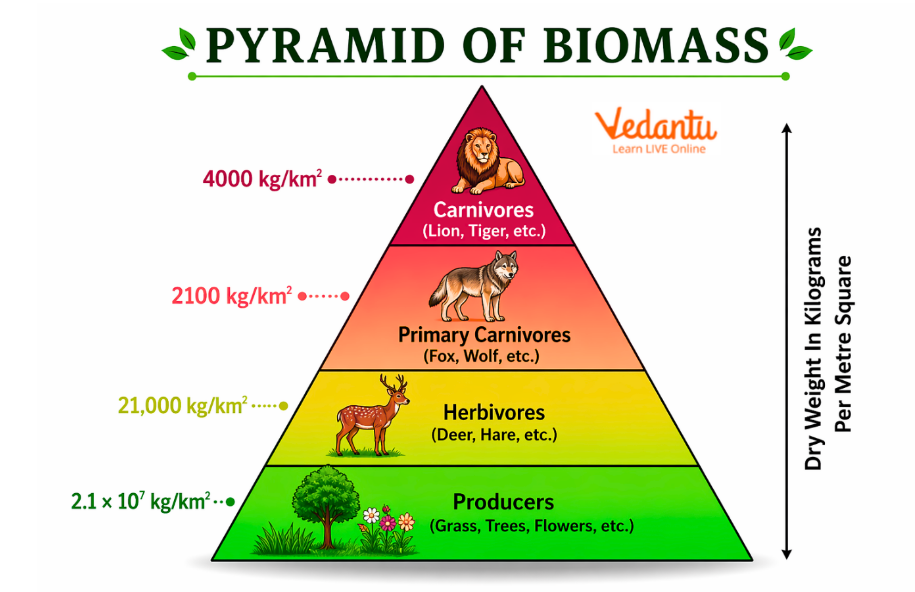
Biomass Meaning in Ecology
To understand the pyramid of biomass, it is necessary to first understand what biomass means.
In ecology, biomass refers to the total mass of all living organisms present in a specific trophic level or area. It is usually expressed as:
dry weight in grams per square metre
kilograms per unit area
or sometimes in terms of calories per unit area
Dry weight is preferred because it avoids the variation caused by water content in living organisms. In ecological studies, instruments such as a bomb calorimeter may also be used when biomass is expressed in terms of energy value.
Biomass is important because it gives a more realistic picture of the amount of living matter than just counting the number of organisms. For example, one large tree can support many insects, but simply counting organisms does not reflect the true amount of biological material present at each level.
Biomass and Trophic Levels
A trophic level is the place occupied by an organism in a food chain. The pyramid of biomass arranges biomass according to these trophic levels.
1. First Trophic Level: Producers
These are autotrophs such as grasses, algae, or trees that prepare food using sunlight.
2. Second Trophic Level: Primary Consumers
These are herbivores such as rabbits, insects, or zooplankton that feed on producers.
3. Third Trophic Level: Secondary Consumers
These are carnivores or omnivores that feed on herbivores.
4. Fourth Trophic Level: Tertiary Consumers
These are top-level carnivores that feed on secondary consumers.
As biomass is measured at each of these levels, the pyramid shape emerges depending on whether biomass decreases or increases upward.
Pyramid of Biomass Diagram
A pyramid of biomass diagram is usually shown as a layered triangular or inverted triangular structure.
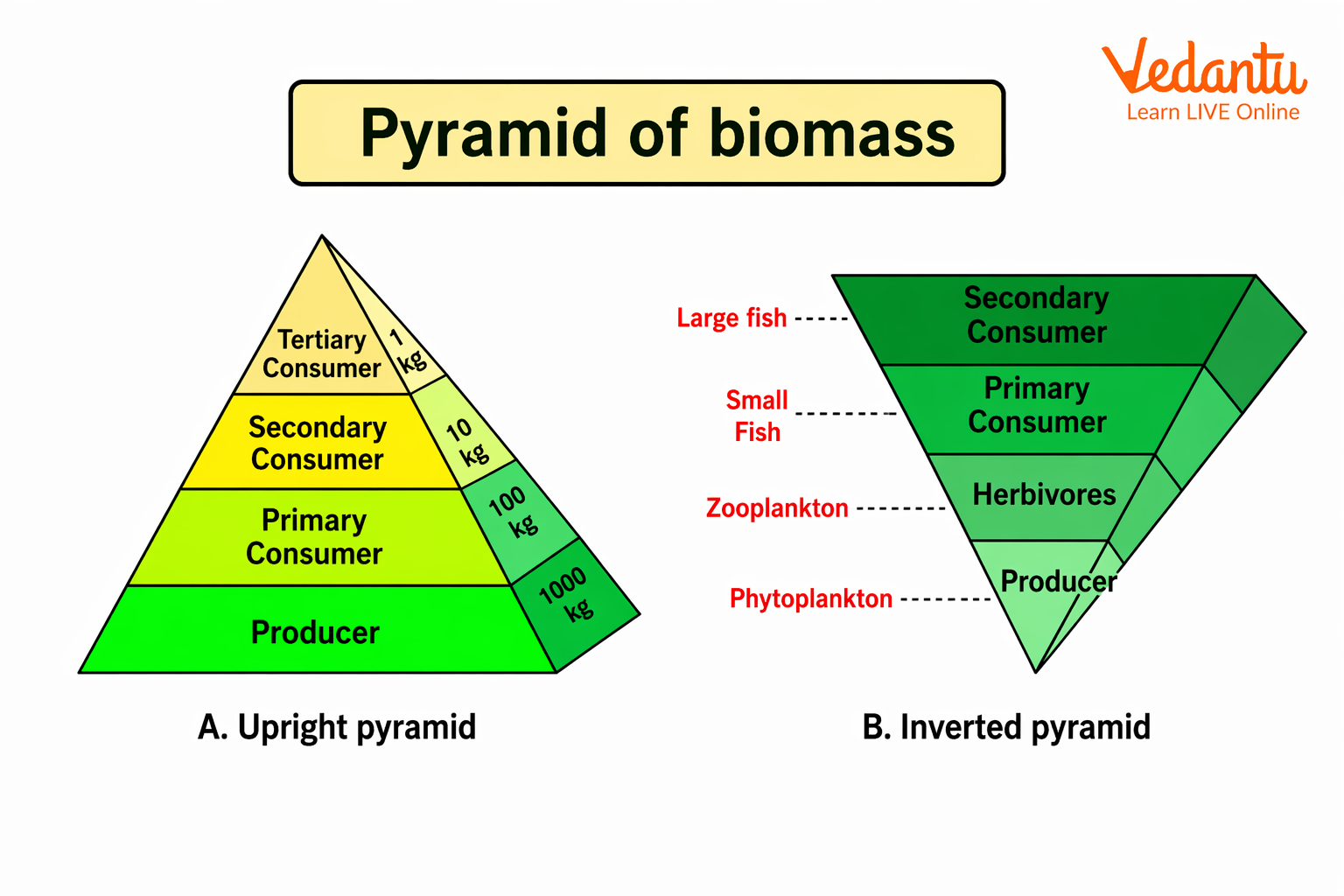
1. In an Upright Pyramid of Biomass:
the base is widest
producers have the maximum biomass
biomass decreases at each higher trophic level
2. In an Inverted Pyramid of Biomass:
producers have lower standing biomass
primary consumers may have greater biomass than producers
upper trophic levels may appear broader at a given moment
Why is the Pyramid of Biomass Important?
The pyramid of biomass is important because it gives a better representation of ecosystem structure than merely counting organisms.
1. Shows Organic Matter Distribution
It helps us understand how much living material is present at each trophic level.
2. Reflects Energy Availability
Since biomass and energy are closely related, it indirectly shows how much energy is available to the next level.
3. Helps Compare Ecosystems
It allows students to compare terrestrial and aquatic ecosystems.
4. Gives Better Ecological Understanding
It provides a more realistic picture than number pyramids in many situations, especially where one large producer supports many smaller consumers.
This is why ecologists often consider biomass pyramids more informative than simple organism counts.
Upright Pyramid of Biomass
The upright pyramid of biomass is the common form found in most terrestrial ecosystems. In this type of pyramid, the biomass is maximum at the producer level and gradually decreases at each successive trophic level.
Why Is It Upright?
Producers such as grasses, herbs, shrubs, and trees usually have the largest amount of biomass because they form the base of the food chain and convert solar energy into chemical energy through photosynthesis.
Herbivores depend on producers, so their biomass is less than that of producers. Carnivores depend on herbivores, so their biomass is even smaller. As we move upward in trophic levels, less biomass is available because:
energy is lost at each level
some energy is used in respiration
some energy is lost as heat
not all biomass is consumed or converted efficiently
Thus, the broad base and narrow top produce an upright shape.
Features of an Upright Pyramid of Biomass
producers have highest biomass
biomass decreases upward
common in grassland, forest, and most terrestrial ecosystems
reflects gradual reduction in available organic matter
Inverted Pyramid of Biomass
The inverted pyramid of biomass is seen when the biomass of producers is lower than that of consumers at a given time. This looks unusual, but it is common in many aquatic ecosystems.
Why It Is Inverted?
In aquatic ecosystems, producers are often microscopic phytoplankton. Although they reproduce rapidly, their standing biomass at any one moment is very small. Zooplankton and fish may collectively have greater biomass than the phytoplankton present at that particular time.
This happens because:
phytoplankton have high reproductive rates
their lifespan is short
they are consumed quickly
they are constantly replaced
So even though the producers have low standing biomass, they can support a much larger consumer biomass over time.
Features of an Inverted Pyramid of Biomass
producer biomass is low at a given moment
consumer biomass may be greater
common in marine and aquatic ecosystems
caused by rapid turnover of producers
“The pyramid of biomass is inverted in aquatic or marine ecosystems”.
This is because phytoplankton, the producers in aquatic systems, have less standing biomass than zooplankton and fish, even though they are extremely productive.
Pyramid of Biomass Example in Grassland Ecosystem
A classic pyramid of biomass example is the grassland ecosystem.
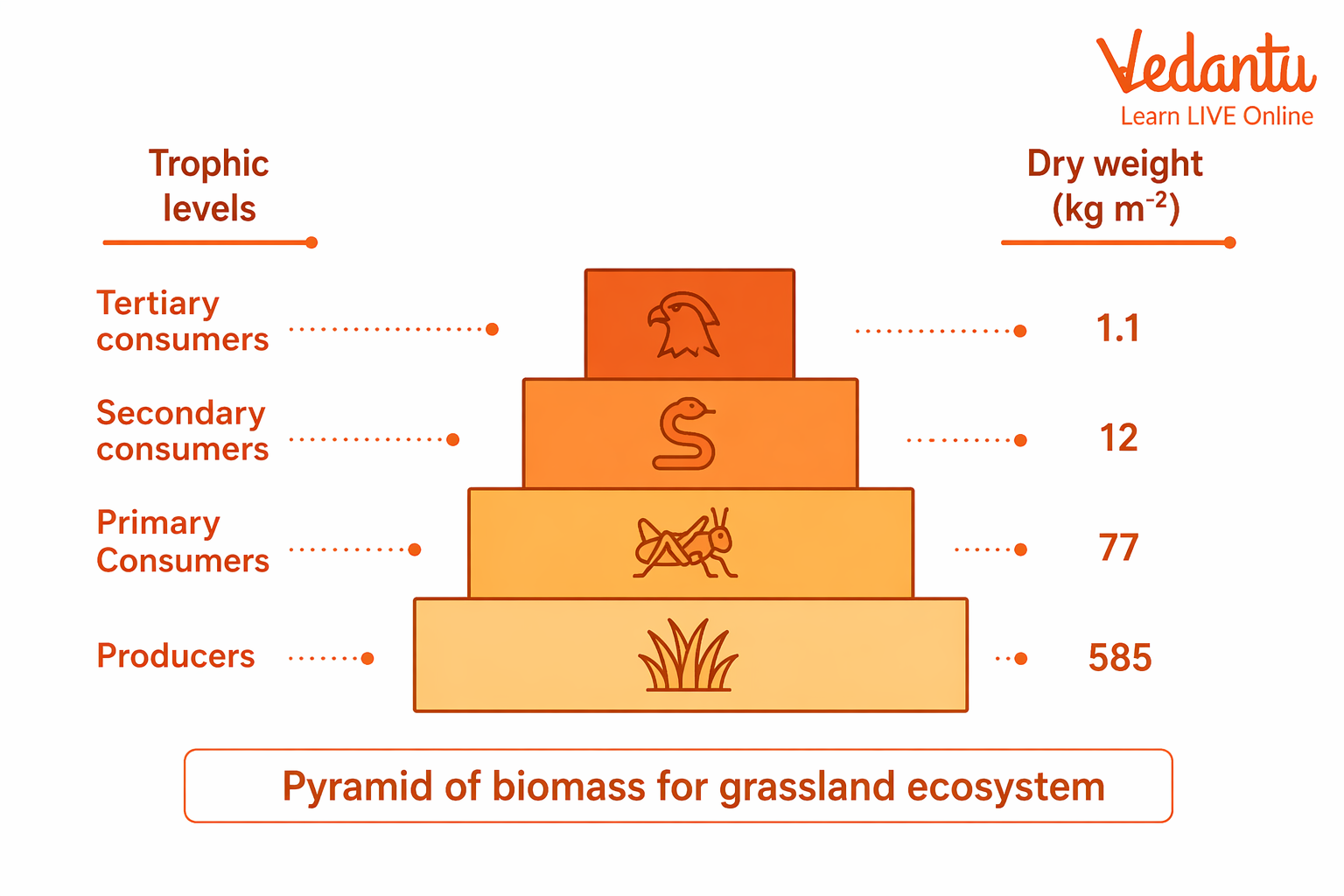
Food Chain Example
Grasses → Rabbits/Rats → Snakes/Lizards/Owls → Eagle
In this ecosystem:
grasses form the producer level and have the largest biomass
herbivores such as rabbits and rats have less biomass
secondary consumers such as snakes, lizards, and owls have still less biomass
tertiary consumers such as eagles have the least biomass
This gives a clearly upright pyramid of biomass.
Why It Is Upright in Grassland?
Grasses occur in huge numbers and collectively have very high biomass. Herbivores depend on them, but only a fraction of plant biomass is transferred upward. The same pattern continues at each higher trophic level.
Pyramid of Biomass Example in Tree Ecosystem
Another important pyramid of biomass example is the tree ecosystem.
Food Chain Example
Oak tree → Caterpillars/Insects → Woodpecker
If we consider number of organisms alone, the number pyramid may look unusual because one large tree can support many insects, and those insects may support fewer birds.
But the biomass pyramid gives a better picture:
the tree has very high biomass
insects collectively have lower biomass than the tree
birds have still less biomass
So, in a tree ecosystem, the pyramid of biomass remains upright even if the number pyramid may not look perfectly upright.
Why is the Biomass Pyramid Better Here?
A single producer like a tree may support hundreds of insects, but the tree’s total biomass is still far greater than that of the insects. This makes the biomass pyramid more realistic than the number pyramid.
Pyramid of Biomass Example in Marine Ecosystem
A very important pyramid of biomass example is the marine ecosystem.
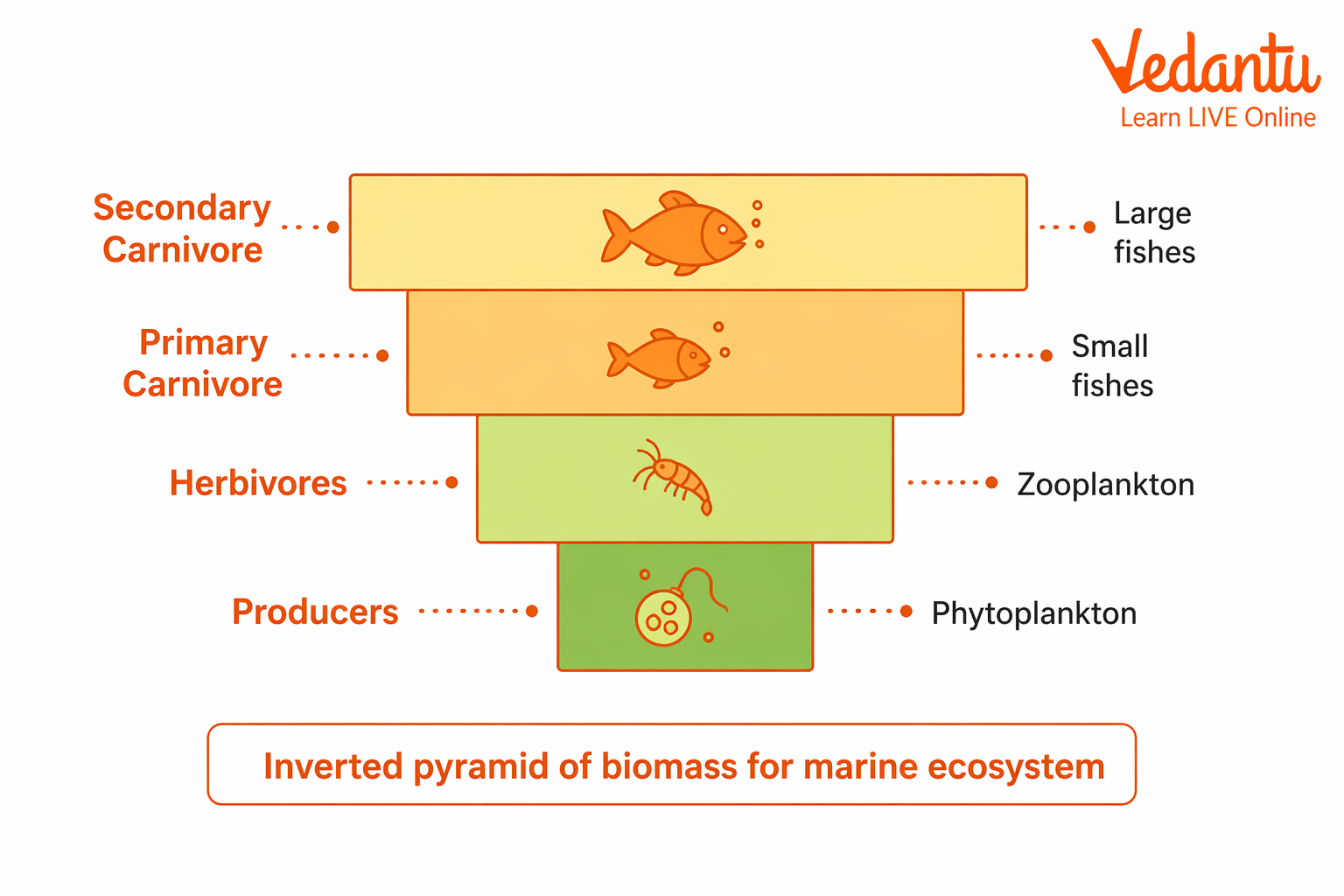
Food Chain Example
Phytoplankton → Zooplankton → Small Fish → Large Fish
At any specific point in time:
phytoplankton have low standing biomass
zooplankton may have greater biomass
small fish may have even greater biomass
large fish may appear to have the maximum biomass
This creates an inverted pyramid of biomass.
Why Does It Looks Inverted?
Phytoplankton are microscopic and short-lived, but they reproduce very rapidly. Their total standing biomass remains low because they are continuously consumed. However, since they are constantly replenished, they can still support a much larger biomass of consumers.
Why Marine Ecosystems Show an Inverted Pyramid of Biomass?
Students often find it confusing that fewer producers can support more consumers. The answer lies in high turnover.
1. Short Lifespan of Phytoplankton
Phytoplankton do not accumulate as standing biomass because they live for short periods.
2. Rapid Reproduction
They multiply very quickly and replenish themselves continuously.
3. Fast Consumption
They are consumed as soon as they are produced, keeping their standing biomass low.
4. Continuous Productivity
Even though the biomass at one moment is low, their total productivity over time is high enough to support higher trophic levels.
So, in marine ecosystems, the low standing biomass of phytoplankton does not mean low productivity.
Distinguish Between Upright and Inverted Pyramid of Biomass
Advantages of Biomass Pyramid Over Number Pyramid
The pyramid of biomass is often considered better than the number pyramid for representing ecosystem structure.
Why It Is Better?
1. Reflects Organic Matter More Accurately
It shows actual living mass, not just the count of individuals.
2. Avoids Misleading Impressions
A single tree may support hundreds of insects, but number alone would give a distorted picture.
3. More Closely Linked to Energy Flow
Since biomass reflects stored energy, it is more useful for understanding trophic relationships.
4. Better for Comparing Ecosystems
It helps compare terrestrial and aquatic systems more meaningfully.
That is why ecologists often prefer the biomass pyramid when discussing energy flow and trophic dynamics.
FAQs on Pyramid of Biomass: Definition, Diagram, Examples, Upright and Inverted Types | NEET Biology
1. In which ecosystem is the pyramid of biomass inverted?
The inverted pyramid of biomass is found in aquatic or marine ecosystems. This happens because the biomass of phytoplankton is low at any one time, but they reproduce very quickly and support a larger biomass of consumers.
2. What is the difference between pyramid of numbers and pyramid of biomass?
The pyramid of numbers shows the number of organisms at each trophic level.
The pyramid of biomass shows the total mass of living organisms at each trophic level.
A biomass pyramid usually gives a more accurate picture of energy flow than a number pyramid.
3. Who gave the concept of energy pyramid?
The concept of the energy pyramid was developed by G. Evelyn Hutchinson and Raymond Lindeman.
4. What are 5 examples of biomass?
Five examples of biomass are:
Trees
Grasses
Crop residues
Algae
Animal waste
5. What is the importance of biomass?
Biomass is important because it:
shows the amount of living matter in an ecosystem
helps explain energy flow in food chains
can be used as a renewable source of energy
6. What are the 4 levels of the energy pyramid?
The four main levels of the energy pyramid are:
Producers
Primary consumers
Secondary consumers
Tertiary consumers
7. Why is a pyramid of biomass always pyramid-shaped?
A biomass pyramid is generally pyramid-shaped because biomass usually decreases from one trophic level to the next as only a small part of energy passes upward.
8. Which level of the pyramid has the most biomass?
The producer level has the most biomass. Producers form the base of the pyramid and support all higher trophic levels.
9. What supplies 80% of all energy in the world?
Fossil fuels supply about 80% of the world’s energy. These include coal, oil, and natural gas.
