



Arabian Horse Characteristics, Personality, and Interesting Facts
The Arabian Horse is one of the oldest and most famous horse breeds in the world. Known for its beauty, intelligence, and incredible endurance, this majestic animal has been loved by humans for thousands of years. Arabian Horse facts reveal that it played an important role in desert life and influenced many modern horse breeds. Let’s explore the Arabian Horse characteristics, habitat, diet, life cycle, and why it is so special.
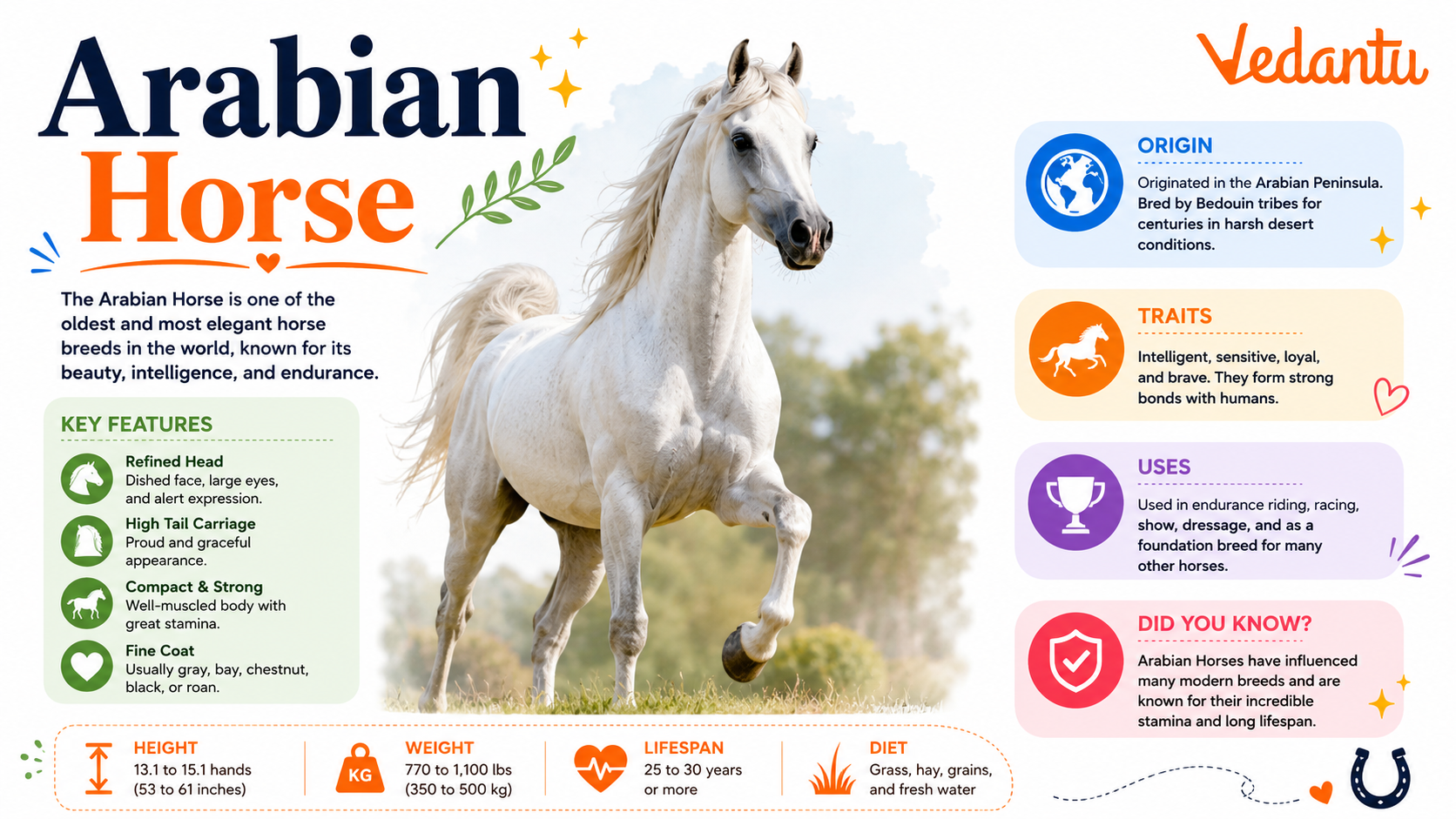
Quick Facts About Arabian Horse
| Feature | Details |
|---|---|
| Common Name | Arabian Horse |
| Scientific Name | Equus ferus caballus |
| Animal Group | Mammal |
| Origin | Arabian Peninsula |
| Height | 14–15 hands (about 1.4–1.5 meters) |
| Weight | 360–450 kg |
| Lifespan | 25–30 years |
| Diet | Herbivore (grass, hay, grains) |
| Use | Riding, racing, endurance sports, shows |
Appearance and Physical Characteristics
- Small, refined head with a slightly dished (curved) face.
- Large, bright eyes showing alertness and intelligence.
- Small ears and wide nostrils for better breathing.
- Arched neck and strong, compact body.
- High tail carriage that gives a proud look.
- Strong legs built for long-distance travel.
Arabian Horse Habitat
The original Arabian Horse habitat was the hot and dry deserts of the Arabian Peninsula. Over time, this breed spread across the world.
- Originally lived in desert regions of Saudi Arabia and nearby areas.
- Adapted to extreme heat and limited water.
- Today found worldwide in farms, ranches, and equestrian centres.
- Can live in different climates with proper care.
Diet and Feeding Habits
The Arabian Horse diet is simple and similar to other domestic horses.
Eats only plant-based food.
Behaviour and Lifestyle
- Highly intelligent and quick learners.
- Very loyal and friendly towards humans.
- Energetic and active.
- Social animals that enjoy company.
- Excellent memory and strong bond with owners.
Life Cycle and Reproduction
- Birth: A baby horse is called a foal. It can stand within hours of birth.
- Young Stage: Foals drink mother’s milk and begin eating grass within weeks.
- Growth: Young horses are called yearlings at one year old.
- Adult Stage: Fully grown by 4–5 years.
- Lifespan: Can live up to 30 years with proper care.
Temperament and Domestic Life
What Makes Arabian Horse Special?
Importance of Arabian Horse
- Used in desert travel by ancient tribes.
- Important in endurance racing competitions.
- Improved other horse breeds through crossbreeding.
- Symbol of pride and heritage in many countries.
Amazing Arabian Horse Facts
- One of the oldest horse breeds, over 4,000 years old.
- Known for its high tail and graceful movement.
- Has excellent lung capacity for desert survival.
- Appears in many ancient paintings and artworks.
- Used in military cavalry in the past.
- Popular in endurance races worldwide.
- Recognised by its distinctive head shape.
Fun Facts for Kids
FAQs on Arabian Horse: Complete Guide to History, Traits, and Care
1. What is an Arabian Horse?
An Arabian Horse is one of the oldest and most famous horse breeds in the world, known for its beauty and endurance.
- Originated in the Arabian Peninsula thousands of years ago
- Recognized for its dished face, arched neck, and high tail carriage
- Known for intelligence, loyalty, and stamina
- Often called the foundation of many modern horse breeds
2. Where did Arabian Horses come from?
The Arabian Horse originated in the hot deserts of the Middle East.
- First bred by Bedouin tribes
- Adapted to survive in harsh desert climates
- Traveled to Europe and America through trade and war
- Influenced many breeds like the Thoroughbred and Andalusian
3. What does an Arabian Horse look like?
An Arabian Horse has a unique and elegant appearance that makes it easy to recognize.
- Small, refined head with a dished profile
- Large, expressive eyes
- High-set tail and graceful movement
- Usually stands between 14 to 15 hands tall
4. Why are Arabian Horses famous?
The Arabian Horse is famous for its beauty, endurance, and influence on other breeds.
- Excellent in endurance riding competitions
- Used in movies and horse shows
- Known for strong bond with owners
- Helped improve many modern sport horses
5. Are Arabian Horses good for kids?
Yes, Arabian Horses can be good for kids when properly trained and supervised.
- Very intelligent and responsive
- Form close bonds with riders
- Best suited for confident or guided young riders
- Require regular training and gentle handling
6. How fast can an Arabian Horse run?
An Arabian Horse can run up to about 40–45 miles per hour, depending on training and health.
- Not the fastest breed, but very steady
- Excellent long-distance runners
- Strong heart and large lung capacity
- Often compete in endurance races over many miles
7. What colors do Arabian Horses come in?
The Arabian Horse comes in several beautiful coat colors.
- Bay
- Gray
- Chestnut
- Black
- Rarely roan
8. How long do Arabian Horses live?
An Arabian Horse usually lives between 25 to 30 years, and sometimes even longer.
- Known for strong genetics
- Often live longer than many other breeds
- Healthy diet and care increase lifespan
- Regular exercise keeps them fit
9. What are Arabian Horses used for?
The Arabian Horse is used for riding, racing, and showing because of its versatility.
- Endurance riding competitions
- Horse shows and beauty contests
- Trail riding and pleasure riding
- Improving other horse bloodlines
10. Why is the Arabian Horse important in history?
The Arabian Horse played an important role in world history and horse breeding.
- Used by Bedouin warriors in desert battles
- Traded across Europe, Asia, and Africa
- Improved famous breeds like the Thoroughbred
- Symbol of pride and wealth in Middle Eastern culture
