

Chaitra Navratri 2026 Calendar Dates, Ghatsthapana Shuabh Muhurat Timings, Rituals, and Significance


Navratri 2026 Calendar: Chaitra Navratri Ghatsthapana Muhurat, Fasting Rules, and Devi Bhogs
Chaitra Navratri 2026 is a powerful nine-night festival dedicated to the worship of Maa Durga, the Divine Feminine. This year, Chaitra Navratri 2026 begins on March 19, 2026, and ends on March 27, 2026. It marks the beginning of the Hindu New Year and is a time for spiritual purification, self-realization, and devotion to Shakti (the cosmic energy of the universe). The festival follows strict rituals and offers a chance to connect deeply with the divine while honoring the strength and power of women.
Know About: Ram Navami 2026 Correct Date, Muhurat, Significance & Celebrations
Along with its spiritual significance, the Chaitra Navratri 2026 calendar helps devotees follow the festival in a structured way by providing day-wise details of each goddess, associated colours, and bhog offerings. This makes it easier to observe rituals, fasting, and daily puja correctly, while staying connected to the deeper meaning of Navratri and honouring the strength and power of the Divine Feminine.
Chaitra Navratri 2026 Date and Ghatsthapana Shubh Muhurat Time
Chaitra Navratri 2026 will begin on March 19, 2026 (Thursday) and will conclude on March 27, 2026 (Friday). According to the Drik Panchang, the festival starts on the Pratipada Tithi of the Shukla Paksha (bright fortnight) of Chaitra month.
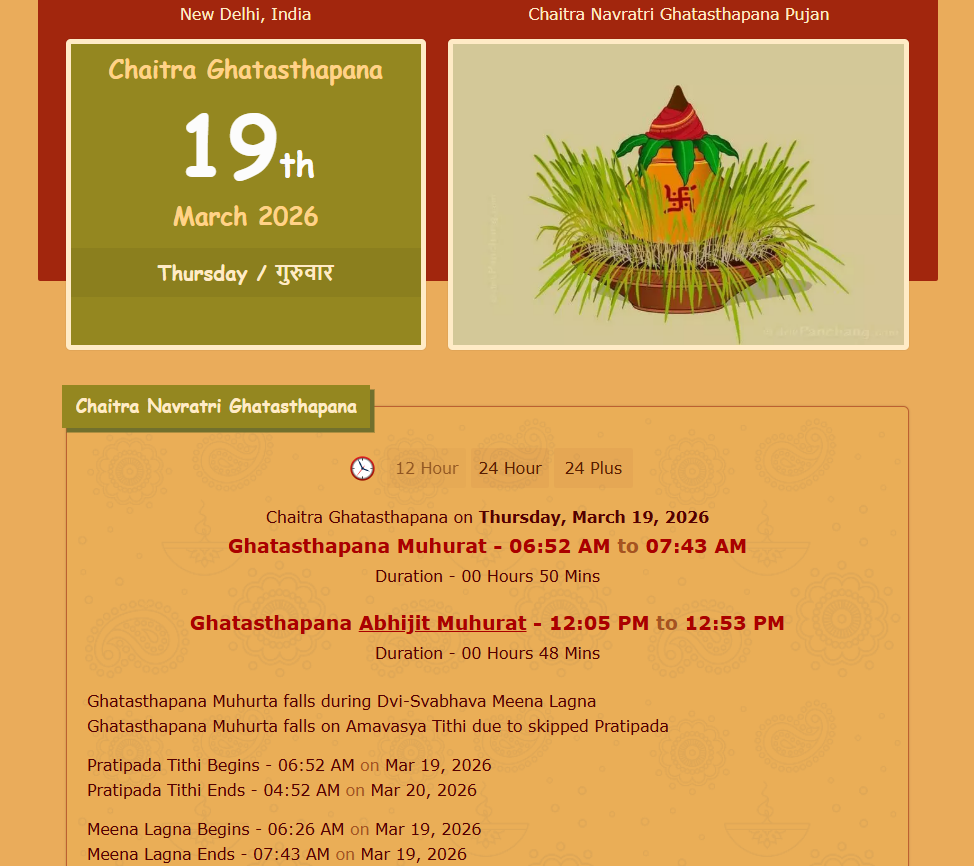
Ghatsthapana Muhurat: 6:52 AM to 07:43 AM (March 19)
Abhijit Muhurat (Alternative timing for Kalash Sthapana): 12:05 PM to 12:53 PM (March 19)
Rama Navami: March 27, 2026
Navratri Parana: March 27, 2026
Drik Panchang Dates and Shubh Muhurat
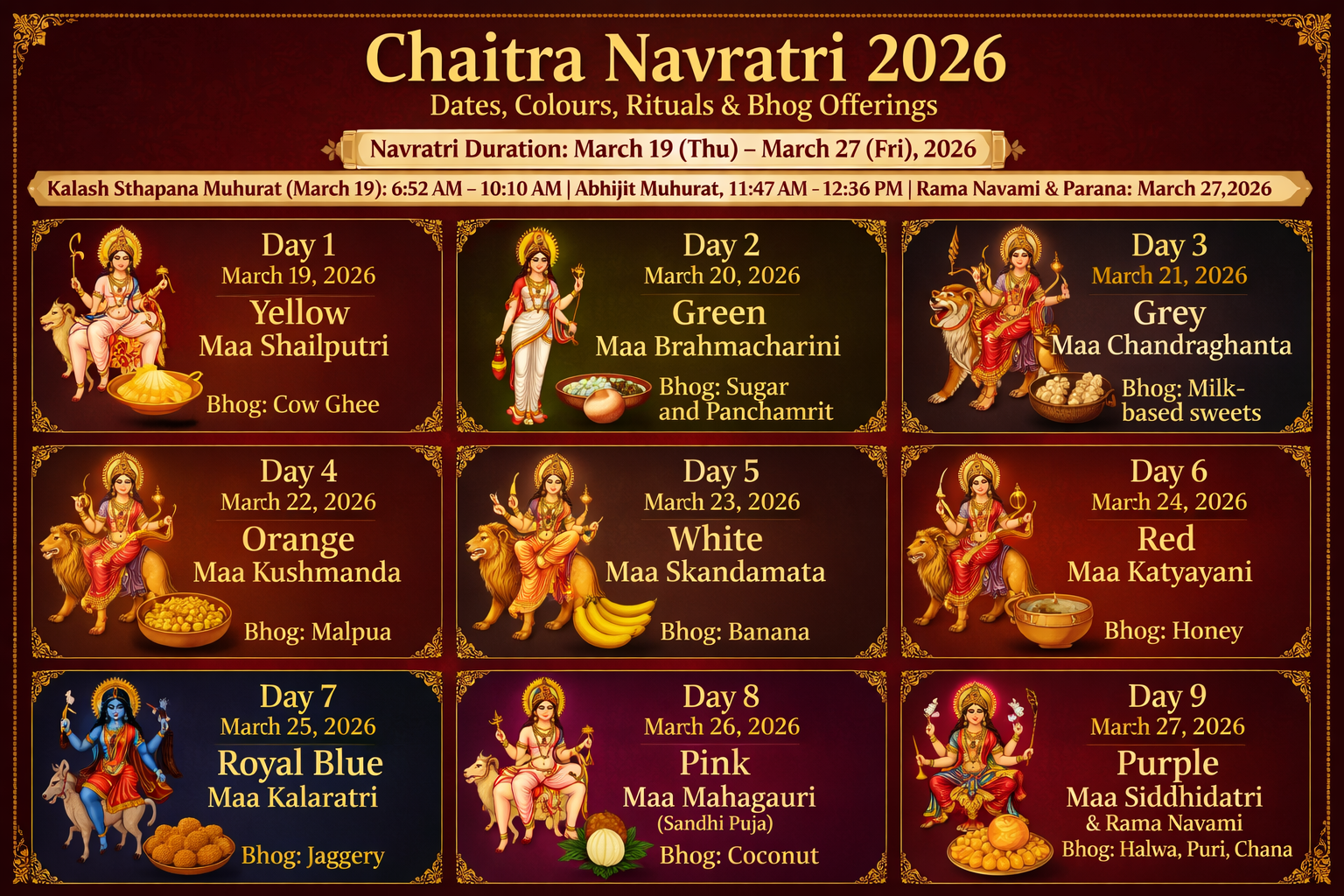
Navratri 2026 Calendar with Colors For Chaitra Naratri: Day-wise Quick List
The Chaitra Navratri 2026 calendar with colours offers a simple day-wise guide to the nine forms of Maa Durga, along with their colours and offerings. From 19 March to 27 March 2026, it helps devotees easily follow daily rituals, fasting, and puja with clarity.
Day 1 (March 19, 2026) - Yellow🟡: Worship Maa Shailputri
Day 2 (March 20, 2026) - Green🟢: Worship Maa Brahmacharini
Day 3 (March 21, 2026) - Grey🩶: Worship Maa Chandraghanta
Day 4 (March 22, 2026) - Orange🟠: Worship Maa Kushmanda
Day 5 (March 23, 2026) - White⚪: Worship Maa Skandamata
Day 6 (March 24, 2026) - Red🔴: Worship Maa Katyayani
Day 7 (March 25, 2026) - Royal Blue🔵: Worship Maa Kalaratri
Day 8 (March 26, 2026) - Pink🩷: Worship Maa Mahagauri (Sandhi Puja)
Day 9 (March 27, 2026) - Purple🟣: Worship Maa Siddhidatri and celebrate Rama Navami
Chaitra Navratri 2026 Nine Days Rituals for Bhog
The festival involves sacred rituals, including Kalash Sthapana on Day 1, and specific offerings (Bhog) for each day of worship. Common offerings include:
Day 1 (Shailputri): Cow Ghee
Day 2 (Brahmacharini): Sugar and Panchamrit
Day 3 (Chandraghanta): Milk-based sweets
Day 4 (Kushmanda): Malpua
Day 5 (Skandamata): Banana
Day 6 (Katyayani): Honey
Day 7 (Kalaratri): Jaggery
Day 8 (Mahagauri): Coconut
Day 9 (Siddhidatri): Halwa, Puri, Chana
Also Check: Navratri 2026 Colours: Day-by-Day Colours Guide with Date, Devi Names, and Significance
Chaitra Navratri 2026 Fasting Rules: Foods to Include and Avoid
Chaitra Navratri 2026 fasting rules are rooted in the principle of self-purification and spiritual discipline. Fasting during this period helps cleanse the body, focusing energy on devotion and meditation. The food restrictions ensure that devotees consume only pure, light, and energizing foods, allowing the body to remain in a heightened state of awareness and connection with the Divine.
Foods Allowed During Chaitra Navratri 2026 Fasting
During Chaitra Navratri 2026, devotees can consume only sattvic (pure and light) foods that help purify the body and mind. The following foods are allowed during the fast:
Vrat-Friendly Grains:
Sabudana (Tapioca)
Kuttu (Buckwheat)
Singhara (Water Chestnut) flour
Samak rice (Barnyard millet)
Fruits and Vegetables:
All fruits, such as apples, bananas, pomegranates, and papaya, are allowed.
Vegetables like sweet potatoes, pumpkin, bottle gourd (lauki), and potatoes are permitted.
Dairy Products:
Milk, curd, paneer, and butter are allowed as they provide essential nutrients and energy.
Kheer or milk-based sweets are common offerings during certain days of Navratri.
Nuts and Dry Fruits:
Almonds, cashews, walnuts, and raisins are excellent sources of energy.
They are easy to digest and provide strength during the fasting period.
Seasoning and Spices:
Use Sendha Namak (Rock Salt) instead of regular salt.
You can also use black pepper, jeera, and cumin for seasoning.
Beverages:
Coconut water, fresh fruit juices, herbal teas, and buttermilk are good for hydration.
Avoid caffeinated drinks or those containing sugar.
Foods to Avoid During Chaitra Navratri 2026 Fasting
Certain foods are prohibited during Chaitra Navratri 2026 as they are considered tamasic (impure) and may interfere with spiritual focus:
Grains and Pulses:
Avoid common grains such as wheat, rice, barley, and oats.
Pulses and lentils are not allowed during the fasting period.
Onions and Garlic:
Onions and garlic are considered tamasic and are forbidden during Navratri fasting.
Non-Vegetarian Food:
Non-vegetarian items, including meat, fish, and eggs, are strictly prohibited during the fasting period.
Alcohol:
Alcohol consumption is forbidden during Chaitra Navratri 2026 as it impedes spiritual practice and focus.
Processed or Junk Food:
Avoid packaged or processed foods like chips, sweets made from refined sugar, and fried snacks as they contain preservatives and harmful additives.
Divine Significance of Chaitra Navratri
Chaitra Navratri is celebrated during the spring season and marks the beginning of the Hindu New Year. It is a time for self-purification and devotion to Shakti (the Divine Feminine). The festival marks the victory of good over evil, and culminates in the birth of Lord Rama, observed on Rama Navami (March 27, 2026).
The nine nights are considered a journey toward spiritual enlightenment, where each day represents a different stage of spiritual awakening.
The Power of Mantras and Meditation
Chaitra Navratri is a spiritually charged period. Chanting mantras such as "Om Aim Hreem Kleem Chamundaye Vichche" helps purify the mind and align oneself with the divine energies of Maa Durga. Meditation can help in focusing on different chakras and creating a connection with the higher self.
Kanya Puja and Navratri Parana
Kanya Puja: Celebrated on Ashtami (March 26) or Navami (March 27), where nine young girls are worshipped as living embodiments of the Goddess.
Navratri Parana: The fast is broken on Navami (March 27) after the Rama Navami puja.
Conclusion:
Chaitra Navratri 2026 offers a unique opportunity for spiritual growth and renewal, guiding us towards personal transformation and devotion. From Ghatsthapana Muhurat to the nine forms of Maa Durga, each aspect of the festival is meant to purify the mind, body, and soul. By following the Navratri colours and performing rituals with dedication, devotees align themselves with the divine energies of Shakti to achieve peace, prosperity, and spiritual perfection.
FAQs on Chaitra Navratri 2026 Calendar Dates, Ghatsthapana Shuabh Muhurat Timings, Rituals, and Significance
1. When is Chaitra Navratri 2026?
Chaitra Navratri 2026 will begin on March 19, 2026 (Thursday) and end on March 27, 2026 (Friday).
2. What are the key rituals during Chaitra Navratri?
The main rituals include Ghatsthapana (Kalash Sthapana), daily offerings, fasting, and chanting mantras. Kanya Puja and Navratri Parana mark the end of the festival.
3. What is the significance of the Navratri colours?
Each day of Chaitra Navratri is associated with a specific colour that represents the different forms of Maa Durga. These colours help set the spiritual tone for each day.
4. What is the fasting rule during Chaitra Navratri?
During Chaitra Navratri, it is advised to avoid grains, pulses, onion, garlic, non-vegetarian food, and alcohol. Sabudana, kuttu flour, fruits, and dairy are allowed.
5. Why is Rama Navami celebrated during Chaitra Navratri?
Rama Navami, celebrated on the final day of Chaitra Navratri, marks the birth of Lord Rama, who embodies dharma (righteousness). It signifies the triumph of good over evil.
6. How can I participate in Chaitra Navratri 2026?
You can participate by performing daily puja rituals, offering specific foods to the Goddess, observing the fasting rules, and chanting mantras for spiritual growth.



