



Brine Shrimp Life Cycle, Habitat, and Why They Matter
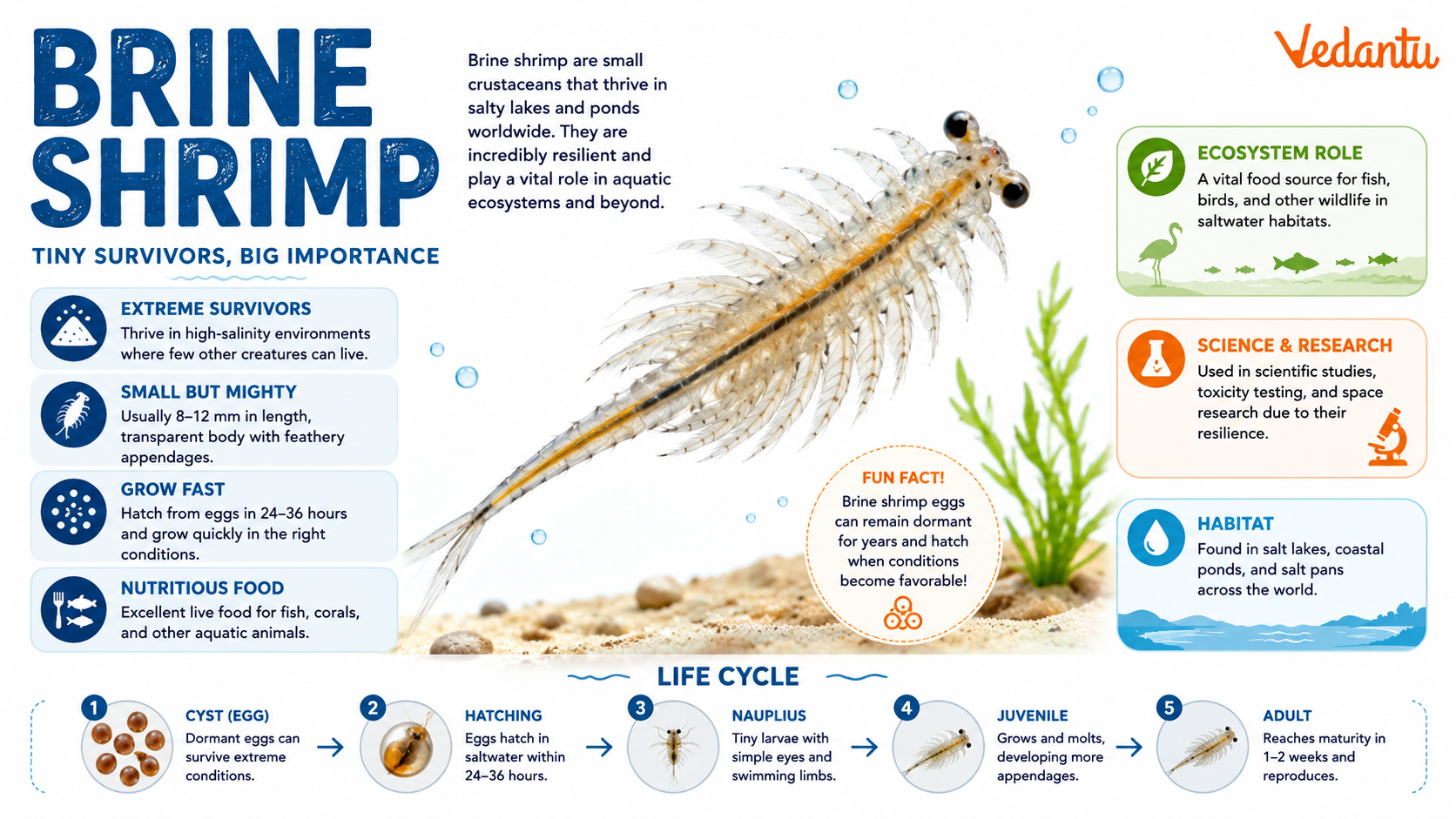
Quick Facts and Statistics
| Feature | Details |
|---|---|
| Common Name | Brine Shrimp |
| Scientific Name | Artemia |
| Animal Group | Crustacean (related to crabs and lobsters) |
| Size | Up to 1–2 cm long |
| Habitat | Salt lakes, salt ponds, and brine pools |
| Diet | Algae and microscopic organisms |
| Lifespan | Several months (depending on conditions) |
| Special Feature | Eggs can survive extreme drying and freezing |
Appearance and Physical Characteristics
- Body Shape: Long, narrow, and soft-bodied.
- Colour: Usually transparent, but can turn pink or red due to algae in their diet.
- Legs: 11 pairs of leaf-like legs used for swimming and feeding.
- Eyes: Two large compound eyes on stalks.
- Size: Very small – about the size of a grain of rice.
Habitat and Distribution
- Salt lakes like the Great Salt Lake (USA).
- Salt pans and evaporation ponds.
- Coastal lagoons with high salinity.
- Inland saltwater pools in many parts of the world.
Brine shrimp prefer warm climates and high salinity levels. Their ability to live in such harsh conditions protects them from many predators.
Diet and Feeding Habits
- Microscopic algae
- Bacteria
- Organic particles in water
They are filter feeders. Their legs move constantly to create water currents, trapping tiny food particles and guiding them to their mouth.
Behaviour and Lifestyle
- Swim upside down most of the time.
- Move by beating their leaf-like legs rhythmically.
- Live in large groups in salt lakes.
- Very active in warm water.
Brine Shrimp Life Cycle
- Egg Stage (Cyst): Females produce special eggs called cysts that can survive drying, freezing, and lack of oxygen.
- Nauplius Stage: When placed in water, the egg hatches into a tiny larva called a nauplius.
- Juvenile Stage: The shrimp grows and develops more legs and body segments.
- Adult Stage: Fully grown brine shrimp reproduce and continue the cycle.
What Makes Brine Shrimp Special?
Their eggs survive extreme heat, cold, and dryness.
They live in water saltier than the ocean.
They grow quickly from larvae to adults.
Widely used in aquariums and fish farming.
Importance and Role in Nature
Provide food for birds like flamingos and many fish.
Used worldwide to feed baby fish and prawns.
Control algae levels in salt lakes.
Used in biology experiments and space studies.
Amazing Brine Shrimp Facts
- They are often sold as “sea monkeys” in toy kits.
- Their eggs can travel by wind to new salt lakes.
- They can survive in water up to 10 times saltier than seawater.
- They do not need much oxygen to survive.
- Females can produce hundreds of eggs.
- They have been sent to space for scientific experiments.
- Their population can grow very quickly in the right conditions.
Fun Facts for Kids
FAQs on Brine Shrimp: Fascinating Facts About These Tiny Survivors
1. What are brine shrimp?
Brine shrimp are tiny saltwater crustaceans that live in very salty lakes and seas around the world.
- They belong to the group called Artemia.
- They are often known as Sea Monkeys when sold as pets.
- They live in salt lakes, salt ponds, and places like the Great Salt Lake.
- They are small, usually about 1 cm long.
- They are an important part of the aquatic food chain.
2. Where do brine shrimp live?
Brine shrimp live in very salty water where most other animals cannot survive.
- Found in salt lakes and salt flats.
- Common in the Great Salt Lake (USA) and the Dead Sea region.
- Prefer water with high salinity levels.
- Cannot live in regular freshwater for long.
- Their habitat protects them from many predators.
3. What do brine shrimp eat?
Brine shrimp eat tiny plants and microorganisms found in salty water.
- They feed on algae.
- They eat microscopic plankton.
- They filter food using their feathery legs.
- They help keep the water ecosystem balanced.
- They are important food for fish and birds.
4. How do brine shrimp hatch?
Brine shrimp hatch from tiny eggs called cysts when placed in salty water.
- The eggs are known as brine shrimp cysts.
- They can stay dry for years before hatching.
- When added to saltwater, they hatch within 24–48 hours.
- Baby brine shrimp are called nauplii.
- This process makes them popular for science experiments.
5. Why are brine shrimp important?
Brine shrimp are important because they support many animals and ecosystems in salty environments.
- They are a key food source for fish and migratory birds.
- Used in aquaculture to feed baby fish.
- Help scientists study biology and life cycles.
- Support the economy through fish farming.
- Play a big role in the salt lake ecosystem.
6. Are brine shrimp the same as Sea Monkeys?
Sea Monkeys are a type of brine shrimp specially marketed as pets.
- Sea Monkeys are a brand name for Artemia.
- They hatch from dried brine shrimp eggs.
- They are sold in kits for kids.
- They grow in small tanks with saltwater.
- They are easy to care for and fun to watch.
7. How long do brine shrimp live?
Brine shrimp usually live for a few weeks to a few months depending on conditions.
- Average lifespan is about 1 to 3 months.
- Clean water and proper salinity help them live longer.
- They grow quickly after hatching.
- Temperature affects their life cycle.
- Good care increases survival rates in tanks.
8. Can you keep brine shrimp as pets?
Yes, brine shrimp can be kept as easy and fun pets for kids and beginners.
- They need a small tank with saltwater.
- Require light and moderate room temperature.
- Need tiny amounts of algae-based food.
- Popular in classroom science projects.
- Low maintenance compared to other aquarium pets.
9. How big do brine shrimp grow?
Brine shrimp grow to about 1 centimeter long when fully developed.
- Babies (nauplii) are very tiny.
- Adults reach about 8–10 millimeters.
- They have long antennae and many legs.
- Their transparent bodies let you see inside.
- Size depends on water quality and food.
10. What makes brine shrimp unique?
Brine shrimp are unique because they can survive extreme salty conditions and dry periods.
- Their eggs can survive without water for years.
- They tolerate very high salinity.
- They reproduce quickly in good conditions.
- Used in scientific research and space experiments.
- They are one of the toughest aquatic invertebrates.
