



What Do Cormorants Eat and Where Do They Live?
Cormorants are skilled water birds famous for their amazing diving abilities. You can often spot them sitting on rocks or trees with their wings spread wide to dry in the sun. These birds are excellent swimmers and expert fish catchers. Found near rivers, lakes, wetlands, and oceans, cormorants play an important role in aquatic ecosystems. Let’s explore interesting Cormorant facts, habitat, diet, life cycle, and special characteristics in this fun learning guide!
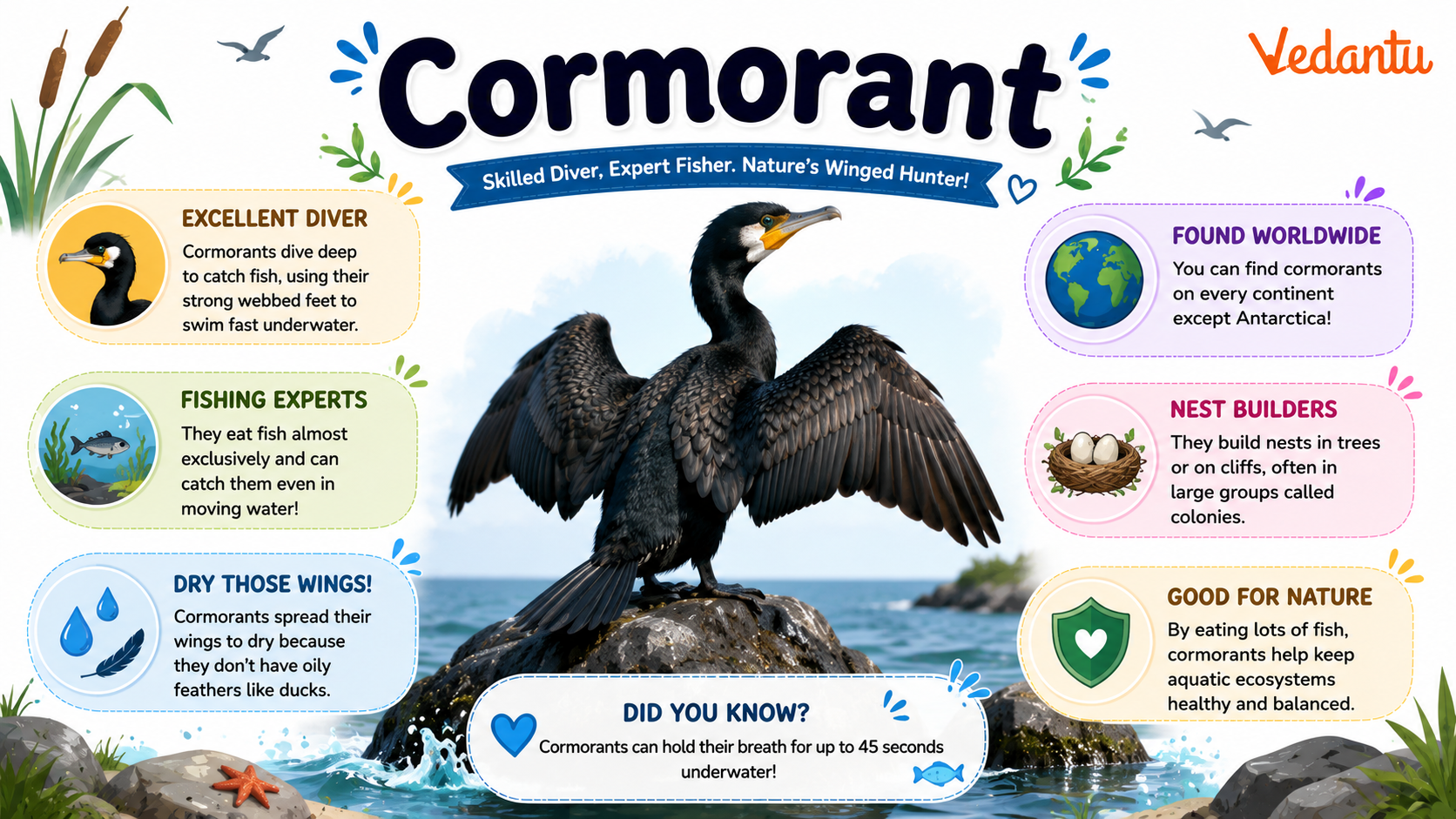
Quick Facts About Cormorant
| Feature | Details |
|---|---|
| Common Name | Cormorant |
| Scientific Family | Phalacrocoracidae |
| Animal Group | Bird |
| Size | 70–100 cm (depending on species) |
| Wingspan | 120–160 cm |
| Weight | 1–5 kg |
| Diet | Carnivore (mainly fish) |
| Habitat | Lakes, rivers, wetlands, coasts |
| Lifespan | 6–20 years |
| Conservation Status | Mostly Least Concern (varies by species) |
Appearance and Physical Characteristics
- Colour: Usually black or dark brown feathers.
- Beak: Long and hooked at the tip to grip slippery fish.
- Neck: Long and flexible.
- Feet: Fully webbed toes for fast swimming.
- Eyes: Sharp vision both above and below water.
Cormorant Habitat and Distribution
- Live near freshwater lakes and rivers.
- Found in coastal areas and seas.
- Prefer places with plenty of fish.
- Nest on cliffs, trees, rocky islands, or mangroves.
The Cormorant habitat usually includes calm waters where they can easily dive and catch fish. Some species migrate during winter, while others stay in the same area all year.
Diet and Feeding Habits
Mostly fish, but sometimes frogs, small eels, and aquatic insects.
Dive underwater and chase fish using strong legs.
Can dive up to 45 meters deep!
Important predators that control fish populations.
The Cormorant diet makes them excellent underwater hunters. They use their powerful webbed feet to swim and catch prey quickly with their sharp beak.
Behaviour and Lifestyle
- Often seen sitting with wings spread wide.
- Can live alone or in large colonies.
- Active during the day (diurnal).
- Strong swimmers but less graceful walkers on land.
- Communicate with low grunts and croaking sounds.
Flight Adaptations
- Long wings help them glide over water.
- Strong chest muscles power their flight.
- Lightweight bones reduce body weight.
- Webbed feet fold back during flight to reduce air resistance.
Though they are excellent swimmers, cormorants are also strong fliers and can travel long distances between feeding and nesting areas.
Cormorant Life Cycle
- Egg Stage: Female lays 2–6 pale blue eggs in a nest.
- Incubation: Both parents keep eggs warm for about 3–4 weeks.
- Chicks: Born helpless and depend on parents for food.
- Fledgling Stage: Young birds learn to fly after 5–6 weeks.
- Adult: Start breeding at 2–3 years of age.
What Makes Cormorant Special?
Importance and Role in Nature
Amazing Cormorant Facts
- There are about 40 different species of cormorants.
- Some cultures trained cormorants to help catch fish.
- They can stay underwater for over a minute.
- Their eyes have a special membrane for underwater vision.
- They swallow fish whole.
- They often perch high to watch for prey.
Fun Facts for Kids
FAQs on Cormorant Bird: Identification, Habitat, and Behavior
1. What is a cormorant?
A cormorant is a large water bird that is famous for diving underwater to catch fish.
- Belongs to the Phalacrocoracidae family of seabirds
- Found near oceans, lakes, rivers, and wetlands
- Has dark feathers and a long neck
- Often seen drying its wings in the sun
- Also called a seabird or water bird
2. Where do cormorants live?
Cormorants live near water all around the world, especially in coastal and freshwater areas.
- Found on every continent except Antarctica
- Live near coasts, lakes, rivers, marshes, and islands
- Build nests on cliffs, trees, or rocky shores
- Prefer places with plenty of fish
3. What do cormorants eat?
Cormorants mainly eat fish, which they catch by diving underwater.
- Primary food: fish
- Sometimes eat frogs, small eels, and crustaceans
- Use their sharp, hooked beak to grab prey
- Swallow fish whole after catching it
4. How do cormorants catch fish?
Cormorants catch fish by diving and swimming underwater with strong feet.
- Dive from the water’s surface
- Use powerful webbed feet to swim
- Have excellent underwater vision
- Can dive up to 45 meters (150 feet) deep
5. Why do cormorants spread their wings?
Cormorants spread their wings to dry their feathers after diving.
- Their feathers are not fully waterproof
- Wet feathers help them dive deeper
- After fishing, they stand with wings open to dry in the sun
- This pose is a common cormorant behavior
6. Are cormorants good swimmers?
Yes, cormorants are excellent swimmers and expert divers.
- Use strong webbed feet for speed
- Swim fully underwater to chase fish
- Have streamlined bodies for diving
- Better swimmers than flyers
7. How big is a cormorant?
Cormorants are medium to large birds with long necks and wide wingspans.
- Length: about 70–100 cm (28–39 inches)
- Wingspan: up to 130 cm (51 inches)
- Weight: around 1.5–5 kg
- Size depends on the species, such as the Great Cormorant
8. What is the lifespan of a cormorant?
Cormorants can live for many years in the wild if they stay safe from predators.
- Average lifespan: 10–15 years
- Some live over 20 years
- Main threats include predators, pollution, and habitat loss
- Protected in many countries
9. Do cormorants migrate?
Some cormorants migrate, while others stay in the same place all year.
- Migration depends on climate and food supply
- Northern populations fly south in winter
- Travel in groups called flocks
- Follow rivers and coastlines during migration
10. Are cormorants endangered?
Most cormorant species are not endangered, but some face environmental challenges.
- The Great Cormorant is listed as Least Concern
- Threats include water pollution and habitat destruction
- Protected under wildlife conservation laws in many regions
- Healthy fish populations help them survive
