



Goose Bird Habitat, Diet, Migration Patterns, and Interesting Facts
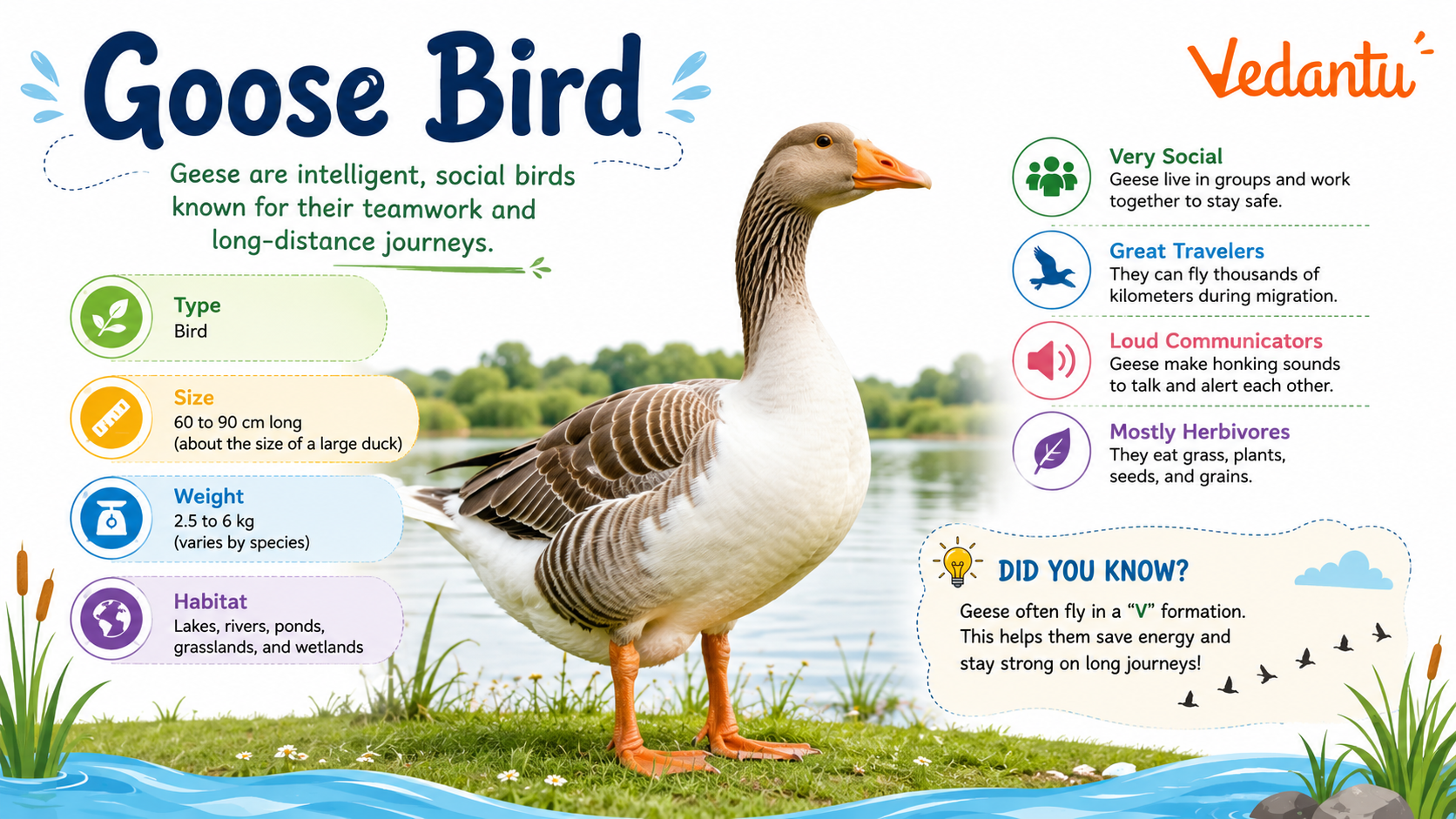
Quick Facts About Goose Bird
| Feature | Details |
|---|---|
| Common Name | Goose |
| Scientific Name | Genus Anser and Branta |
| Animal Group | Bird |
| Habitat | Lakes, rivers, wetlands, grasslands |
| Diet | Grass, grains, aquatic plants |
| Lifespan | 10–25 years (depending on species) |
| Movement | Walks, swims, flies long distances |
| Young One | Gosling |
| Sound | Honk |
Appearance and Physical Characteristics
- Medium to large-sized water bird.
- Long neck and strong, broad wings.
- Webbed feet for swimming.
- Flat, wide beak for grazing and filtering food.
- Feathers usually white, grey, brown, or black depending on species.
Goose Bird Habitat and Distribution
Goose bird habitat includes freshwater lakes, rivers, ponds, wetlands, and open grasslands. Some species also live in Arctic and temperate regions.
- Found in North America, Europe, Asia, and parts of Africa.
- Prefer areas close to water bodies.
- Migrate to warmer regions during winter.
Diet and Feeding Habits
The Goose bird diet mainly consists of plant-based food, making it a herbivore.
- Grass and leaves
- Grains and seeds
- Aquatic plants
- Occasionally small insects
Behaviour and Lifestyle
- Highly social birds that live in groups.
- Very protective of their young.
- Known for flying in a V-shaped formation.
- Communicate using loud honking sounds.
Goose Bird Life Cycle
- Egg Stage: Female lays 2–8 eggs in a nest near water.
- Incubation: Eggs hatch after about 25–30 days.
- Gosling: Baby geese can walk and swim within a day of hatching.
- Juvenile: Young birds learn to fly in about 2–3 months.
- Adult: Become fully mature and capable of migration.
Flight Adaptations
- Large, powerful wings for long-distance flying.
- Lightweight bones to reduce body weight.
- Strong chest muscles for flapping.
- Excellent navigation skills during migration.
Sound or Call
The goose bird makes a loud “honk” sound. This call is used to:
- Communicate during flight.
- Warn others of danger.
- Stay connected with the group.
Types of Geese
Black head and neck with white chin strap.
Mostly white with black wing tips.
Large grey body and orange beak.
Famous for flying over the Himalayas.
Importance and Role in Nature
Amazing Goose Bird Facts
- Geese can fly as high as 9,000 metres.
- Some species travel over 3,000 km during migration.
- They mate for life in many species.
- Bar-headed geese can fly over Mount Everest region.
- They remember routes and return to the same nesting place.
- Geese are known to be very loyal partners.
Interesting Facts About Goose Bird
Fun Facts for Kids
- A baby goose is called a gosling.
- Geese hiss when they feel threatened.
- They waddle while walking on land.
- Geese love grazing in grassy fields.
- They are excellent family birds and care deeply for their young.
FAQs on Goose Bird: Complete Guide to Species, Habitat, and Lifestyle
1. What is a goose bird?
A goose bird is a large waterbird that belongs to the duck family (Anatidae) and is known for living near water.
- Geese are bigger than ducks but smaller than swans.
- They have long necks, webbed feet, and strong wings.
- They are found in lakes, rivers, ponds, and wetlands.
- Common types include the Canada Goose and Snow Goose.
2. Where do geese live?
Geese live in places with plenty of water and open land for feeding.
- Near lakes, rivers, ponds, and marshes.
- On farms, grasslands, and parks.
- In North America, Europe, and Asia.
- Some species migrate between cold and warm regions.
3. What do geese eat?
Geese are mostly plant-eaters, meaning they are herbivores.
- Grass and leaves
- Seeds and grains
- Aquatic plants
- Sometimes small insects
4. Why do geese fly in a V formation?
Geese fly in a V formation to save energy and travel long distances more easily.
- Each bird helps reduce wind resistance for the one behind it.
- They take turns leading the group.
- This formation helps them during migration.
- It also keeps the flock organized and safe.
5. Do geese migrate?
Yes, many species of geese migrate to find warmer weather and food.
- They travel south in winter.
- They return north in spring to breed.
- Migration routes can be thousands of miles long.
- Examples include the Canada Goose migration.
6. How long do geese live?
Geese can live for many years, especially in safe environments.
- Wild geese live about 10–20 years.
- Domestic geese may live even longer.
- They live longer when protected from predators.
- Healthy diet and habitat increase lifespan.
7. What are baby geese called?
Baby geese are called goslings.
- They hatch from eggs.
- Goslings can walk and swim soon after birth.
- Parent geese protect them carefully.
- A group of geese on land is called a gaggle.
8. Are geese friendly or aggressive?
Geese can be friendly but may act aggressive if they feel threatened.
- They protect their nests and goslings.
- They may hiss or flap their wings.
- Domestic geese can become used to humans.
- It is best to keep a safe distance from wild geese.
9. What is the difference between a goose and a duck?
The main difference between a goose and a duck is their size and neck length.
- Geese are larger than ducks.
- Geese have longer necks.
- Ducks usually quack, while geese honk.
- Both belong to the waterfowl family.
10. Why do geese honk?
Geese honk to communicate with each other and stay connected.
- They warn others of danger.
- They keep the flock together during flight.
- They call their mates and goslings.
- Honking is a key part of goose communication.
