



Why Do Fish Swim in Groups? Meaning, Benefits, and Fun Facts
A Group of Fish moving together in water is one of the most fascinating sights in nature. Whether in oceans, rivers, or lakes, fish often swim in large numbers for safety and survival. These groups show amazing coordination and teamwork. In this page, explore interesting Group of Fish facts, their behaviour, habitat, diet, and why swimming together is so important for them.
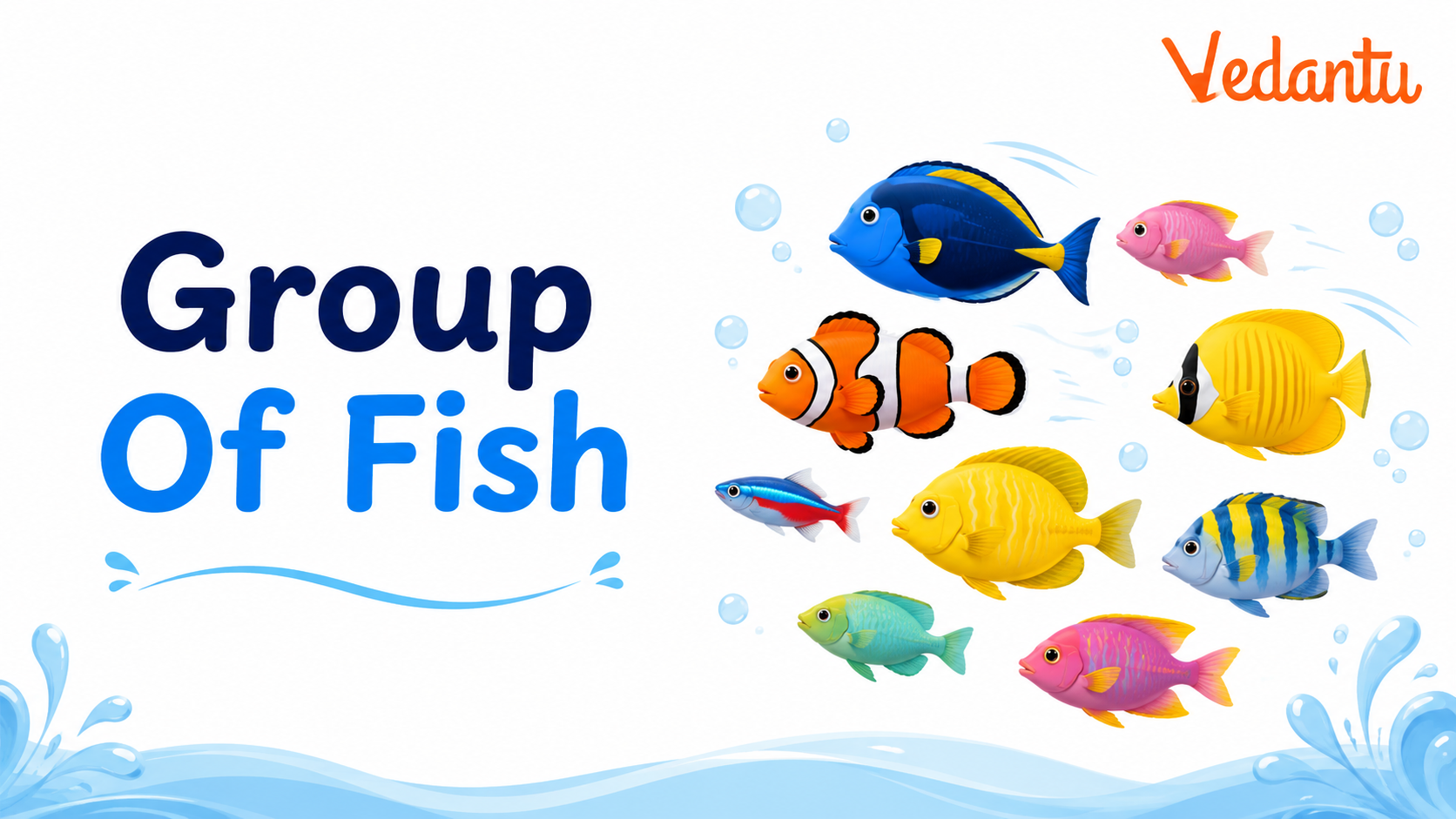
Quick Facts About a Group of Fish
| Feature | Details |
|---|---|
| Common Name | Group of Fish |
| Other Names | School (when swimming in coordination), Shoal (loose group) |
| Animal Group | Fish (Aquatic Vertebrates) |
| Habitat | Oceans, Seas, Rivers, Lakes, Ponds |
| Diet | Plankton, plants, insects, small fish (varies by species) |
| Main Purpose | Safety, easier feeding, better movement |
| Group Size | From a few fish to thousands or even millions |
What Is a Group of Fish Called?
- Shoal: A group of fish swimming together in a loose formation.
- School: A group of fish swimming in the same direction in a well-organised way.
- All schools are shoals, but not all shoals are schools.
Appearance and Physical Characteristics
- Fish in a group are usually of the same species.
- They are often similar in size, colour, and shape.
- Many have streamlined bodies to swim quickly.
- Shiny scales help them reflect light and confuse predators.
- They use special sense organs called the lateral line to detect movement in water.
Group of Fish Habitat
- Found in freshwater (rivers, lakes, ponds).
- Common in saltwater (oceans and seas).
- Some species prefer shallow waters near coral reefs.
- Others live in deep ocean zones.
- Water temperature and food availability decide where they form groups.
Group of Fish Diet and Feeding Habits
- Diet depends on the species.
- Some eat plankton and tiny sea plants.
- Some eat insects and small crustaceans.
- Predatory fish may hunt smaller fish together.
- Swimming in groups helps them find food easily.
Behaviour and Lifestyle
Predators find it hard to target one fish in a moving group.
Fish reduce water resistance by swimming close together.
Schools can turn instantly without crashing into each other.
They sense vibrations and movement through the lateral line.
Life Cycle of Fish in a Group
- Egg Stage: Female fish lay eggs in water.
- Larva Stage: Tiny fish hatch and float or swim.
- Juvenile Stage: Young fish start forming small groups.
- Adult Stage: Mature fish join large shoals or schools.
The Group of Fish life cycle depends on the species, but grouping behaviour usually begins at a young stage for protection.
What Makes a Group of Fish Special?
Importance of a Group of Fish in Nature
- Maintain balance in the aquatic food chain.
- Provide food for larger animals like whales and seabirds.
- Help control populations of plankton and insects.
- Support fishing industries and human food supply.
Amazing Group of Fish Facts
Interesting Facts About a Group of Fish
- Schools may split and join depending on danger.
- Different species usually do not mix in the same school.
- Light reflection from scales makes them look shiny.
- Some fish group together only during breeding season.
Fun Facts for Kids
- A group of fish is called a “school”!
- Fish do not bump into each other while swimming.
- They can change direction together like dancers.
- Some fish groups look like underwater fireworks.
- They work as a team to stay safe.
FAQs on Group of Fish: What Do You Call a School of Fish?
1. What is a group of fish called?
A group of fish is called a school or a shoal.
- School of fish – When fish swim together in the same direction in an organized way.
- Shoal of fish – A loose group of fish swimming together.
- These terms are common in marine life, ocean animals, and aquatic ecosystems.
2. Why do fish swim in groups?
Fish swim in groups to stay safe and survive better in the wild.
- Protection from predators like sharks and larger fish.
- Easier to find food together.
- Better chances of finding a mate.
- Save energy by swimming in formation.
3. What is the difference between a shoal and a school of fish?
A shoal is a loose group of fish, while a school swims in a coordinated pattern.
- Shoal – Fish stay together but move freely.
- School – Fish swim in the same direction in a synchronized way.
- Schools show advanced group behavior and team movement.
4. How many fish are in a school?
A school of fish can have a few fish or even thousands.
- Small groups may have 10–20 fish.
- Large ocean schools can include millions of fish.
- Examples include sardines, herring, and anchovies.
5. Do all fish live in groups?
No, not all fish live in groups.
- Some fish prefer living alone, called solitary fish.
- Examples include certain betta fish and groupers.
- Others form schools or shoals for safety.
6. What are some examples of fish that swim in schools?
Many ocean fish are known for swimming in schools.
- Sardines
- Herring
- Tuna
- Mackerel
7. How do fish stay together in a school?
Fish use their senses to stay close and move together.
- They sense water movement with a special organ called the lateral line.
- They watch nearby fish to match speed and direction.
- They react quickly to changes in movement.
8. Where can we see a group of fish?
Groups of fish can be seen in oceans, rivers, lakes, and aquariums.
- Coral reefs in the ocean.
- Freshwater rivers and lakes.
- Public aquariums.
9. What is the benefit of schooling behavior in fish?
Schooling behavior helps fish survive and grow.
- Reduces the risk of being eaten by predators.
- Increases success in finding food sources.
- Improves chances of reproduction.
- Saves energy during long swims.
10. Is a group of fish called a herd?
No, a group of fish is not called a herd.
- The correct terms are school or shoal.
- Herd is used for land animals like cows or elephants.
- Fish are aquatic animals that form schools in water.
