



Why the Indri Lemur’s Song, Habitat, and Conservation Matter
The Indri Lemur is one of the most fascinating primates found in the rainforests of Madagascar. Known for its powerful songs and adorable teddy-bear face, the indri is the largest living lemur in the world. These tree-dwelling animals spend most of their lives high in the forest canopy. Learning about Indri Lemur facts, habitat, diet, and life cycle helps us understand why this rare animal is so special and why it needs protection.
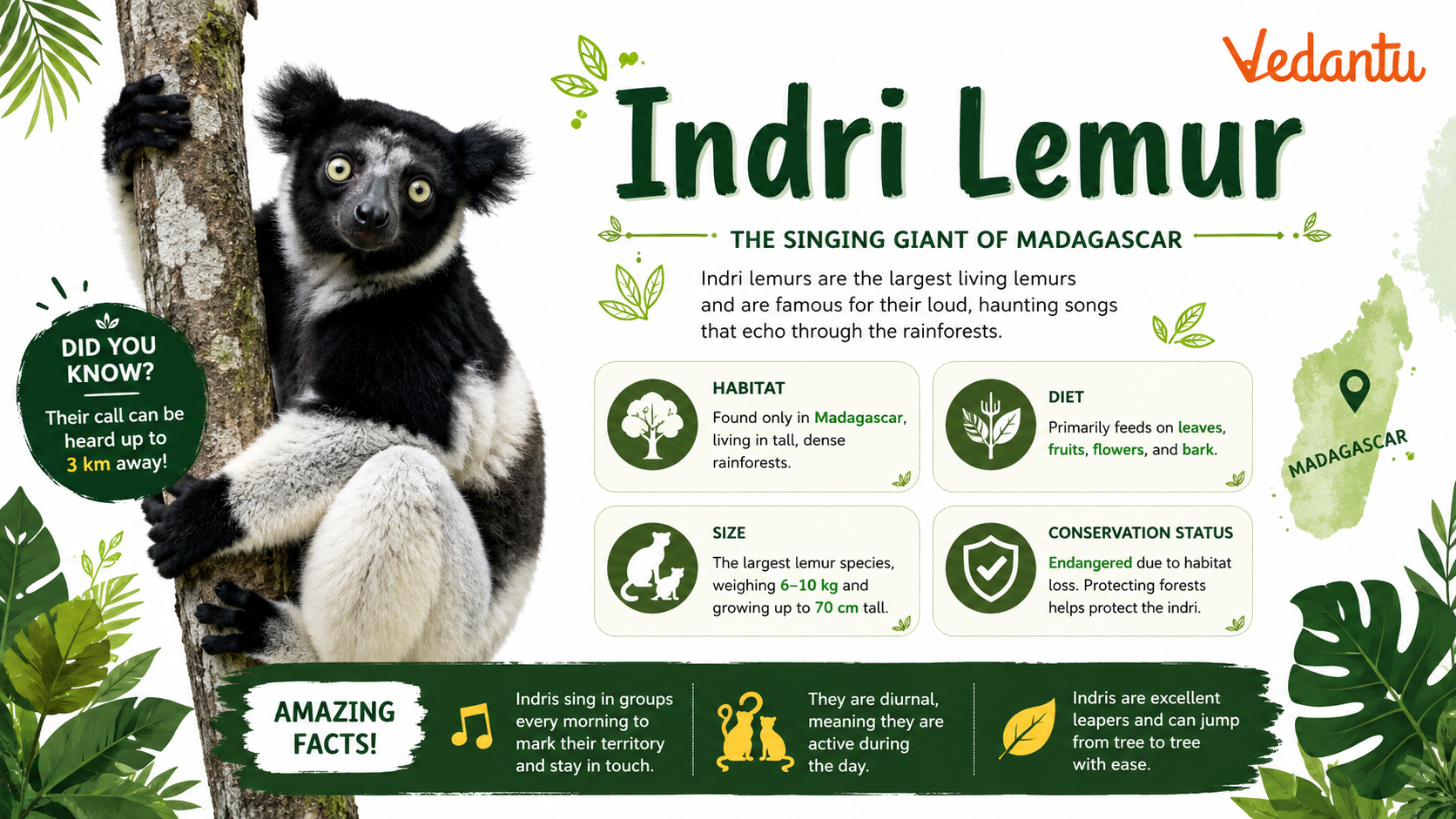
Quick Facts and Statistics
| Feature | Details |
|---|---|
| Common Name | Indri Lemur |
| Scientific Name | Indri indri |
| Animal Group | Mammal (Primate) |
| Size | About 60–70 cm (without tail) |
| Weight | 6–9 kg |
| Lifespan | 15–20 years (in the wild) |
| Habitat | Tropical rainforests of Madagascar |
| Diet | Herbivore – mainly leaves |
| Conservation Status | Critically Endangered |
Appearance and Physical Characteristics
- Large, round face with small ears.
- Big, bright eyes for sharp vision in forests.
- Black and white thick fur coat.
- Very short tail compared to other lemurs.
- Strong legs for powerful jumping between trees.
One of the most unique Indri Lemur characteristics is its almost tail-less body. Unlike other lemurs that use long tails for balance, indris rely on their strong legs to leap from tree to tree.
Habitat and Distribution
- Found only in Madagascar (an island country in Africa).
- Lives in eastern tropical rainforests.
- Prefers tall, dense forest canopies.
- Spends most of its life high above the ground.
The Indri Lemur habitat is shrinking due to deforestation. As forests are cut down, these animals lose their homes, making conservation very important.
Diet and Feeding Habits
- Mainly eats fresh leaves.
- Also eats fruits, flowers, and seeds.
- Herbivore (plant-eating animal).
- Feeds during the day.
The Indri Lemur diet mostly consists of young leaves, which are easier to digest. They carefully choose nutritious plants to stay healthy and active.
Behaviour and Lifestyle
Lives in small family groups of 2–6 members.
Active during the day and rests at night.
Uses loud songs to mark its territory.
Moves by vertical clinging and leaping.
Sound or Call
Indris are famous for their long, musical songs. These calls:
- Can be heard up to 2 kilometres away.
- Help family members stay connected.
- Warn other groups to stay away.
Life Cycle and Reproduction
- Birth: A mother usually gives birth to one baby after about 4–5 months of pregnancy.
- Infant Stage: The baby clings to its mother’s belly and later rides on her back.
- Growing Up: Young indris learn to jump and find food by watching adults.
- Adult Stage: Becomes fully grown at around 7–9 years of age.
The Indri Lemur life cycle is slow compared to many animals, which makes it harder for their population to grow quickly.
What Makes the Indri Lemur Special?
Importance and Role in Nature
- Helps in seed dispersal by eating fruits.
- Maintains forest plant balance.
- Acts as an indicator of healthy rainforest ecosystems.
- Important for biodiversity in Madagascar.
The Indri Lemur importance in nature is closely linked to forest health. Protecting them also protects many other plants and animals.
Amazing Facts About Indri Lemur
Interesting Facts About Indri Lemur
- Local people consider it sacred in some regions.
- It communicates using facial expressions and body movements.
- Each family group has its own unique song pattern.
- Its thick fur protects it from rain in the rainforest.
Fun Facts for Kids
FAQs on Indri Lemur: Madagascar’s Singing Giant
1. What is an Indri Lemur?
The Indri Lemur is the largest living lemur species found only in Madagascar.
- Its scientific name is Indri indri.
- It is known for its loud, musical calls.
- It belongs to the group of animals called primates, like monkeys and apes.
- People also ask: Is the Indri a monkey? No, it is a lemur, a unique primate from Madagascar.
2. Where do Indri Lemurs live?
The Indri Lemur habitat is the tropical rainforests of eastern Madagascar.
- They live high up in the canopy of rainforests.
- They prefer areas with tall trees and thick vegetation.
- They are native only to Madagascar and are not found in the wild anywhere else.
- People also search: Madagascar wildlife, rainforest animals, endemic species.
3. What do Indri Lemurs eat?
The Indri Lemur diet mainly consists of plant-based foods.
- They eat leaves, especially young leaves.
- They also eat fruits, seeds, and flowers.
- They are mostly herbivores.
- People also ask: Do Indri lemurs eat meat? No, they mainly eat plants.
4. Why do Indri Lemurs sing?
The Indri Lemur song helps them communicate and protect their territory.
- Their loud calls can be heard up to 2 kilometers away.
- They sing to warn other groups to stay away.
- Family members sing together in a group chorus.
- People also search: why do lemurs howl, primate communication.
5. How big is an Indri Lemur?
The Indri Lemur size makes it the largest living lemur species.
- It can grow up to 70–90 cm (28–35 inches) tall.
- It weighs about 6–9 kilograms (13–20 pounds).
- It has a short tail compared to other lemurs.
- People also ask: What is the biggest lemur? The Indri is the largest living one.
6. Are Indri Lemurs endangered?
Yes, the Indri Lemur is classified as Critically Endangered.
- The main threat is deforestation in Madagascar.
- Habitat loss reduces their living space.
- Hunting and illegal logging also harm their population.
- People also search: endangered animals in Madagascar, lemur conservation.
7. How do Indri Lemurs move?
The Indri Lemur movement is known for powerful jumping between trees.
- They use their strong hind legs to leap up to 10 meters (33 feet).
- They move vertically by clinging to tree trunks.
- They rarely come down to the ground.
- People also ask: Can Indri lemurs climb? Yes, they are expert climbers and jumpers.
8. How long do Indri Lemurs live?
The Indri Lemur lifespan can reach up to 15–20 years in the wild.
- Their lifespan depends on habitat and safety.
- They face threats from predators and habitat destruction.
- They do not survive well in captivity.
- People also search: lemur life expectancy, primate lifespan.
9. Do Indri Lemurs live alone or in groups?
The Indri Lemur social structure is based on small family groups.
- They usually live in groups of 2–6 members.
- A typical group includes parents and their young.
- They work together to defend their territory.
- People also ask: Are Indri lemurs social animals? Yes, they live in close family units.
10. Why are Indri Lemurs important to the ecosystem?
The Indri Lemur plays an important role in keeping the rainforest ecosystem healthy.
- They help spread seeds through the forest.
- They support plant growth and forest regeneration.
- They are part of Madagascar’s unique biodiversity.
- People also search: ecosystem balance, rainforest animals, biodiversity importance.
