



What Are Krill? Size, Habitat, Diet, and Why They Matter to Marine Life
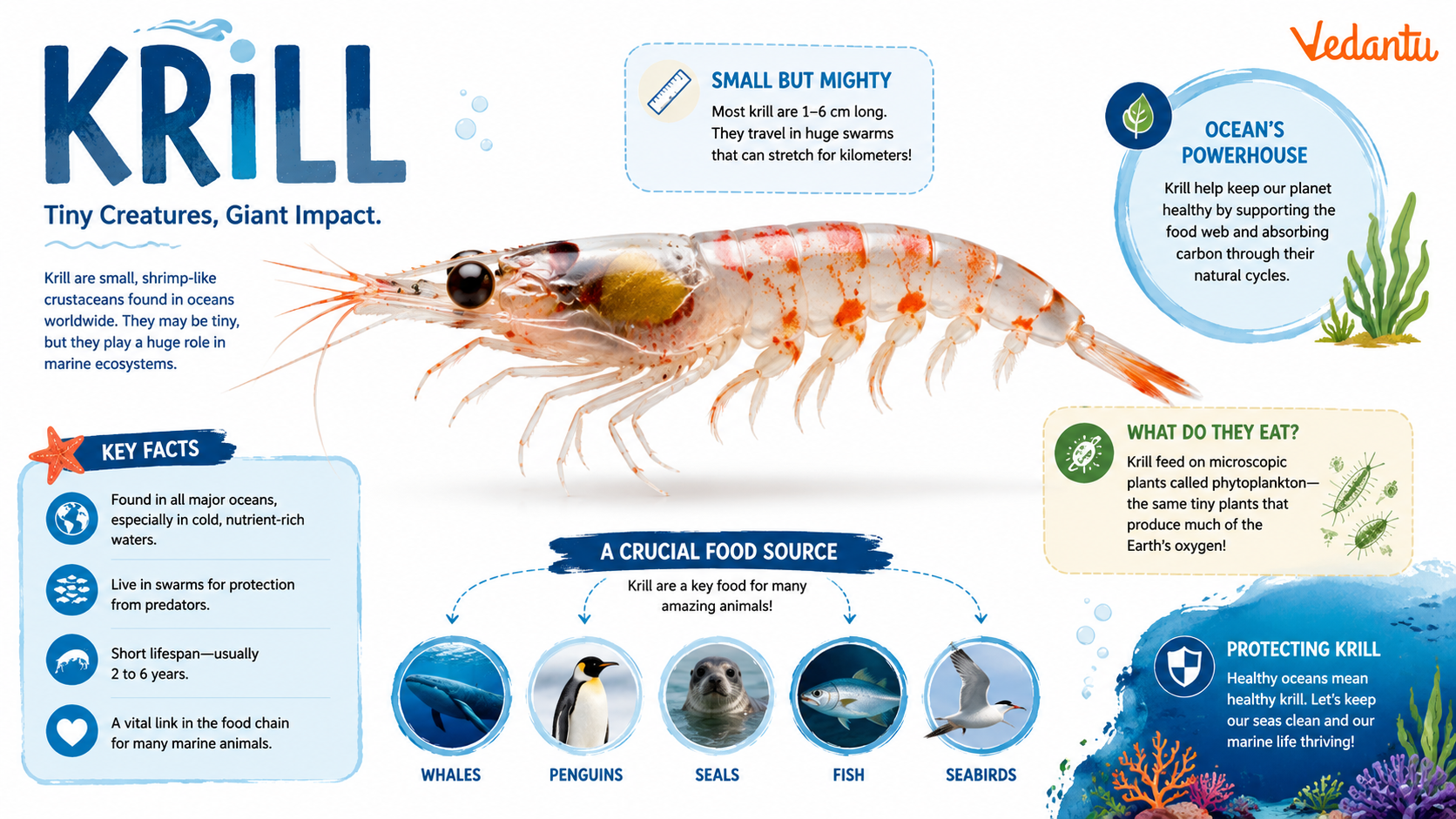
Quick Facts About Krill
| Feature | Details |
|---|---|
| Common Name | Krill |
| Scientific Order | Euphausiacea |
| Animal Group | Crustacean (related to shrimp and crabs) |
| Size | 1–6 cm long (most are about 2–3 cm) |
| Lifespan | Up to 5–7 years (Antarctic krill) |
| Habitat | Oceans worldwide, especially cold waters |
| Diet | Phytoplankton and tiny marine organisms |
| Special Feature | Can glow in the dark (bioluminescence) |
Appearance and Physical Characteristics
- Small, slender, and shrimp-like body shape
- Usually transparent or slightly pink
- Large compound eyes for detecting light
- Multiple pairs of legs for swimming
- Hard outer shell called an exoskeleton
Krill Habitat and Distribution
- Found in Arctic, Antarctic, and temperate oceans
- Prefer cold, nutrient-rich waters
- Often swim in large groups called swarms
- Live near the ocean surface at night
- Move deeper into water during the day
Krill Diet and Feeding Habits
- Eat phytoplankton (microscopic plants)
- Also feed on zooplankton
- Use tiny hair-like structures to filter food from water
- Feed mostly near the surface at night
Behaviour and Lifestyle
Krill Life Cycle
- Egg Stage: Female krill release thousands of eggs into the water.
- Larval Stage: Eggs hatch into tiny larvae that drift in the ocean.
- Juvenile Stage: They grow and begin feeding actively.
- Adult Stage: Fully developed krill join large swarms and reproduce.
What Makes Krill Special?
Importance and Role in Nature
Amazing Krill Facts
- Antarctic krill are among the most abundant animals on Earth.
- A blue whale can eat up to 4 tons of krill in a single day.
- Krill shed their outer shell as they grow.
- They can shrink their body size when food is scarce.
- Some species can live for several years in icy waters.
- Krill help scientists study climate change in polar regions.
Fun Facts for Kids
FAQs on Krill: Tiny Ocean Creatures with a Massive Impact
1. What is krill?
Krill are tiny shrimp-like sea creatures that play a huge role in the ocean ecosystem.
- Krill are small crustaceans found mostly in cold oceans.
- They look like miniature shrimp and glow in the dark (bioluminescence).
- They are a key part of the marine food chain.
- Many animals depend on krill for survival.
2. Where do krill live?
Krill mainly live in cold ocean waters, especially around Antarctica.
- Most krill species are found in the Southern Ocean.
- They also live in the Pacific Ocean and Atlantic Ocean.
- Krill prefer cold, deep waters but come near the surface at night.
- They live in large groups called swarms.
3. Why are krill important?
Krill are important because they are a main food source for many ocean animals.
- They feed whales, seals, penguins, and fish.
- They help maintain the marine ecosystem balance.
- Krill eat tiny plants called phytoplankton.
- They help store carbon, which supports the fight against climate change.
4. What do krill eat?
Krill mostly eat microscopic plants and tiny sea organisms.
- Their main food is phytoplankton (tiny ocean plants).
- They also eat zooplankton and algae.
- Krill use small legs to filter food from the water.
- They are called filter feeders.
5. How big are krill?
Krill are small sea animals, usually only a few centimeters long.
- Most krill grow up to 1–2 inches (2–5 cm).
- Antarctic krill are among the largest species.
- Despite their tiny size, they form huge swarms.
- A swarm can contain millions of krill.
6. What animals eat krill?
Many large ocean animals depend on krill as their main food source.
- Blue whales and other baleen whales eat tons of krill daily.
- Penguins and seabirds hunt krill.
- Seals and some fish feed on them.
- Krill are a key link in the Antarctic food web.
7. How long do krill live?
Krill can live for several years, depending on the species and environment.
- Antarctic krill can live up to 5–7 years.
- Their lifespan depends on water temperature and predators.
- They grow by shedding their outer shell in a process called molting.
- Cold waters help them live longer.
8. What is krill oil?
Krill oil is a supplement made from krill and is rich in healthy fats.
- It contains Omega-3 fatty acids.
- People use krill oil for heart health and brain support.
- It is similar to fish oil.
- Krill oil comes mainly from Antarctic krill.
9. Are krill endangered?
Krill are not currently endangered, but they face environmental threats.
- Climate change affects sea ice where krill live.
- Overfishing for krill oil can reduce populations.
- Loss of sea ice impacts krill larvae.
- Scientists monitor krill to protect the ocean ecosystem.
10. How do krill glow in the dark?
Krill glow using a natural light-making process called bioluminescence.
- They have special light organs called photophores.
- This glow is known as bioluminescence.
- It may help them hide from predators.
- The light can be blue or green underwater.
