



Where Do Langur Monkeys Live and What Do They Eat?
Quick Facts and Statistics
| Feature | Details |
|---|---|
| Common Name | Langur |
| Scientific Genus | Semnopithecus |
| Animal Group | Mammal (Primate) |
| Size | 60–75 cm (body length) |
| Weight | 10–20 kg (approx.) |
| Lifespan | 15–20 years |
| Diet | Leaves, fruits, flowers |
| Habitat | Forests, grasslands, urban areas |
| Conservation Status | Least Concern (most species) |
Appearance and Physical Characteristics
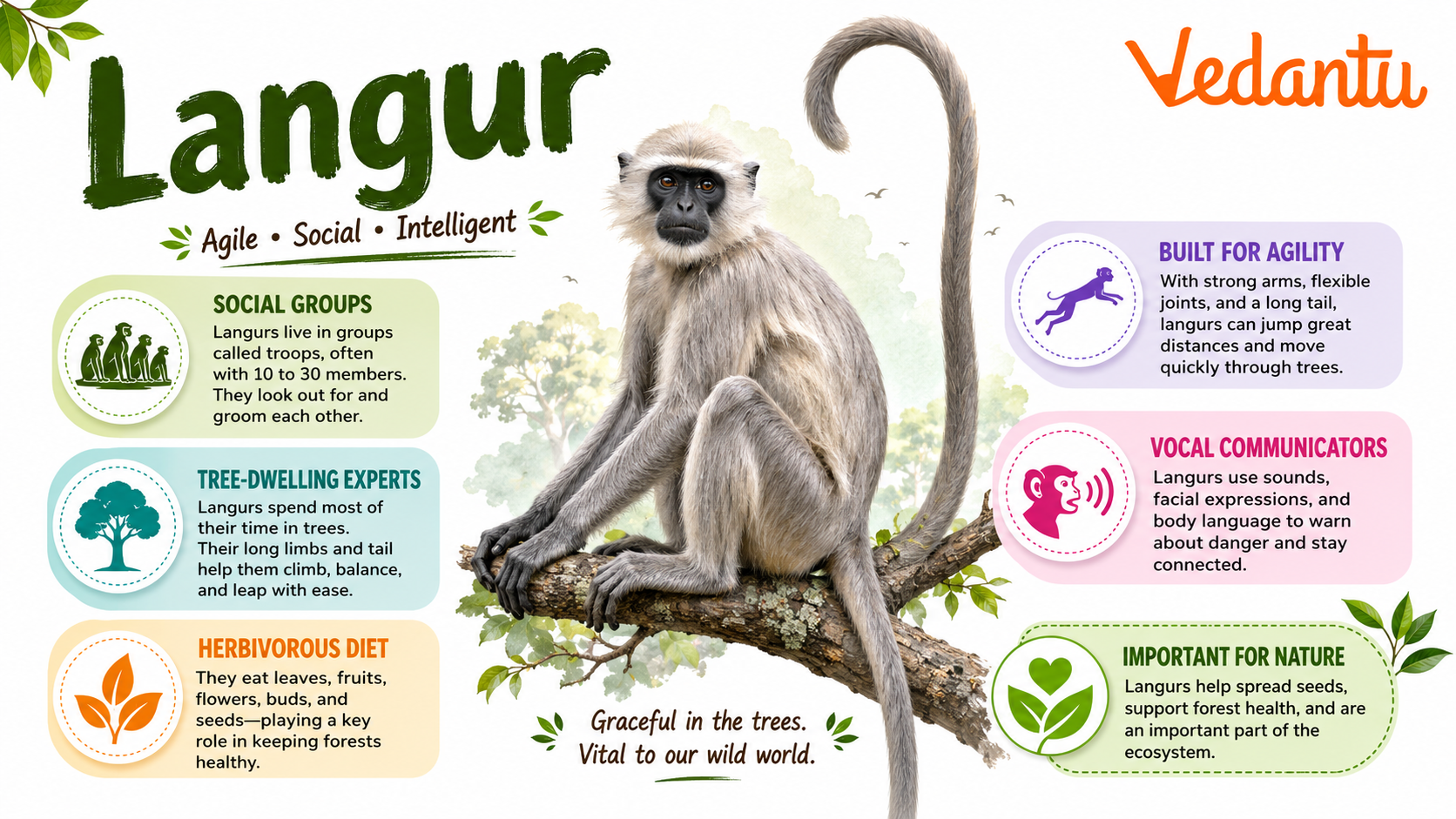
- Long, slender body with very long tail.
- Black face with light grey or golden fur.
- Strong arms and legs for jumping and climbing.
- Sharp eyesight to spot predators and food.
- Long tail helps in balance while moving on trees.
Habitat and Distribution
- Tropical and subtropical forests
- Grasslands and scrub forests
- Mountain slopes
- Near temples and cities in India
Diet and Feeding Habits
- Leaves (primary food)
- Fruits and berries
- Flowers and buds
- Seeds
Behaviour and Lifestyle
Life Cycle and Reproduction
- Female Langur gives birth to one baby after a gestation period of about 6 months.
- Baby Langurs are born with lighter fur.
- The mother takes care of the baby, and sometimes other females help too.
- Young Langurs learn climbing and social skills from adults.
- They become fully grown in a few years.
What Makes Langur Special?
Importance and Role in Nature
- Spreading seeds through their droppings.
- Helping forests grow by seed dispersal.
- Being part of the food chain.
- Maintaining ecological balance.
Amazing Langur Facts
Interesting Facts About Langur
- Langurs have black hands and feet.
- They sit upright while eating.
- They groom each other to build social bonds.
- Leopards are one of their main predators.
Fun Facts for Kids
- Langurs love sitting on temple walls and rooftops.
- They can jump really far between trees.
- Baby Langurs are very playful.
- They spend many hours eating leaves.
- Their tail looks like a question mark when curved!
FAQs on Langur Monkey: Fascinating Facts, Habitat, and Behavior
1. What is a langur?
Langur is a type of Old World monkey known for its long tail and black face.
- Belongs to the Colobinae subfamily
- Commonly found in Asia, especially India and Nepal
- Also called Hanuman langur or leaf monkey
- Has a slender body and long limbs
- Feeds mainly on leaves, fruits, and flowers
2. Where do langurs live?
Langurs live in forests, grasslands, and even cities across Asia.
- Found in India, Sri Lanka, Nepal, Bhutan, and Southeast Asia
- Prefer tropical rainforests, dry forests, and mountain areas
- Some species adapt to urban areas near temples and villages
- Live in trees but also move on the ground
3. What do langurs eat?
Langurs are mainly herbivores that eat leaves and plant-based foods.
- Fresh leaves (main diet)
- Fruits and berries
- Flowers and buds
- Seeds and bark
4. Why do langurs have long tails?
Langurs use their long tails for balance and movement.
- Helps them balance while jumping between trees
- Supports climbing and running
- Not used for grabbing like some other monkeys
- Can be longer than their body
5. Are langurs dangerous to humans?
Langurs are generally not dangerous but may act aggressively if threatened.
- Usually calm and shy in the wild
- May defend themselves if scared
- Can snatch food in cities
- Rarely attack without reason
6. How do langurs live in groups?
Langurs live in social groups called troops.
- A troop may have 10–30 members
- Led by one or more adult males
- Includes females and baby langurs
- Communicate using sounds and facial expressions
7. What are the different types of langurs?
There are several species of langurs found across Asia.
- Gray langur (Hanuman langur)
- Golden langur
- Dusky leaf monkey
- Nilgiri langur
8. How long do langurs live?
Langurs can live up to 20 years in the wild.
- Average lifespan is 15–20 years
- May live longer in protected areas
- Face threats from predators and habitat loss
9. Are langurs endangered?
Some langur species are endangered due to habitat loss and hunting.
- Golden langur is endangered
- Deforestation reduces their forest homes
- Illegal hunting and human conflict are threats
- Protected under wildlife conservation laws
10. Why are langurs important in Indian culture?
Langurs are respected in Indian culture because of their link to Lord Hanuman.
- Associated with the Hindu god Hanuman
- Often seen near temples
- Considered sacred in many regions
- Protected by local communities
