



What Makes Marsupials Different from Other Mammals?
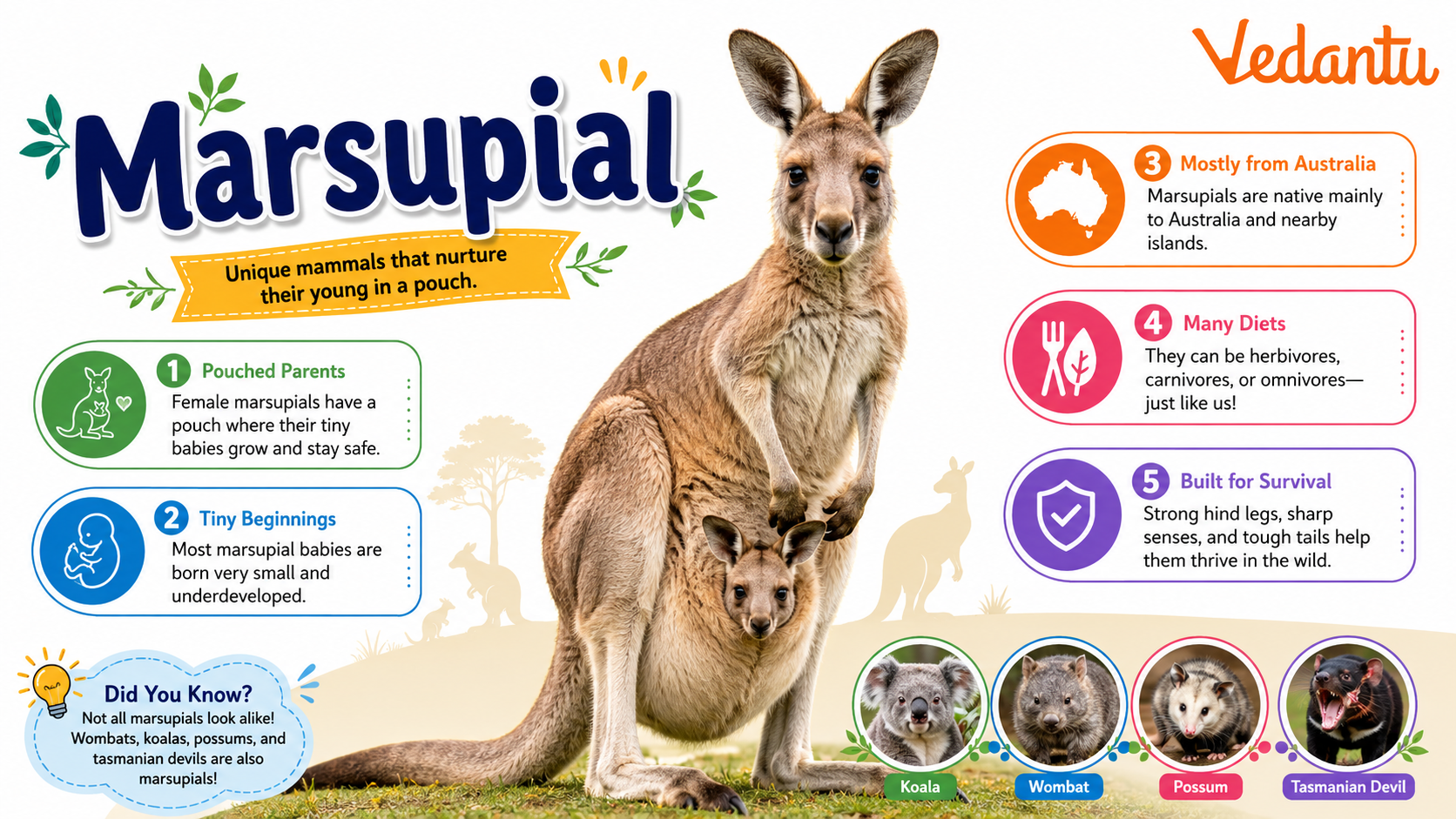
Quick Facts About Marsupials
| Feature | Details |
|---|---|
| Animal Group | Mammals |
| Scientific Infraclass | Marsupialia |
| Number of Species | Over 330 species |
| Main Habitat | Australia, New Guinea, Americas |
| Diet | Herbivore, Carnivore, or Omnivore (varies by species) |
| Young One | Joey |
| Special Feature | Pouch (called a marsupium) |
Appearance and Physical Characteristics
- Have fur-covered bodies like other mammals.
- Most females have a pouch on their belly.
- Strong hind legs in some species (like kangaroos) for hopping.
- Sharp claws in tree-dwelling types (like koalas and possums).
- Teeth shape depends on marsupial diet – sharp for meat, flat for plants.
Habitat and Distribution
Marsupial habitat varies depending on the species. Most marsupials live in Australia, which has the highest diversity of marsupials in the world.
- Australia: Kangaroos, koalas, wombats, wallabies.
- New Guinea: Tree kangaroos.
- North & South America: Opossums.
They can live in forests, grasslands, deserts, mountains, and even urban areas.
Marsupial Diet and Feeding Habits
Kangaroos and koalas eat grass, leaves, and eucalyptus.
Tasmanian devils eat meat, insects, and small animals.
Opossums eat fruits, insects, eggs, and small animals.
They act as both prey and predators in their ecosystems.
Behaviour and Lifestyle
- Some are nocturnal (active at night), like opossums.
- Some are diurnal (active during the day), like kangaroos.
- Tree-dwelling marsupials climb skillfully.
- Many species live alone, while some live in groups.
- They use body language, sounds, and scent marking to communicate.
Marsupial Life Cycle
- Birth: A tiny, underdeveloped baby (joey) is born.
- Pouch Stage: The joey crawls into the pouch and attaches to a teat.
- Growth: It stays in the pouch for weeks or months.
- Exploration: The joey begins peeking out and later leaves the pouch.
- Independence: The young marsupial becomes independent.
Types of Marsupials
Large hopper with powerful legs.
Tree-dwelling leaf eater.
Burrowing plant eater.
Meat-eating marsupial.
What Makes Marsupials Special?
Importance and Role in Nature
- Help control insect populations.
- Disperse seeds through droppings.
- Maintain balance in ecosystems.
- Serve as prey for larger predators.
Amazing Marsupial Facts
Fun Facts for Kids
- A baby marsupial is called a joey.
- Joeys drink milk inside the pouch.
- Some marsupials hop, some climb, and some glide!
- Kangaroos use their tails for balance.
- Not all marsupials live in Australia.
FAQs on Marsupials Explained: Unique Mammals with Pouches
1. What is a marsupial?
A marsupial is a type of mammal that carries and nurses its babies in a special pouch called a marsupium.
- Marsupials give birth to very tiny, underdeveloped young.
- The baby crawls into the mother’s pouch after birth.
- Common examples include the kangaroo, koala, and opossum.
- They are different from placental mammals like dogs and humans.
2. What animals are examples of marsupials?
Common marsupial animals include kangaroos, koalas, and wombats.
- Kangaroo – Known for hopping and strong back legs.
- Koala – Tree-dwelling animal that eats eucalyptus leaves.
- Wombat – A burrowing mammal from Australia.
- Tasmanian devil – A carnivorous marsupial.
- Opossum – Found in North and South America.
3. Where do marsupials live?
Most marsupials live in Australia, but some are found in the Americas.
- Australia has the largest variety of marsupials.
- New Guinea also has many species.
- Opossums live in North and South America.
- They live in forests, grasslands, deserts, and trees.
4. How are marsupials different from other mammals?
Marsupials are different because their babies continue developing in a pouch after birth.
- They give birth to tiny, immature young.
- Babies grow inside a pouch (marsupium).
- Placental mammals develop fully inside the womb.
- Marsupials have a shorter pregnancy period.
5. What is a marsupial pouch used for?
A marsupial pouch protects and feeds the baby while it grows.
- The pouch contains teats for milk.
- It keeps the baby warm and safe.
- The baby may stay inside for weeks or months.
- Some pouches open upward, others downward.
6. Are all marsupials found in Australia?
No, not all marsupials live in Australia, though most species are found there.
- Australia is home to kangaroos and koalas.
- Opossums live in North America.
- South America has several marsupial species.
- Australia has the greatest marsupial diversity.
7. What do marsupials eat?
Marsupials eat different foods depending on the species.
- Kangaroos eat grass and plants (herbivores).
- Koalas eat eucalyptus leaves.
- Tasmanian devils eat meat (carnivores).
- Some marsupials eat insects, fruits, or small animals.
8. How do baby marsupials grow?
Baby marsupials are born tiny and finish developing inside the mother’s pouch.
- They are born blind and hairless.
- They crawl into the pouch right after birth.
- They attach to a teat for milk.
- They stay in the pouch until strong enough to come out.
9. Are marsupials mammals?
Yes, marsupials are mammals because they have fur and feed their babies milk.
- They are warm-blooded animals.
- They have hair or fur.
- Mother marsupials produce milk.
- They are one of three mammal groups, along with placental mammals and monotremes.
10. Why are marsupials important to the ecosystem?
Marsupials are important because they help keep ecosystems balanced.
- Herbivores like kangaroos control plant growth.
- Carnivores like Tasmanian devils clean up dead animals.
- Some spread seeds through their droppings.
- They are a key part of Australia’s wildlife biodiversity.
