



Mastiff Temperament, Size, Lifespan, and Care Needs Explained
The Mastiff is one of the largest and most powerful dog breeds in the world. Known for its massive size, calm nature, and strong protective instincts, the Mastiff has been a loyal guardian of homes and livestock for thousands of years. Despite its huge build and serious look, this dog is gentle, loving, and devoted to its family. Let’s explore interesting Mastiff facts, their characteristics, habitat, diet, and special qualities in a fun and easy way.
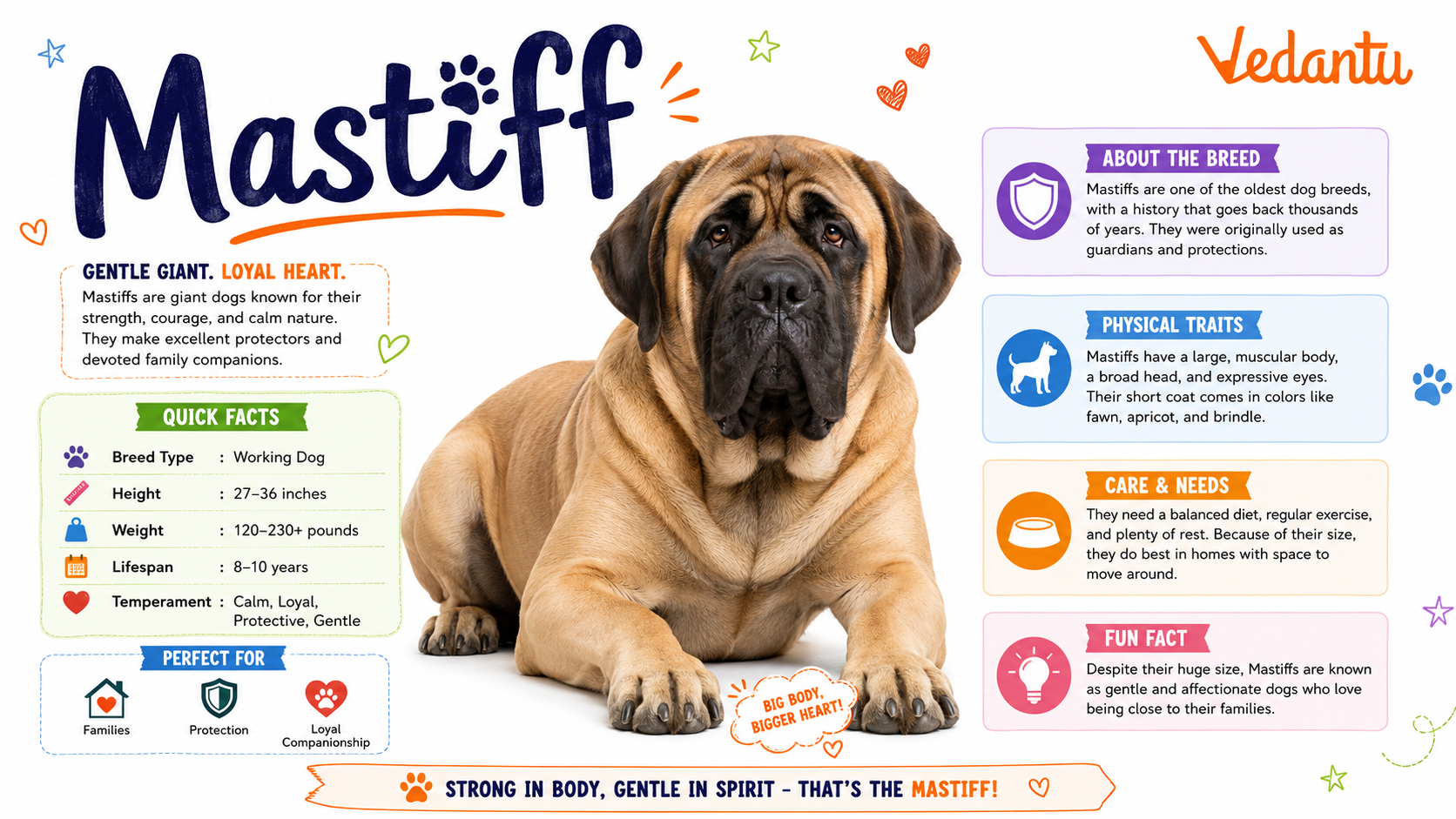
Quick Facts About Mastiff
| Feature | Details |
|---|---|
| Common Name | Mastiff |
| Scientific Name | Canis lupus familiaris |
| Animal Group | Mammal (Dog Breed) |
| Size | Very Large (up to 30+ inches tall) |
| Weight | 70–100 kg (sometimes more) |
| Lifespan | 6–10 years |
| Diet | Omnivore (mainly meat-based dog food) |
| Habitat | Domestic – Lives with humans |
| Origin | Ancient Britain and Europe |
Appearance and Physical Characteristics
- Large, heavy, and strongly built body
- Broad skull with short muzzle
- Small, dark eyes with a serious expression
- Short and dense coat
- Colours: fawn, apricot, or brindle with a dark mask
- Strong legs and wide chest
Habitat and Distribution
The Mastiff habitat is not wild. These dogs are fully domesticated and live with humans around the world.
- Found in homes across Europe, America, and Asia
- Prefer large houses with open space
- Can adapt to apartments if given enough exercise
- Comfortable in moderate climates
Diet and Feeding Habits
The Mastiff diet mainly includes high-quality dog food rich in protein to support its massive body.
- Meat-based food (chicken, lamb, beef)
- Dry kibble specially made for giant breeds
- Fresh water daily
- Controlled portions to prevent obesity
Behaviour and Lifestyle
Naturally guards family members and property.
Usually quiet and relaxed indoors.
Forms strong bonds with owners.
Needs daily walks but not excessive exercise.
Mastiffs are not aggressive by nature but may become protective if they sense danger. Early training and socialisation are important.
Life Cycle and Reproduction
- Birth: Puppies are born in litters of 6–12.
- Puppy Stage: Rapid growth during the first year.
- Adolescent Stage: Gains strength and body mass.
- Adult Stage: Fully grown by 2–3 years.
- Lifespan: Usually lives 6–10 years.
What Makes Mastiff Special?
Temperament and Domestic Life
- Affectionate with family members
- Good watchdog
- Needs firm but gentle training
- Requires space due to large size
- May drool a lot
Importance of Mastiff
Amazing Mastiff Facts
- Mastiffs date back over 2,000 years.
- They were brought to Britain by ancient traders.
- Their bark is deep and very powerful.
- They mature slower than smaller dog breeds.
- Despite their size, they love relaxing indoors.
- They are known as “gentle giants.”
- Some Mastiffs have appeared in movies and history books.
Interesting Facts About Mastiff
Fun Facts for Kids
FAQs on Mastiff Dog Breed: Complete Guide to These Gentle Giants
1. What is a Mastiff dog?
A Mastiff is a giant dog breed known for its massive size, strength, and gentle personality.
- Breed Group: Working dog
- Other Names: English Mastiff, Old English Mastiff
- Famous Traits: Loyal, protective, calm
- Origin: England
2. How big does a Mastiff grow?
A Mastiff grows into one of the largest dog breeds in the world.
- Height: 27–30 inches tall at the shoulder
- Weight: 120–230 pounds
- Size Category: Giant breed dog
3. Are Mastiffs good family dogs?
Yes, Mastiffs are gentle giants and can be wonderful family dogs.
- Temperament: Calm and patient
- With Kids: Protective and loving
- Loyalty: Very devoted to their family
4. Do Mastiffs bark a lot?
No, Mastiffs are usually quiet dogs that bark only when necessary.
- Guard Instinct: Bark to alert danger
- Normal Behavior: Calm and watchful
- Training: Helps control unwanted barking
5. How long do Mastiffs live?
The average Mastiff lifespan is about 6–10 years.
- Life Expectancy: Shorter than small breeds
- Health Care: Regular vet visits are important
- Diet & Exercise: Help maintain healthy weight
6. What do Mastiffs eat?
A Mastiff eats high-quality dog food made for large or giant breeds.
- Protein-Rich Diet: Supports muscles
- Portion Control: Prevents obesity
- Fresh Water: Always available
7. Are Mastiffs easy to train?
Yes, Mastiffs can be trained well with patience and positive reinforcement.
- Intelligence: Smart but sometimes stubborn
- Best Method: Gentle, reward-based training
- Early Socialization: Important for behavior
8. Do Mastiffs need a lot of exercise?
No, Mastiffs need moderate exercise but not intense workouts.
- Daily Walks: 20–40 minutes
- Playtime: Light games in a yard
- Rest: They enjoy relaxing indoors
9. What colors do Mastiffs come in?
The Mastiff coat colors are usually fawn, apricot, or brindle.
- Fawn: Light tan shade
- Apricot: Slight reddish tone
- Brindle: Dark stripes on a lighter base
10. Are Mastiffs good guard dogs?
Yes, Mastiffs are excellent guard dogs because of their size and protective nature.
- Natural Protection Instinct: Watchful and brave
- Deep Bark: Scares intruders
- Loyal Personality: Defends family
