



Where Do Muntjac Deer Live and What Do They Eat?
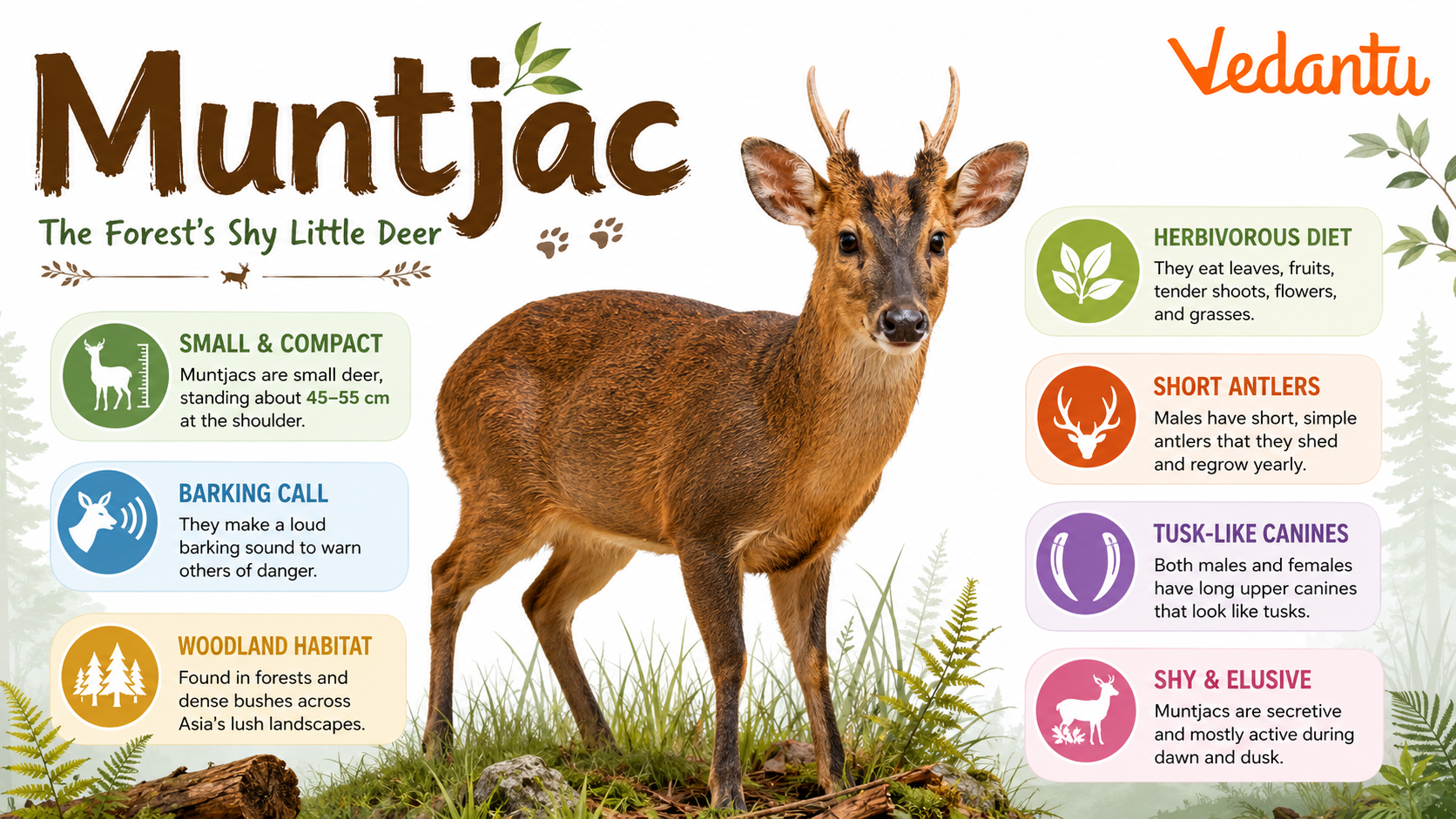
Quick Facts and Statistics
| Feature | Details |
|---|---|
| Common Name | Muntjac (Barking Deer) |
| Scientific Name | Muntiacus |
| Animal Group | Mammal |
| Size | 40–65 cm tall at shoulder |
| Weight | 10–30 kg (varies by species) |
| Lifespan | 10–16 years |
| Habitat | Forests, grasslands, hills |
| Diet | Herbivore |
| Young One | Fawn |
| Special Feature | Dog-like barking sound |
Appearance and Physical Characteristics
- Small body with short legs.
- Reddish-brown or dark brown fur.
- White underside and chin.
- Males have short antlers and long canine teeth.
- Large eyes and pointed ears for alertness.
Muntjac Habitat and Distribution
- Native to South and Southeast Asia.
- Found in India, China, Indonesia, Thailand, and nearby regions.
- Some species live in the UK after being introduced.
- Prefer dense forests, shrubs, and grassy hills.
- Stay close to thick vegetation for safety.
Muntjac Diet and Feeding Habits
- Herbivores – eat plant-based food.
- Feed on grass, leaves, fruits, shoots, and flowers.
- Sometimes eat seeds and fallen fruits.
- Occasionally nibble on bark.
Behaviour and Lifestyle
- Usually solitary animals.
- Active during early morning and evening.
- Make a loud barking sound to warn others of danger.
- Use scent glands to mark territory.
- Quick runners when threatened.
Muntjac Life Cycle
- Mating: Can breed throughout the year.
- Gestation: About 7 months.
- Birth: Usually one fawn at a time.
- Growth: Fawns hide in grass for safety and grow quickly.
- Adult: Reach maturity within a year.
What Makes the Muntjac Special?
Importance and Role in Nature
Amazing Muntjac Facts
- Muntjacs are also called barking deer because of their loud alarm call.
- They are one of the oldest known deer species.
- Some species have unique chromosome numbers.
- Males use tusks for fighting instead of large antlers.
- They can live alone without a herd.
- They are active mostly at dawn and dusk.
Fun Facts for Kids
FAQs on Muntjac Deer: Complete Guide to the Barking Deer
1. What is a muntjac?
Muntjac is a small type of deer known for its tiny size and barking sound.
- Scientific name: Muntiacus
- Often called barking deer
- Native to South and Southeast Asia
- One of the oldest known deer species
- Has short antlers and small body compared to other deer
2. Why is the muntjac called a barking deer?
Muntjacs are called barking deer because they make loud sounds that resemble a dog’s bark.
- They bark to warn others of danger
- Use barking to protect their territory
- The sound scares away predators like leopards
- This behavior makes them unique among deer species
3. Where do muntjacs live?
Muntjacs live mainly in forests and grassy areas in Asia.
- Found in India, China, Indonesia, and Malaysia
- Some species live in the United Kingdom as introduced animals
- Prefer dense forests, woodlands, and hills
- Like places with lots of plants for hiding and eating
4. What do muntjacs eat?
Muntjacs are herbivores that mostly eat plants, fruits, and leaves.
- Eat grass, leaves, and shoots
- Enjoy fallen fruits and seeds
- Sometimes eat insects or bird eggs
- Classified as both herbivores and occasional omnivores
5. How big is a muntjac?
Muntjacs are one of the smallest deer species in the world.
- Height: about 40–65 cm (16–26 inches)
- Weight: around 10–30 kg
- Have short legs and a small body
- Males have short antlers and small tusk-like teeth
6. Do muntjacs have antlers?
Male muntjacs have short antlers, while females usually do not.
- Antlers are small compared to other deer
- Males also have long canine teeth (tusks)
- Antlers are used in fighting and defending territory
- They shed and regrow antlers each year
7. Are muntjacs dangerous to humans?
Muntjacs are generally shy and not dangerous to humans.
- They prefer to run away when scared
- Males may fight other deer during mating season
- Rarely attack humans unless threatened
- Wild animals should always be observed from a safe distance
8. How long do muntjacs live?
Muntjacs can live around 10 to 20 years depending on their environment.
- In the wild: about 10–16 years
- In captivity: up to 20 years
- Lifespan depends on predators, food, and habitat
- Common predators include tigers, leopards, and wild dogs
9. What makes muntjacs special compared to other deer?
Muntjacs are special because they are ancient deer with unique features like barking sounds and tusks.
- Known as one of the oldest deer species
- Have facial scent glands for marking territory
- Males have both antlers and tusk-like teeth
- Can reproduce throughout the year, unlike many deer
10. Are muntjacs endangered?
Some muntjac species are at risk, but not all are endangered.
- Indian muntjac is listed as Least Concern
- Some rare species are vulnerable or endangered
- Threats include habitat loss and hunting
- Protected in many wildlife reserves and national parks
