



Where Do Puku Live? Habitat, Behavior, and Adaptations Explained
The Puku is a medium-sized antelope known for its warm golden-brown coat and gentle nature. Found mainly in parts of southern Africa, this beautiful grassland animal loves living near rivers and floodplains. Puku facts show that it is specially adapted to life in wet, grassy areas. Though it may look similar to other antelopes, the Puku has its own unique characteristics, behaviour, and habitat preferences that make it truly special in the wild.
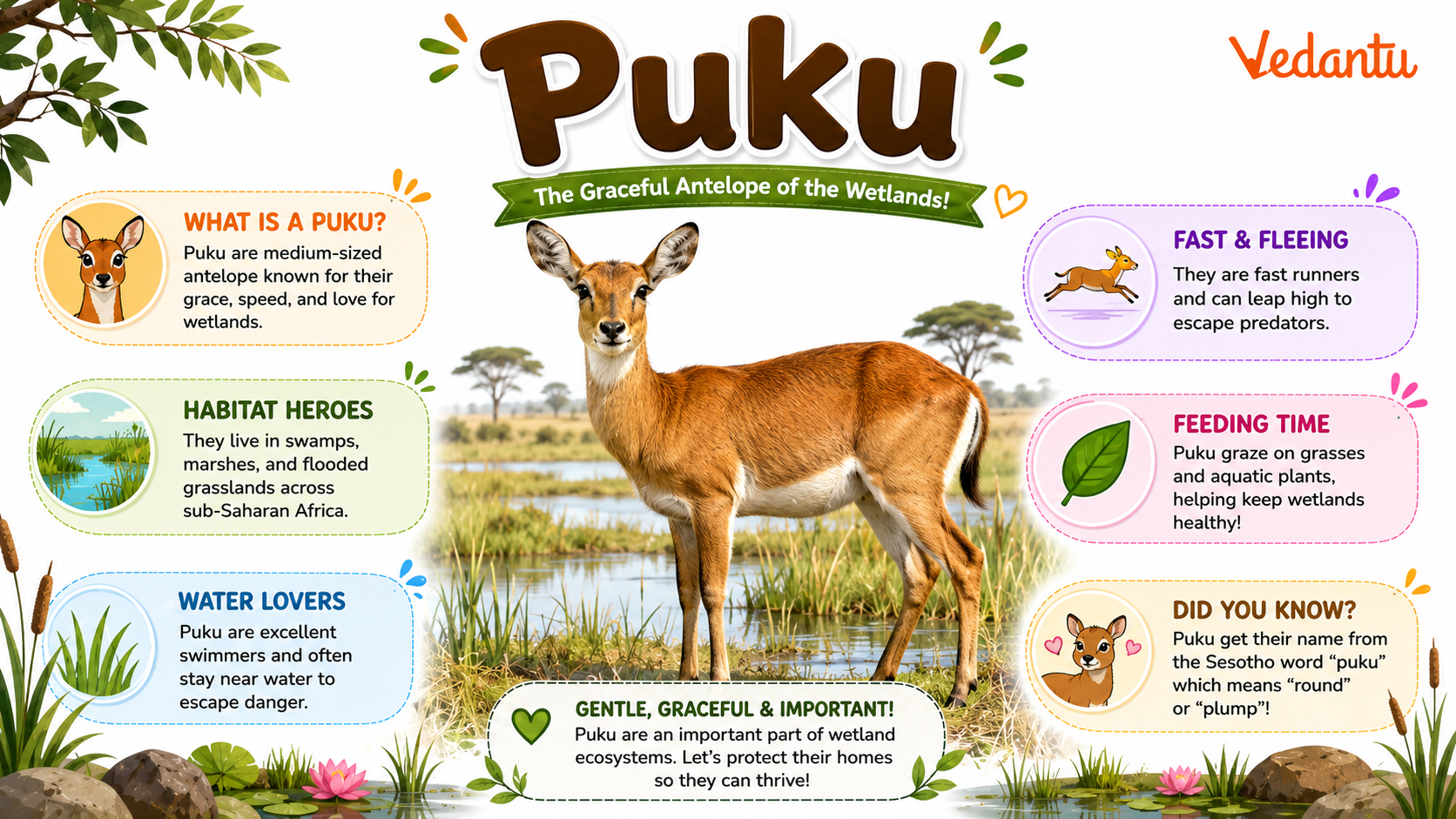
Quick Facts About Puku
| Feature | Details |
|---|---|
| Common Name | Puku |
| Scientific Name | Kobus vardonii |
| Animal Group | Mammal |
| Family | Bovidae (Antelope family) |
| Height | About 80–90 cm at the shoulder |
| Weight | 70–90 kg |
| Lifespan | Up to 10–15 years in the wild |
| Puku Habitat | Floodplains and moist grasslands |
| Puku Diet | Grasses and soft plants |
| Conservation Status | Near Threatened |
Appearance and Physical Characteristics
- Coat Colour: Rich golden-brown or reddish-brown.
- Underparts: Lighter belly and inner legs.
- Horns: Only males have ridged, lyre-shaped horns.
- Body Shape: Strong, sturdy body with long legs for running.
- Face: Dark markings around the eyes and muzzle.
The Puku’s characteristics include a smooth coat that helps it blend into tall grasses. Its strong legs and flexible neck allow it to move quickly through wetlands and thick vegetation.
Puku Habitat and Distribution
The natural Puku habitat includes open floodplains and grasslands near rivers. These areas provide both food and protection.
- Found mainly in Zambia, Botswana, and nearby regions of southern Africa.
- Prefers areas close to permanent water sources.
- Lives in flat, open landscapes with tall grasses.
- Avoids very dry deserts and dense forests.
Puku Diet and Feeding Habits
The Puku diet mainly consists of grasses. It is a strict herbivore and spends many hours grazing.
Behaviour and Lifestyle
- Usually seen in small groups of females and young.
- Males are territorial and defend their area.
- Active mostly during cooler parts of the day.
- Runs swiftly to escape predators.
- Uses alarm calls to warn the herd of danger.
Puku Life Cycle
- Mating Season: Males compete for territory and females.
- Pregnancy: Lasts about 8 months.
- Birth: Usually one calf is born.
- Young Stage: Calves hide in grass for safety.
- Adult Stage: Grows strong and joins the herd.
What Makes the Puku Special?
Importance and Role in Nature
- Helps maintain grassland balance by grazing.
- Provides food for large predators.
- Supports biodiversity in wetland ecosystems.
- Attracts wildlife tourism in African reserves.
Amazing Puku Facts
Fun Facts for Kids
- Pukus love hanging out near rivers.
- Baby Pukus hide in tall grass to stay safe.
- They look golden in sunlight.
- Male Pukus guard their own grassy territory.
- They are super alert and have sharp hearing.
FAQs on Puku Antelope: Habitat, Diet, and Unique Facts
1. What is a Puku?
A Puku is a medium-sized antelope species that lives in wet grasslands of Africa.
- The scientific name of the Puku is Kobus vardonii.
- It belongs to the Bovidae family, which includes antelopes, goats, and cattle.
- Pukus are known for their golden-brown fur and gentle nature.
- They are plant-eating animals (herbivores).
2. Where do Pukus live?
Pukus live in central and southern Africa, especially near rivers and wetlands.
- They are commonly found in Zambia, Tanzania, and the Democratic Republic of Congo.
- Their habitat includes floodplains, savannas, and grassy riverbanks.
- They prefer areas with tall grass for protection from predators.
3. What do Pukus eat?
Pukus are herbivores that mainly eat grass and soft plants.
- Their diet includes fresh grasses found in wetlands.
- They may also eat leaves and small plants.
- Pukus usually graze during the early morning and late afternoon.
4. What do Pukus look like?
Pukus have a golden-brown coat and a strong, sturdy body built for running.
- Male Pukus have long, curved horns.
- They have lighter-colored fur on their belly and around their eyes.
- An adult Puku can weigh between 60 to 90 kilograms.
5. Are Pukus endangered?
Pukus are currently listed as Near Threatened due to habitat loss and hunting.
- Their population is decreasing in some regions.
- Main threats include poaching and wetland destruction.
- Conservation efforts help protect their natural habitats.
6. How fast can a Puku run?
A Puku can run very fast to escape predators in the wild.
- They can reach speeds of up to 50 km/h (31 mph).
- Running helps them escape animals like lions and leopards.
- Their strong legs make them excellent runners in grassy areas.
7. What animals hunt Pukus?
Pukus are prey animals and are hunted by large African predators.
- Main predators include lions, leopards, and hyenas.
- Young Pukus may also be hunted by crocodiles near rivers.
- They stay in groups to stay safe from danger.
8. Do Pukus live alone or in groups?
Pukus usually live in small herds for protection and social bonding.
- A group of Pukus is called a herd.
- Herds often include females and their young.
- Adult males may defend their own territory.
9. How do Pukus protect themselves?
Pukus protect themselves mainly by running fast and staying alert.
- They use their strong sense of hearing and smell to detect danger.
- Males may use their curved horns to fight rivals.
- They hide in tall grass when predators are nearby.
10. What is the lifespan of a Puku?
A Puku can live up to about 10 to 15 years in the wild.
- Their lifespan depends on food supply and predator threats.
- Pukus in protected reserves may live longer.
- Healthy wetlands help increase their survival rate.
