



What Do Robins Eat? Diet, Nesting, and Lifespan Explained
The robin is a small, friendly bird famous for its bright chest and sweet singing voice. Often seen hopping on lawns and sitting on fences, robins are loved in gardens and forests around the world. These birds are active, alert, and full of energy. Learning about robin facts, robin habitat, robin diet, and robin life cycle helps us understand why this tiny bird plays such an important role in nature.
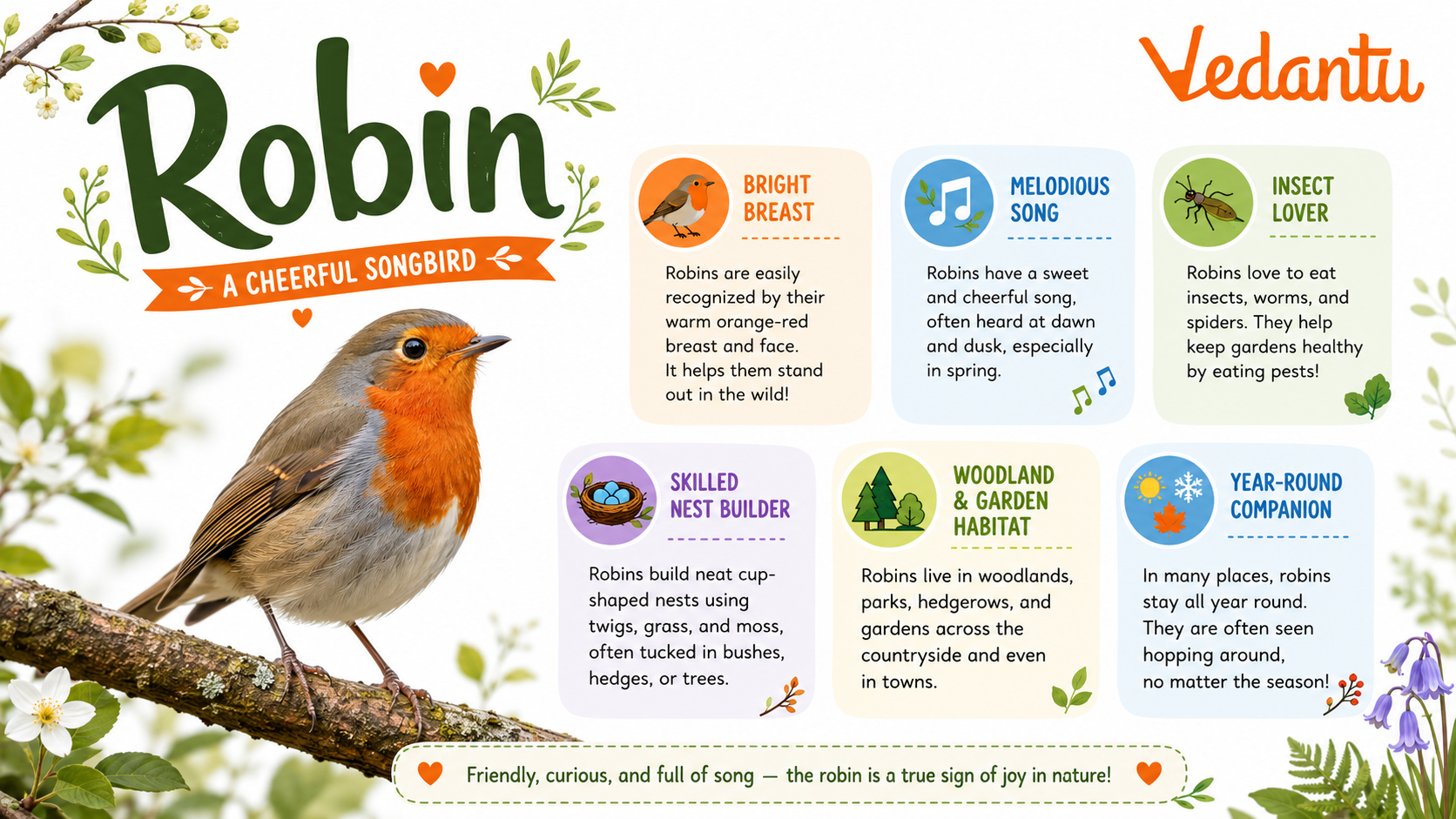
Quick Facts About Robin
| Feature | Details |
|---|---|
| Common Name | Robin |
| Scientific Name | Erithacus rubecula (European Robin) / Turdus migratorius (American Robin) |
| Animal Group | Bird |
| Size | 12–25 cm long (varies by species) |
| Weight | 16–77 grams |
| Lifespan | 2–6 years (some live longer) |
| Habitat | Gardens, forests, parks, woodlands |
| Diet | Worms, insects, fruits, berries |
| Young One | Chick |
| Special Feature | Bright red or orange chest |
Appearance and Physical Characteristics
- Small, round body with a short tail.
- Bright red or orange chest (especially in European robins).
- Brown or grey back and wings.
- Large black eyes and a thin, pointed beak.
- Lightweight body for easy flying.
One of the most important robin characteristics is its colourful chest, which makes it easy to recognise. Male and female robins look very similar. Young robins do not have a red chest at first; they have brown speckled feathers for camouflage.
Habitat and Distribution
- Found in Europe, North America, and parts of Asia.
- Live in forests, woodlands, gardens, and city parks.
- Prefer areas with trees, shrubs, and open ground.
- Build nests in bushes, trees, or even building ledges.
The robin habitat usually includes places where food like worms and insects is easily available. Some robins migrate to warmer regions during winter, while others stay in the same area all year round.
Diet and Feeding Habits
Robins are omnivores. They eat both animals and plant-based food.
Earthworms, insects, beetles, and caterpillars.
In winter, they eat berries and small fruits.
They hop on the ground and listen carefully for worms under the soil.
The robin diet helps control insect populations, making them helpful birds in gardens and farms.
Behaviour and Lifestyle
- Very active and energetic during the day.
- Often seen hopping instead of walking.
- Males sing loudly to mark their territory.
- Can be friendly around humans.
- Some species migrate seasonally.
Sound and Call
Robins are famous for their sweet, whistling songs. They sing:
- To attract a mate.
- To warn other birds to stay away.
- Early in the morning and sometimes even at night.
Flight Adaptations
- Strong chest muscles for quick take-off.
- Lightweight bones for easier flying.
- Rounded wings for fast and flexible movement.
- Tail helps in steering and balance.
These flight adaptations help robins move quickly between trees, bushes, and open ground.
Robin Life Cycle
- Egg Stage: Female lays 3–5 blue eggs in a soft nest.
- Incubation: Eggs hatch after about 12–14 days.
- Chick Stage: Both parents feed the chicks insects and worms.
- Fledgling Stage: Young birds leave the nest after about 2 weeks.
- Adult Stage: They grow red chest feathers and start singing.
The complete robin life cycle shows how quickly these birds grow and become independent.
What Makes Robin Special?
Importance and Role in Nature
- Controls insects and pests.
- Helps in seed dispersal by eating fruits.
- Acts as an important part of the food chain.
- Adds beauty and music to natural environments.
Amazing Facts About Robin
Interesting Facts About Robin
- The robin is a national bird symbol in some countries.
- It is often shown in winter greeting cards.
- Robins defend their territory strongly.
- Their red chest is also called a “red breast.”
Fun Facts for Kids
- Robins hop instead of walking.
- They love fresh worms after rain.
- Baby robins chirp loudly when hungry.
- You can often see them in your backyard.
- Their song sounds like cheerful whistling.
FAQs on Robin Bird: Complete Guide to Habits and Habitat
1. What is a Robin?
A Robin is a small, colorful songbird known for its bright chest and cheerful singing.
- The most famous types are the American Robin and the European Robin.
- Robins belong to the thrush family (Turdidae).
- They are popular garden birds often seen in parks and backyards.
- Robins are known for their sweet bird songs in spring.
2. What does a Robin look like?
A Robin bird is easy to recognize because of its bright-colored chest and round body.
- American Robin: Orange-red chest, gray-brown back, yellow beak.
- European Robin: Bright red face and chest with brown wings.
- They have a small head, sharp beak, and long legs.
- Baby robins have spotted feathers for camouflage.
3. Where do Robins live?
Robins live in many places around the world, especially in gardens, forests, and parks.
- American Robins are found across North America.
- European Robins live in Europe and parts of Asia.
- They build nests in trees, bushes, and sometimes near houses.
- Robins prefer areas with grass where they can find worms.
4. What do Robins eat?
Robins are omnivores, which means they eat both plants and animals.
- They love earthworms and insects.
- They also eat berries and small fruits.
- In winter, fruit becomes an important food source.
- Robins often tilt their heads to listen for worms underground.
5. Why are Robins seen as a sign of spring?
Robins are considered a sign of spring because they appear and sing more when the weather gets warmer.
- They migrate back from warmer places.
- Their cheerful spring song is easy to hear.
- They start building nests and laying eggs.
- People often associate robins with new beginnings and warmer days.
6. Do Robins migrate?
Yes, many robins migrate to find food and warmer weather.
- American Robins travel south during winter.
- Some robins stay if food is available.
- European Robins may move short distances.
- Migration depends on climate and food supply.
7. How do Robins build their nests?
Robins build strong cup-shaped nests to protect their eggs and chicks.
- They use grass, twigs, and mud.
- The nest is often placed in trees or shrubs.
- Female robins usually build the nest.
- A robin lays about 3–5 blue eggs.
8. What sound does a Robin make?
A robin makes a sweet, musical song that is easy to recognize.
- Their song sounds like cheerful whistles.
- They sing most during early morning.
- Male robins sing to protect their territory.
- Robin calls can also signal danger.
9. How long do Robins live?
Robins usually live a few years in the wild, but some can live much longer.
- Average lifespan is about 2–5 years.
- Some robins have lived up to 10–14 years.
- Many young robins face dangers from predators.
- Cats, hawks, and harsh weather can reduce lifespan.
10. Are Robins friendly to humans?
Robins are generally calm birds and often live close to humans.
- They are common in backyards and gardens.
- They may come near people while searching for worms.
- Robins are not usually aggressive toward humans.
- Providing bird feeders and water can attract robins safely.
