



What Is a Steer? Key Differences Between Bulls and Other Cattle
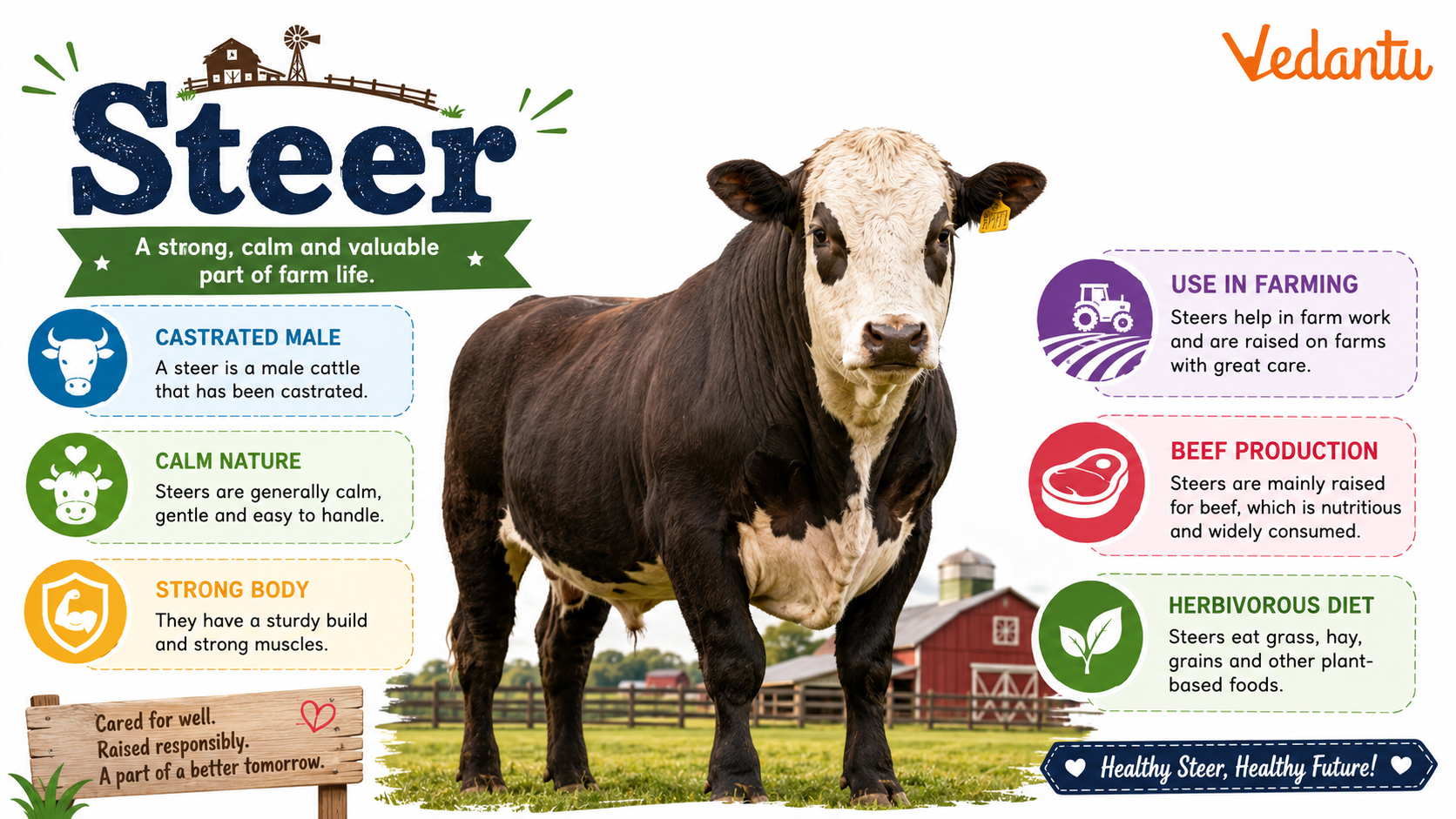
Quick Facts About Steer
| Feature | Details |
|---|---|
| Common Name | Steer |
| Scientific Name | Bos taurus |
| Animal Group | Mammal |
| Type | Domesticated Cattle (Castrated Male) |
| Average Weight | 450 – 1,100 kg |
| Lifespan | 15 – 20 years |
| Habitat | Farms, grasslands, ranches |
| Diet | Grass, hay, grains |
| Young One | Calf |
Appearance and Physical Characteristics
- Large and strong body built for farm work.
- Broad head with large eyes and wide nostrils.
- Short hair coat in colours like brown, black, white, or mixed patterns.
- Hooved feet designed for walking on fields and grasslands.
- Usually does not develop strong aggressive features like bulls.
Steer Habitat and Distribution
- Found on farms and ranches across the world.
- Common in countries like the USA, India, Brazil, Australia, and Argentina.
- Prefer open grasslands and fenced pastures.
- Live in barns or sheds for protection during extreme weather.
The steer habitat mainly includes managed agricultural areas. Since steers are domesticated animals, they depend on farmers for food, shelter, and care.
Diet and Feeding Habits
Steers eat plant-based food such as grass, hay, and grains.
They spend many hours grazing slowly in fields.
Like other cattle, they chew cud to digest tough plant fibres.
Farmers may provide special feed to improve health and growth.
The steer diet plays an important role in producing meat and supporting agricultural industries worldwide.
Behaviour and Lifestyle
- Calm and less aggressive compared to bulls.
- Social animals that live in herds.
- Active during the day (diurnal).
- Communicate using low mooing sounds.
- Follow a regular routine of grazing, resting, and chewing cud.
Life Cycle of a Steer
- Birth: Born as a male calf.
- Castration: The young male is castrated to become a steer.
- Growth Stage: Grows steadily while feeding on milk first, then grass and grains.
- Adult Stage: Becomes fully grown and used for farming or beef production.
The steer life cycle is similar to other cattle, except for the castration process that makes them calmer and easier to manage.
Temperament and Domestic Life
- Generally gentle and manageable.
- Easier to handle than bulls.
- Can be trained for light farm tasks in some regions.
- Depend completely on human care.
Because of their steady nature, steers are widely preferred in farming communities.
Importance of Steer
Major source of beef in many countries.
Support farmers and livestock industries.
Used in making leather goods.
Historically used for pulling carts and ploughs.
Amazing Steer Facts
- Steers are usually raised specifically for beef production.
- They can weigh more than a small car!
- Have excellent sense of smell.
- Spend up to 8 hours a day grazing.
- Can recognize familiar humans.
- Belong to one of the oldest domesticated animal groups.
Interesting Facts About Steer
- The word “steer” comes from an old English word meaning “young bull.”
- They have horizontal pupils that help them see wide areas.
- Steers cannot reproduce.
- They are raised in many different cattle breeds.
Fun Facts for Kids
FAQs on Steer Animal: Meaning, Traits, and Purpose on Farms
1. What is a steer?
A steer is a male cow that has been neutered and is mainly raised for beef production.
- A steer is a young male cattle.
- It cannot reproduce because it has been neutered.
- Steers are calmer than bulls.
- They are commonly raised on farms for beef.
2. What does the word steer mean?
The word steer means to guide or control the direction of something.
- You steer a car using a steering wheel.
- Ships are steered using a rudder.
- Bikes are steered by turning the handlebars.
3. What is the difference between a steer and a bull?
The main difference is that a steer is neutered, while a bull is not.
- A bull can reproduce.
- A steer cannot reproduce.
- Bulls are usually larger and more aggressive.
- Steers are calmer and raised for beef production.
4. Why are steers raised on farms?
Steers are raised mainly for producing high-quality beef.
- They grow steadily and gain healthy weight.
- They are easier to manage than bulls.
- They provide meat for food products.
5. How do farmers take care of a steer?
Farmers care for a steer by providing food, shelter, and medical care.
- They feed steers grass, hay, and grains.
- They ensure clean water daily.
- They provide safe barns or open fields.
- Veterinarians check their health.
6. What is steering in vehicles?
Steering in vehicles means controlling the direction in which a vehicle moves.
- Cars use a steering wheel.
- Boats use a rudder.
- Airplanes use control systems for navigation.
7. Is a steer the same as a cow?
No, a steer is not the same as a cow because a cow is a female.
- A cow is an adult female cattle.
- A steer is a neutered male cattle.
- Both are part of livestock animals.
8. At what age does a bull become a steer?
A bull becomes a steer after being neutered, usually at a young age.
- This process often happens when the calf is a few months old.
- Early neutering helps with calmer behavior.
- It improves beef quality.
9. What do steers eat?
Steers eat a healthy diet to grow strong and produce quality beef.
- Grass in open pastures.
- Hay during colder months.
- Grains like corn for energy.
10. Why is steering important for safety?
Steering is important because it helps control movement and avoid accidents.
- It allows drivers to turn safely.
- It helps avoid obstacles on the road.
- It keeps vehicles in the correct lane.
