



How to Identify a Thrush Bird: Types, Calls, Diet, and Behavior
The Thrush Bird is one of nature’s finest singers. Known for its sweet and flute-like songs, this bird fills forests and gardens with beautiful melodies. Thrush birds belong to a large group of songbirds found in many parts of the world. From woodlands to parks, they adapt easily and play an important role in the ecosystem. Let us explore amazing Thrush Bird facts, habitat, diet, characteristics, life cycle, and interesting behaviours in this colourful guide.
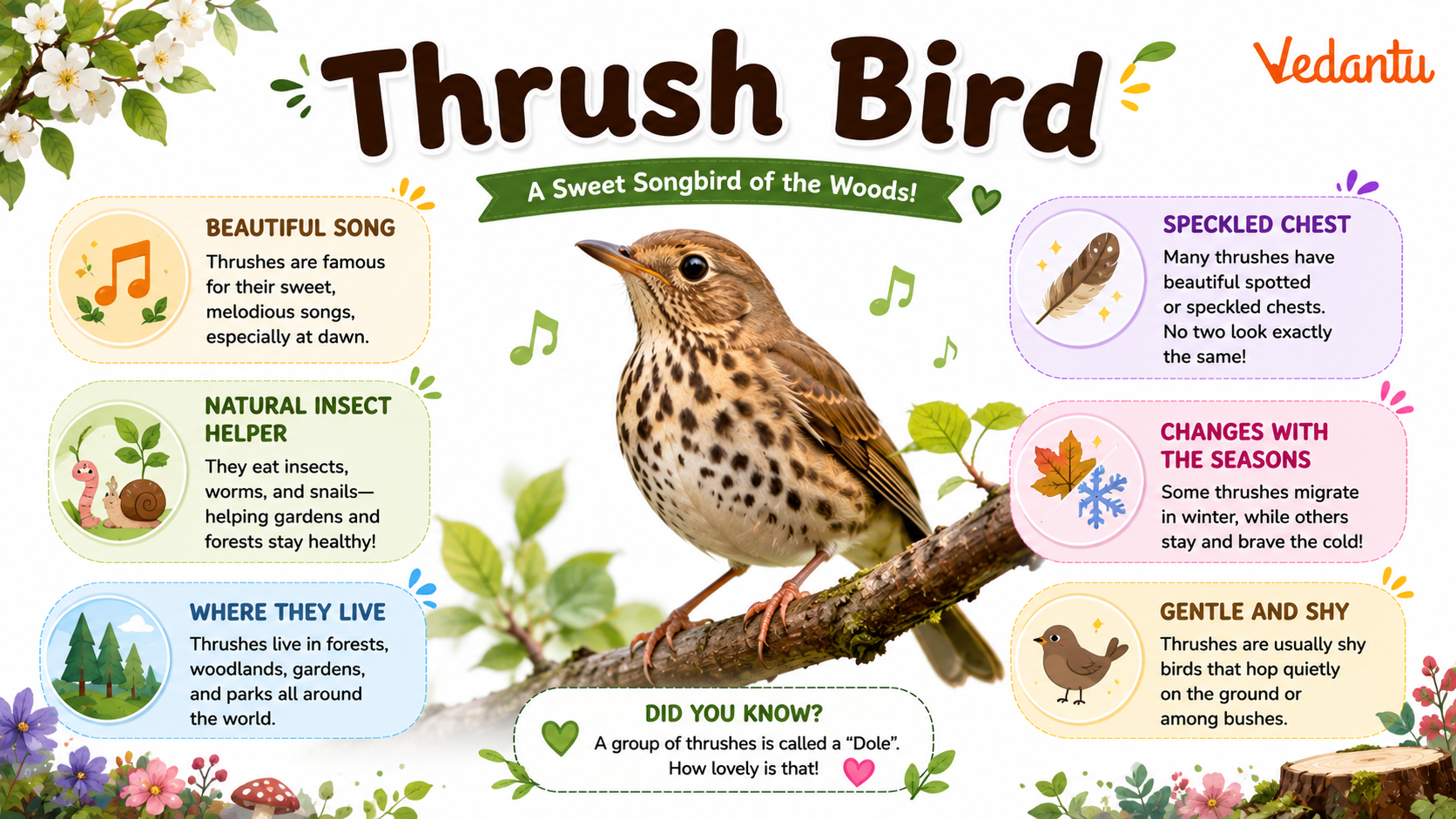
Quick Facts About Thrush Bird
| Feature | Details |
|---|---|
| Common Name | Thrush Bird |
| Scientific Family | Turdidae |
| Animal Group | Bird (Songbird) |
| Size | 20–28 cm (varies by species) |
| Weight | 50–150 grams |
| Lifespan | 5–10 years (in the wild) |
| Habitat | Forests, woodlands, gardens, parks |
| Diet | Insects, worms, berries, fruits |
| Special Feature | Beautiful melodious song |
Appearance and Physical Characteristics
- Medium-sized bird with a rounded body.
- Strong legs for hopping on the ground.
- Straight, slender beak for catching insects and eating fruits.
- Soft brown, grey, or spotted feathers (depending on species).
- Many species have spotted or speckled chests.
Habitat and Distribution
- Live in forests and woodlands.
- Common in gardens and city parks.
- Prefer areas with trees and bushes.
- Build nests in shrubs, trees, or hidden corners.
- Some species migrate to warmer regions during winter.
Diet and Feeding Habits
Thrush birds eat insects, worms, beetles, and caterpillars found on the ground.
They also enjoy berries and small fruits, especially in winter.
Often seen hopping and searching for food in soil and grass.
Help control insect populations and spread seeds through droppings.
Behaviour and Lifestyle
- Mostly active during the day (diurnal).
- Known for sweet, flute-like songs.
- Males sing to attract mates and mark territory.
- Usually seen alone or in pairs.
- Some species gather in small flocks during migration.
Life Cycle of a Thrush Bird
- Egg Stage: Female lays 3–5 eggs in a cup-shaped nest.
- Incubation: Eggs hatch in about 10–14 days.
- Chicks: Both parents feed the chicks insects and worms.
- Fledgling: Young birds leave the nest after about 2 weeks.
- Adult: Grow fully and start singing and breeding.
What Makes Thrush Bird Special?
Thrush birds are among the best singers in the bird world.
Some species repeat musical phrases 2–4 times clearly.
Can detect worms moving under the soil.
Some thrushes travel long distances during seasonal changes.
Flight Adaptations
- Strong wings for steady and controlled flight.
- Lightweight body with hollow bones.
- Tail helps in balancing and turning while flying.
- Powerful chest muscles support flapping flight.
Sound or Call
Importance and Role in Nature
Eat harmful insects that damage plants.
Spread seeds by eating fruits and dropping them elsewhere.
Serve as prey for larger birds and animals.
Add beauty and sound to forests and gardens.
Amazing Thrush Bird Facts
- There are more than 170 species of thrush birds.
- The Song Thrush can sing over 100 different phrases.
- Some thrushes migrate thousands of kilometres.
- They often tilt their heads to listen for worms.
- Thrush birds are closely related to robins.
- They are found on almost every continent.
Fun Facts for Kids
FAQs on Thrush Bird: Complete Guide to Species, Songs, and Habitat
1. What is a Thrush bird?
A Thrush bird is a small to medium-sized songbird known for its beautiful singing voice and spotted chest.
- Belongs to the Turdidae family
- Famous for its sweet and melodic bird songs
- Usually has brown, gray, or spotted feathers
- Found in forests, gardens, and woodlands worldwide
- Often searched as song thrush, wood thrush, or American robin
2. Where do Thrush birds live?
Thrush birds live in many parts of the world, especially in forests and gardens.
- Common in North America, Europe, Asia, and Africa
- Prefer woodlands, parks, and backyards
- Build nests in trees or shrubs
- Some species migrate during winter
- People also ask about thrush bird habitat and migration patterns
3. What do Thrush birds eat?
Thrush birds are omnivores that eat both insects and fruits.
- Love worms, insects, and snails
- Eat berries and small fruits
- Search for food on the ground
- Help control pests in gardens
- Also searched as thrush bird diet and what do song thrush eat
4. Why is the Thrush bird famous for its song?
The Thrush bird is famous because it has one of the most beautiful and musical bird songs.
- Sings clear and repeated melodic notes
- Male thrushes sing to attract mates
- Often sing at sunrise and sunset
- Each species has a unique tune
- Common search terms include thrush bird sound and song thrush melody
5. What are the different types of Thrush birds?
There are many types of Thrush birds found around the world.
- Song Thrush
- Wood Thrush
- Hermit Thrush
- American Robin (a type of thrush)
- People also search for types of thrush birds and thrush species list
6. How big is a Thrush bird?
A Thrush bird is usually small to medium in size.
- Length ranges from 7 to 11 inches
- Has a slim body and strong legs
- Wings are rounded for short flights
- Weight depends on species
- Often asked as thrush bird size and how big is a song thrush
7. Do Thrush birds migrate?
Yes, many Thrush birds migrate to warmer places during winter.
- Fly south when weather gets cold
- Return in spring to breed
- Some species stay year-round
- Migrate in groups at night
- Popular queries include do thrush migrate and thrush bird migration
8. How do Thrush birds build their nests?
Thrush birds build strong cup-shaped nests using natural materials.
- Use twigs, grass, and mud
- Build nests in trees or bushes
- Female usually builds the nest
- Lay 3–5 eggs at a time
- Also searched as thrush nest facts and how do song thrush build nests
9. Are Thrush birds friendly to humans?
Thrush birds are generally shy but can live near humans peacefully.
- Often seen in gardens and parks
- Do not usually attack people
- May come close if food is available
- Help gardens by eating insects
- Common searches include are thrush birds friendly and garden thrush bird
10. Why are Thrush birds important to nature?
Thrush birds are important because they help keep ecosystems healthy.
- Control insect populations
- Spread seeds by eating fruits
- Serve as food for larger animals
- Indicate a healthy forest environment
- People also ask about importance of thrush birds and role of songbirds in ecosystems
