



What Do Vampire Bats Eat and Where Do They Live?
Vampire bats are small, fascinating mammals known for their unusual feeding habits. Found mainly in Central and South America, these nocturnal animals survive by drinking the blood of other animals. Although their name may sound scary, vampire bats are intelligent, social, and important parts of their ecosystem. Let’s explore amazing Vampire Bat facts, their habitat, diet, characteristics, life cycle, and why they are so unique in the animal kingdom.
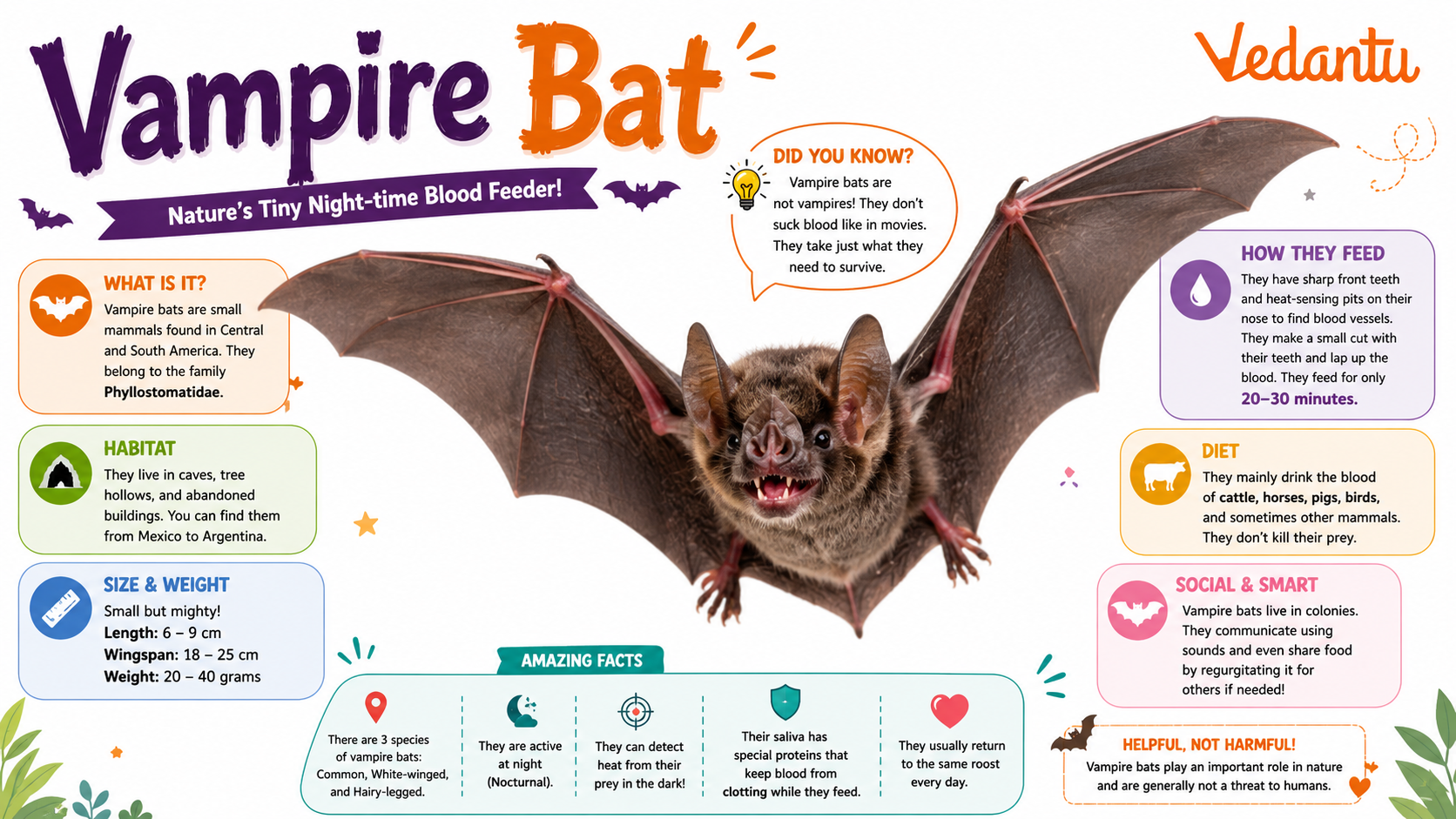
Quick Facts About Vampire Bat
| Feature | Details |
|---|---|
| Common Name | Vampire Bat |
| Scientific Name | Desmodus rotundus (Common Vampire Bat) |
| Animal Group | Mammal |
| Size | 7–9 cm long |
| Weight | 25–40 grams |
| Lifespan | Up to 9 years in the wild |
| Habitat | Forests, caves, grasslands |
| Diet | Blood (Carnivore) |
| Activity Time | Nocturnal (active at night) |
| Conservation Status | Least Concern |
Appearance and Physical Characteristics
- Small body with short brown or grey fur.
- Large, sharp front teeth for cutting skin.
- Short, cone-shaped nose with heat sensors.
- Strong wings made of thin skin stretched between fingers.
- Sharp claws to grip animals while feeding.
Vampire Bat Habitat and Distribution
- Found mainly in Central and South America.
- Live in warm climates and tropical regions.
- Rest in dark places like caves, hollow trees, tunnels, and abandoned buildings.
- Prefer areas where livestock or wild animals are available for food.
The Vampire Bat habitat usually includes forests, grasslands, and farms where animals such as cows, horses, and birds are present. They sleep during the day and come out at night to feed.
Diet and Feeding Habits
Behaviour and Lifestyle
- Nocturnal – active only at night.
- Live in social groups inside caves.
- Communicate using squeaks and high-pitched sounds.
- Use echolocation to move in the dark.
- Share food with other bats if one cannot find a meal.
Flight Adaptations
- Wings made of thin skin stretched between long fingers.
- Lightweight body helps in easy flying.
- Strong chest muscles power their flight.
- Excellent night navigation using echolocation.
Life Cycle of a Vampire Bat
- Birth: Female bats usually give birth to one baby at a time.
- Pup Stage: The baby bat drinks its mother’s milk.
- Growth: After a few months, it starts learning to fly and feed.
- Adult: Becomes fully independent and joins group feeding.
The Vampire Bat life cycle is similar to other mammals, as they give birth to live young and care for them.
What Makes Vampire Bats Special?
Importance and Role in Nature
- Help scientists study blood and clotting disorders.
- Maintain balance in ecosystems.
- Part of the natural food chain.
Amazing Vampire Bat Facts
Interesting Facts About Vampire Bat
- Their scientific name means “round-toothed blood drinker.”
- They have fewer teeth than most bats.
- They are very clean animals and groom themselves often.
- Their kidneys work fast to remove extra water from blood.
Fun Facts for Kids
FAQs on Vampire Bat: Fascinating Facts About Their Diet and Behavior
1. What is a Vampire Bat?
Vampire bats are small mammals that feed on blood and live mainly in Central and South America.
- They belong to the family Phyllostomidae
- There are three species of vampire bats
- They are nocturnal animals, meaning they are active at night
- Unlike scary stories, they are usually gentle and avoid humans
2. What do Vampire Bats eat?
Vampire bats feed only on blood, which makes them unique among bats.
- Their diet mainly includes cow, horse, and bird blood
- They rarely bite humans
- They use sharp teeth to make a small cut
- Their saliva contains a chemical that keeps blood from clotting
3. Where do Vampire Bats live?
Vampire bats live in warm regions of Central and South America.
- They prefer tropical and subtropical climates
- They sleep in caves, hollow trees, and abandoned buildings
- They live in colonies that can have hundreds of bats
4. Are Vampire Bats dangerous to humans?
Vampire bats are usually not dangerous to humans, but they can carry diseases.
- They prefer feeding on livestock instead of people
- They can sometimes spread rabies
- Bites are small and often painless
- Attacks on humans are very rare
5. How big is a Vampire Bat?
Vampire bats are small animals about the size of a human thumb.
- They are about 3 inches (7–9 cm) long
- They weigh around 1–2 ounces (30–40 grams)
- Their wingspan is about 7–8 inches
6. How do Vampire Bats find their prey?
Vampire bats use heat sensors and sharp hearing to find animals to feed on.
- They can detect body heat using special nose sensors
- They listen for breathing sounds
- They move quietly on the ground using their wings like legs
7. How long do Vampire Bats live?
Vampire bats can live up to 9–12 years in the wild.
- In captivity, they may live even longer
- They form strong social bonds in their colonies
- They sometimes share food with other bats
8. Why are they called Vampire Bats?
They are called vampire bats because they drink blood, like vampires in stories.
- The name comes from European vampire legends
- They inspired many movies and myths
- Real vampire bats are not as scary as fictional vampires
9. Do Vampire Bats help the ecosystem?
Vampire bats play a role in maintaining balance in their ecosystem.
- They help control animal populations
- Their saliva has been studied for medical research
- They are part of the natural food chain
10. How are Vampire Bats different from other bats?
Vampire bats are different because they feed only on blood, unlike most bats that eat insects or fruit.
- Most bats are insectivores or frugivores
- Vampire bats can walk and hop on the ground
- They have specialized razor-sharp teeth
- They have heat-sensing abilities
