




Difference Between Aerobic and Anaerobic Respiration with Equations and ATP Yield
Have you ever wondered how cells have the energy in our food? Living organisms require energy to perform all kinds of tasks – from lifting a school bag to powering microscopic functions inside each cell. This energy is mainly produced through a biochemical process known as cellular respiration. There are two primary modes in which it can occur: aerobic and anaerobic respiration.
In this article, we will discuss what is the difference between aerobic and anaerobic respiration, explore their processes, and highlight their role in everyday life. We’ll also provide additional insights that go beyond the basics – all in clear, student-friendly language.
What is Cellular Respiration?
Cellular respiration is the step-by-step chemical process by which cells convert the energy stored in glucose (sugar) into a form that the cell can use (ATP – Adenosine Triphosphate). This process can happen in two distinct ways:
Aerobic respiration: This takes place in the presence of oxygen.
Anaerobic respiration: This takes place in the absence of oxygen.
Although many associate aerobic respiration mainly with advanced organisms like humans and animals, both processes (aerobic and anaerobic) are crucial for different living organisms at different times.
Overview: Aerobic vs Anaerobic Respiration
When we talk about aerobic vs anaerobic respiration, the most critical factor is the availability of oxygen. Aerobic respiration requires oxygen, producing carbon dioxide, water, and a substantial amount of energy. Anaerobic respiration, on the other hand, occurs when oxygen is not present (or is scarce), generating energy along with by-products like lactic acid or alcohol (ethanol) and carbon dioxide.
If you’re studying this topic for an exam, especially if you need to understand the difference between aerobic and anaerobic respiration class 10, keep in mind that these differences form a core concept in Biology and are tested frequently.
What is Aerobic Respiration?
“Aerobic” literally means “with air” or “with oxygen.” During aerobic respiration, glucose molecules are fully broken down using oxygen, releasing carbon dioxide (CO₂), water (H₂O), and energy (ATP). Here’s a simplified equation:
Glucose + Oxygen → Carbon dioxide + Water + Energy (ATP)
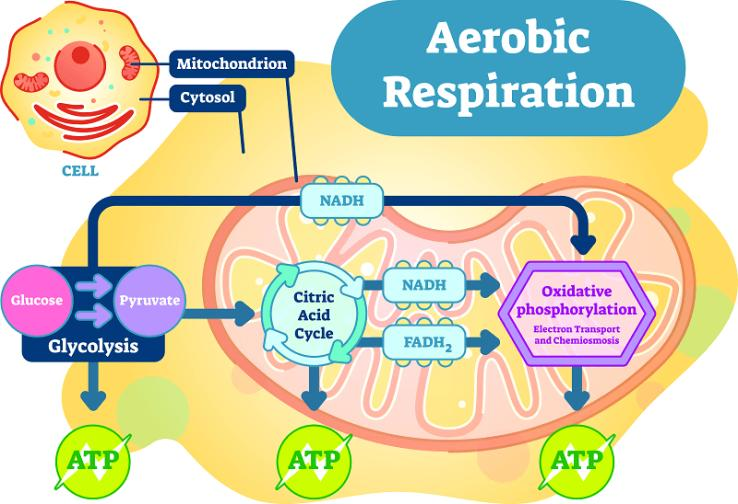
Where does it occur? Aerobic respiration occurs partly in the cytoplasm (in the initial stage called glycolysis) and predominantly in the mitochondria of the cell – often called the cell’s “powerhouses” because they generate most of the ATP.
Significance: This process is highly efficient and produces a higher yield of ATP compared to anaerobic respiration. In humans, plants, and most animals, aerobic respiration is the primary mode of breaking down glucose to produce energy.
Did you know? The net gain of ATP in aerobic respiration can be around 36-38 ATP molecules per glucose molecule, which is significantly higher than in anaerobic respiration.
What is Anaerobic Respiration?
“Anaerobic” means “without air” or “in the absence of oxygen.” During anaerobic respiration, glucose is not fully broken down because there is insufficient or no oxygen. Instead, the partial breakdown of glucose releases energy alongside other by-products. The two main types of anaerobic respiration are:
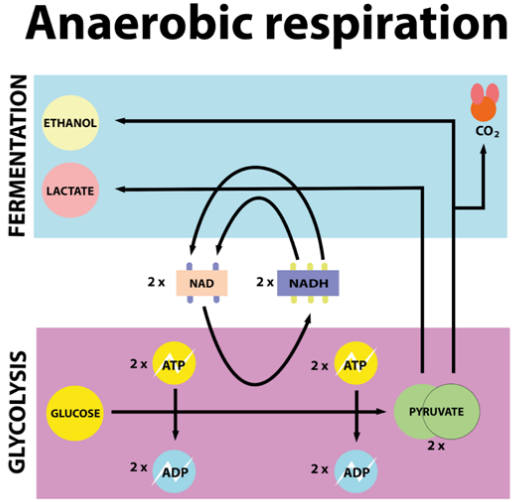
Alcoholic Fermentation (common in yeast and some bacteria)
Glucose → Ethanol (Alcohol) + Carbon dioxide + Energy (ATP)
Lactic Acid Fermentation (occurs in certain bacteria, and temporarily in human muscle cells)
Glucose → Lactic acid + Energy (ATP)
Where does it occur?
Anaerobic respiration mainly occurs in the cytoplasm, as the mitochondria require oxygen for most of their functions.
Significance: Many microorganisms (e.g., yeast) rely primarily on anaerobic respiration. Even human muscles can switch to anaerobic respiration briefly when oxygen is in short supply, for instance, during very intense exercise.
Did you know? Anaerobic respiration yields far fewer ATP (around 2 ATP molecules per glucose) compared to aerobic respiration. However, it is a quick way to produce energy, which can be crucial during emergencies, such as intense bursts of activity.
Difference between Aerobic and Anaerobic Respiration
Similarities Between Aerobic and Anaerobic Respiration
While the difference between aerobic respiration and anaerobic respiration is often emphasised, it’s equally important to note their similarities:
Both Breakdown Glucose: In both processes, glucose is the primary substrate that is broken down to release energy.
ATP Production: Whether oxygen is present or not, both types of respiration aim to generate ATP, the energy currency of the cell.
Initial Step – Glycolysis: In both aerobic and anaerobic respiration, glycolysis (in the cytoplasm) is the first stage where glucose is converted into pyruvate, producing a small amount of ATP.
Enzymatic Control: Both processes are regulated by enzymes, ensuring that the conversion of glucose to by-products is controlled and efficient.
Understanding these similarities can provide a holistic view of aerobic and anaerobic respiration and why living organisms might switch between these two methods under certain conditions.
Anaerobic Respiration in Humans
A common misconception is that humans rely solely on aerobic respiration. While it’s true that our bodies predominantly use aerobic pathways under normal conditions, muscles can engage in anaerobic respiration during short, intense bursts of activity.
Muscle Cramps and Lactic Acid
During vigorous exercise (e.g., sprinting, weight lifting), muscle cells may not receive enough oxygen to meet the energy demand.
As a result, muscles switch to lactic acid fermentation, producing lactic acid as a by-product.
The accumulation of lactic acid can cause muscle fatigue and the familiar burning sensation or cramps.
Resting, stretching, or taking a warm bath can improve blood flow, delivering more oxygen to these muscles and helping to clear lactic acid.
Additional Insights & Unique Facts
Here are some extra bits of information to make your understanding of aerobic and anaerobic respiration even more robust:
Industrial Uses:
Yeast (using alcoholic fermentation) helps produce bread, beer, and wine.
Certain bacteria (using lactic acid fermentation) are used in producing yoghurt, cheese, and pickles.
Adaptations in Nature:
Some aquatic organisms (e.g., certain fungi and bacteria in waterlogged soils) thrive purely on anaerobic respiration.
Seeds in waterlogged soil or plant roots in very wet conditions can switch to anaerobic pathways until oxygen levels become adequate again.
Krebs Cycle & Electron Transport Chain:
Aerobic respiration includes more complex stages such as the Krebs cycle and electron transport chain (ETC) in mitochondria, maximising energy extraction from glucose.
Energy Efficiency:
Aerobic respiration is highly efficient in converting glucose into usable energy (ATP). In contrast, anaerobic respiration is less efficient but faster in providing ATP when oxygen levels are low.
Role of Oxygen in Mitochondria:
Oxygen in aerobic respiration serves as the final electron acceptor in the ETC, enabling more ATP to be produced.
By exploring these unique and extra details, you not only understand what is the difference between aerobic and anaerobic respiration but also appreciate the critical roles both processes play in diverse environments and industrial applications.


FAQs on Aerobic and Anaerobic Respiration in Cells
1. What is aerobic respiration?
Aerobic respiration is the process by which cells produce energy in the presence of oxygen to generate ATP. It occurs mainly in the mitochondria and involves the complete breakdown of glucose into carbon dioxide and water.
- Requires oxygen
- Produces about 36–38 ATP per glucose molecule
- End products: carbon dioxide (CO₂) and water (H₂O)
2. What is anaerobic respiration?
Anaerobic respiration is the production of energy in the absence of oxygen, resulting in partial breakdown of glucose. It occurs in the cytoplasm and produces much less ATP compared to aerobic respiration.
- Does not require oxygen
- Produces 2 ATP per glucose molecule
- End products: lactic acid (in animals) or ethanol and carbon dioxide (in yeast)
3. What is the difference between aerobic and anaerobic respiration?
The main difference between aerobic and anaerobic respiration is that aerobic respiration uses oxygen, while anaerobic respiration occurs without oxygen.
- Oxygen: Required in aerobic; not required in anaerobic
- ATP yield: 36–38 ATP (aerobic); 2 ATP (anaerobic)
- Location: Mitochondria (aerobic); cytoplasm (anaerobic)
- End products: CO₂ and H₂O (aerobic); lactic acid or ethanol (anaerobic)
4. Where does aerobic respiration occur in the cell?
Aerobic respiration mainly occurs in the mitochondria of eukaryotic cells. After glycolysis in the cytoplasm, the remaining stages take place inside mitochondria.
- Krebs cycle occurs in the mitochondrial matrix
- Electron transport chain occurs on the inner mitochondrial membrane
5. What are the stages of aerobic respiration?
Aerobic respiration occurs in three main stages that together produce ATP efficiently.
- Glycolysis – breakdown of glucose into pyruvate (in cytoplasm)
- Krebs cycle (Citric acid cycle) – oxidation of acetyl-CoA (in mitochondria)
- Electron transport chain – production of large amounts of ATP using oxygen
6. Why is aerobic respiration more efficient than anaerobic respiration?
Aerobic respiration is more efficient because it completely oxidizes glucose using oxygen, producing up to 38 ATP molecules per glucose. In contrast, anaerobic respiration only partially breaks down glucose.
- Complete oxidation in aerobic respiration
- Higher ATP yield
- Electron transport chain maximizes energy extraction
7. What happens during anaerobic respiration in human muscles?
During intense exercise, human muscles perform anaerobic respiration, producing lactic acid when oxygen supply is insufficient. This process allows quick ATP production but leads to muscle fatigue.
- Glucose is converted to pyruvate
- Pyruvate is converted to lactic acid
- Only 2 ATP molecules are produced
8. What is the role of oxygen in aerobic respiration?
Oxygen acts as the final electron acceptor in the electron transport chain during aerobic respiration. Without oxygen, the chain stops and ATP production decreases drastically.
- Accepts electrons and hydrogen ions
- Forms water (H₂O)
- Enables maximum ATP synthesis
9. What are the end products of aerobic and anaerobic respiration?
The end products of aerobic respiration are carbon dioxide, water, and ATP, while anaerobic respiration produces lactic acid or ethanol with less ATP.
- Aerobic: CO₂ + H₂O + 36–38 ATP
- Anaerobic (animals): Lactic acid + 2 ATP
- Anaerobic (yeast): Ethanol + CO₂ + 2 ATP
10. Can you give an example of aerobic and anaerobic respiration?
An example of aerobic respiration is normal breathing and energy production in human cells using oxygen, while anaerobic respiration occurs in yeast during fermentation.
- Aerobic example: Human cells producing ATP during daily activities
- Anaerobic example: Yeast converting glucose into ethanol in bread and alcohol production



