




What Is Photosynthesis Process Light and Dark Reactions and Equation
Photosynthesis is a vital biological process that sustains almost all life on Earth by converting light energy into chemical energy. This process occurs in plants, algae, and some bacteria, enabling them to create organic molecules like glucose from simple inorganic substances. By releasing oxygen, photosynthesis also supports animal and human life, playing a major role in ecological balance and global food supply.
Photosynthesis Definition
Photosynthesis is the process by which green plants, algae, and certain bacteria transform light energy, usually from the sun, into chemical energy stored in glucose. The reaction uses carbon dioxide and water as reactants and produces oxygen as a byproduct. This definition is fundamental to biology and is covered in detail in photosynthesis class 12 resources.
Historical Development and Discovery
The study of photosynthesis began in the 18th century. Joseph Priestley discovered that plants could restore air spoiled by burning a candle, and Jan Ingenhousz found that this process needed light and green plant parts. Later, researchers proved that the oxygen released comes from water, not carbon dioxide, fundamentally shaping our understanding of plant biology and environmental science.
Overall Photosynthesis Process: Explanation and Stages
Photosynthesis is a two-stage process, involving both light-dependent and light-independent reactions. These steps occur inside the chloroplasts, mainly in the leaves of plants. Understanding this process helps students answer many photosynthesis questions and attempt related photosynthesis mcqs.
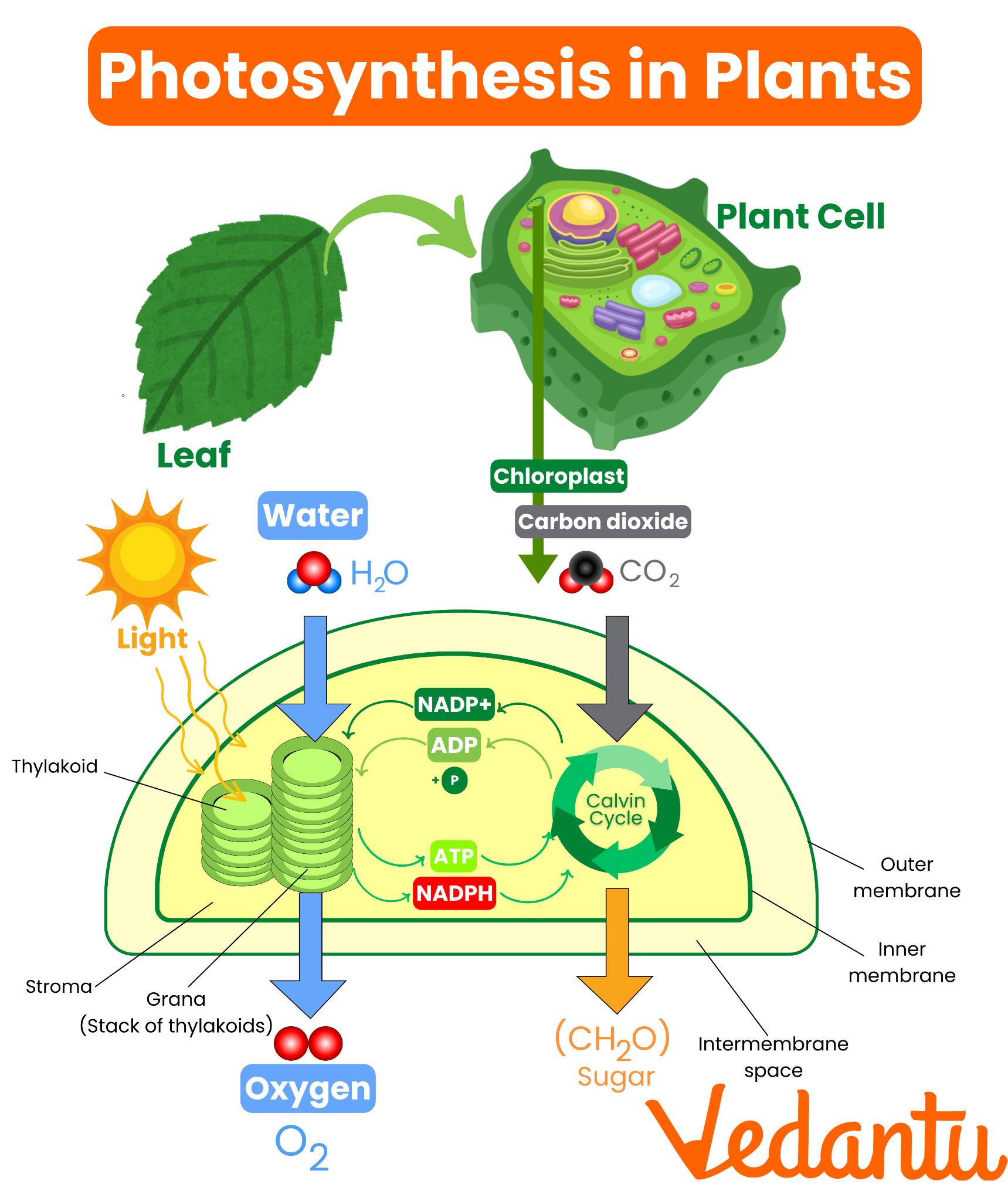
- Light-dependent reactions: These happen in the thylakoid membranes of the chloroplast. Solar energy is absorbed by chlorophyll and other pigments, splitting water molecules into oxygen, protons, and electrons. This also produces ATP and NADPH, crucial molecules for the next stage.
- Light-independent reactions (Calvin Cycle): These processes occur in the stroma of the chloroplast. Using the ATP and NADPH generated in the previous stage, carbon dioxide is converted into glucose through a series of enzyme-driven steps. This is also known as carbon fixation.
Many biology courses, such as photosynthesis process topics, explain these steps using labeled diagrams and practical experiments.
Photosynthesis Equation and Chemical Formula
The general chemical equation for photosynthesis is:
6CO2 + 6H2O + light energy → C6H12O6 + 6O2
This means six molecules of carbon dioxide combine with six molecules of water, using sunlight, to produce one molecule of glucose and six molecules of oxygen. The detailed mechanism also involves intermediate compounds and various enzymes, as explored in biomolecules studies.
Structure and Role of Chloroplasts and Chlorophyll
The key organelle for photosynthesis is the chloroplast. Inside it, chlorophyll pigments absorb sunlight, making the entire process possible. The arrangement of membranes and pigments ensures efficient light harvesting and conversion to chemical energy.
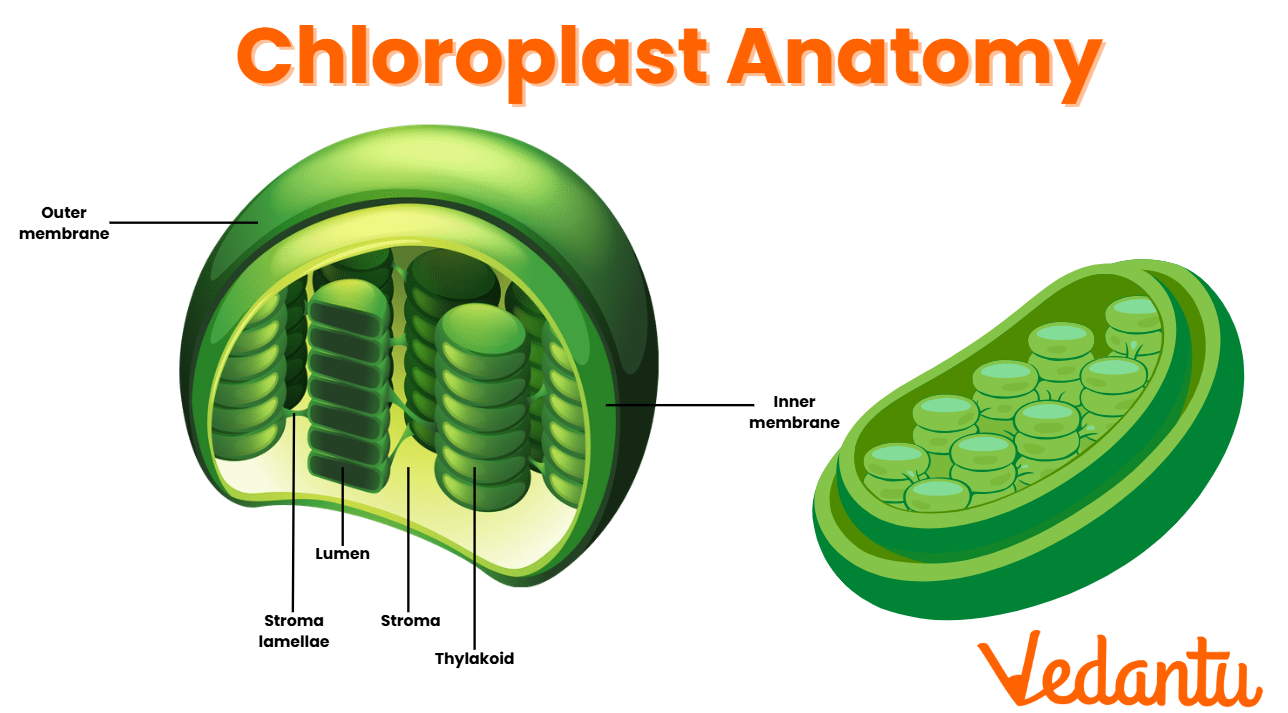
For a detailed structure, see the plant cell and chloroplasts sections.
Photosynthesis Examples in Everyday Life
Examples of photosynthesis surround us:
- Leaves of trees and plants making food in gardens or forests
- Algae in ponds producing oxygen for aquatic life
- Crops like wheat, rice, and maize that humans rely on for food
- Phytoplankton in oceans that serve as the base of marine food chains
To explore more plant adaptations and diversity, visit adaptations in plants and tree leaves.
Photosynthesis Diagram
A well-labeled diagram can clarify the complex process of photosynthesis. Key elements shown include sunlight, chloroplasts, stomata for gas exchange, and pathways for water and carbon dioxide. These diagrams are often included in classroom biology diagrams and photosynthesis PPT presentations.
Reactants and Products in Photosynthesis
Reactants: Carbon dioxide (CO2), water (H2O), and sunlight are the starting materials.
Products: Glucose (C6H12O6) and oxygen (O2) are formed.
- Glucose serves as energy for plants and as food for animals and humans.
- Oxygen is released into the atmosphere, supporting life on Earth.
These details are essential for understanding climate effects, as explained in effects of climate changes.
Significance of Photosynthesis for Environment and Life
Photosynthesis maintains atmospheric oxygen and builds organic matter forming the base of the food chain. It mitigates carbon dioxide, reducing greenhouse gases. Without this process, there would be no food for herbivores or humans, and oxygen levels would drop. This topic is linked with environmental issues and food and health.
Key Facts about Photosynthesis
- Occurs primarily in leaves but also in some stems.
- Supports all heterotrophic life, including humans.
- Can happen under artificial light in greenhouses.
- Certain bacteria perform photosynthesis without producing oxygen.
For high-yield crops and food security, modern agriculture relies on maximizing photosynthetic efficiency.
Real-World Applications and Connections
Understanding photosynthesis helps in improving crop yields, addressing climate change, and designing renewable energy solutions (like artificial photosynthesis and solar panels). This knowledge underlies biotechnology, nature conservation, and research into the effects of environmental stress on plants. In medicine, oxygen produced is vital for survival treatments.
Learn further about food science, life science, and biological science at Vedantu.
Page Summary
Photosynthesis is the cornerstone of life, providing food and oxygen for all living beings. Its detailed stages, reactants, and significance connect biology with agriculture, medicine, and environmental sustainability. Understanding this topic helps us better appreciate nature and solve global challenges using science, as explored deeply in Vedantu’s learning resources.


FAQs on Photosynthesis and How Plants Make Food
1. What is photosynthesis?
Photosynthesis is the biological process by which green plants, algae, and some bacteria use sunlight to convert carbon dioxide and water into glucose and oxygen. It occurs in the chloroplasts of plant cells and stores light energy as chemical energy. The overall word equation is:
- Carbon dioxide + Water → Glucose + Oxygen (in the presence of light and chlorophyll)
2. Where does photosynthesis occur in plant cells?
Photosynthesis occurs in the chloroplasts of plant cells, mainly in the mesophyll cells of leaves. Chloroplasts contain:
- Thylakoids – where the light-dependent reactions occur
- Grana – stacks of thylakoids
- Stroma – where the light-independent reactions (Calvin cycle) take place
3. What are the two stages of photosynthesis?
The two main stages of photosynthesis are the light-dependent reactions and the Calvin cycle (light-independent reactions).
- Light-dependent reactions: Occur in thylakoid membranes; use sunlight to produce ATP, NADPH, and release oxygen.
- Calvin cycle: Occurs in the stroma; uses ATP and NADPH to convert carbon dioxide into glucose.
4. What is the overall equation for photosynthesis?
The overall balanced chemical equation for photosynthesis is: 6CO₂ + 6H₂O → C₆H₁₂O₆ + 6O₂ in the presence of light and chlorophyll.
- CO₂ = Carbon dioxide
- H₂O = Water
- C₆H₁₂O₆ = Glucose
- O₂ = Oxygen
5. Why is photosynthesis important for life on Earth?
Photosynthesis is important because it produces oxygen and forms the base of nearly all food chains. Its significance includes:
- Releasing oxygen required for aerobic respiration
- Producing glucose, which stores energy
- Maintaining the balance of carbon dioxide in the atmosphere
6. What is the role of chlorophyll in photosynthesis?
Chlorophyll is the green pigment that absorbs light energy to drive photosynthesis. It is located in the thylakoid membranes of chloroplasts and primarily absorbs red and blue wavelengths of light. This absorbed energy is used to:
- Split water molecules (photolysis)
- Generate ATP and NADPH
7. What are the raw materials needed for photosynthesis?
The raw materials required for photosynthesis are carbon dioxide, water, and light energy. These are obtained as follows:
- Carbon dioxide enters through stomata in leaves
- Water is absorbed by roots and transported via xylem
- Sunlight is captured by chlorophyll
8. How does the light-dependent reaction work?
The light-dependent reaction uses sunlight to produce ATP, NADPH, and oxygen in the thylakoid membranes. The steps include:
- Absorption of light by chlorophyll
- Splitting of water (photolysis) to release oxygen
- Electron transport chain to generate ATP
- Formation of NADPH
9. What is the difference between photosynthesis and cellular respiration?
Photosynthesis stores energy in glucose, while cellular respiration releases energy from glucose. Key differences include:
- Photosynthesis: Occurs in chloroplasts; uses CO₂ and H₂O; produces glucose and O₂; requires light.
- Cellular respiration: Occurs mainly in mitochondria; uses glucose and O₂; produces CO₂, H₂O, and ATP.
10. What factors affect the rate of photosynthesis?
The rate of photosynthesis is mainly affected by light intensity, carbon dioxide concentration, and temperature. These are called limiting factors:
- Light intensity: Higher light increases the rate up to a saturation point.
- CO₂ concentration: More carbon dioxide increases glucose production until limited.
- Temperature: Affects enzyme activity in the Calvin cycle.



