




What is Annelida Definition Structure Types and Examples
Ever wondered why earthworms can move so gracefully through the soil, or how leeches manage to survive in freshwater environments? All these creatures belong to phylum Annelida—a diverse group of segmented worms found in marine, freshwater, and terrestrial habitats. From their distinctive body segmentation to their incredible regenerative abilities, annelids are truly captivating organisms that play significant roles in various ecosystems.
In this guide, we will explore the classification of Annelida, delve into their unique Annelida characteristics, and highlight several Annelida examples. We will also discuss the Annelida body cavity, present an Annelida diagram suggestion, and provide additional insights to make your learning expand experience engaging and memorable.
What qre Five Characteristics of Phylum Annelida?
If you’re curious about what are five characteristics of phylum Annelida, here’s a concise list that also expands on some additional features:
Segmented Body: Each annelid’s body is divided into repeating units, known as metameres. This segmentation provides flexibility and efficiency in movement.
Coelomate and Triploblastic: They possess a true Annelida body cavity (coelom), which is fluid-filled and lined by mesoderm. Being triploblastic means they have three germ layers (ectoderm, mesoderm, endoderm).
Organ System Level Organization: Annelids have well-developed systems, including a closed circulatory system, digestive tract, nervous system, and excretory organs (nephridia).
Respiration Through the Body Surface:Most annelids exchange gases via their moist skin surface, although some have specialized structures like gills in aquatic environments.
Hermaphroditism & Reproduction: Many Annelida species are hermaphrodites (possessing both male and female reproductive organs), but still practice cross-fertilisation. Some show external fertilisation, while others exhibit internal fertilisation.
Extra Notable Features
Regeneration: Several annelids can regenerate lost segments.
Haemoglobin in Blood: The presence of haemoglobin in many annelids gives their blood a red colour.
Setae/Parapodia for Locomotion: Depending on the class, they might have bristle-like structures (setae) or paddle-like appendages (parapodia).
An Overview of the Annelida Body Cavity
A key feature of phylum Annelida is their coelomic space, which acts as a hydrostatic skeleton. This Annelida body cavity is partitioned by thin walls called septa, allowing individual segments to function somewhat independently. This structure aids in locomotion and flexibility, making annelids efficient burrowers and swimmers.
Annelida Diagram
While diagrams may vary, a common Annelida diagram for a segmented worm (e.g., earthworm) typically includes:
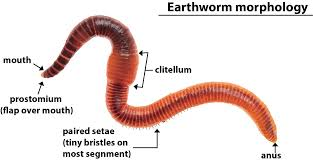
Prostomium (the head region)
Segmented Body divided by septa
Setae (bristles on each segment)
Clitellum (in earthworms and leeches, used for cocoon formation)
Mouth at the anterior end
Anus at the posterior end
Classification of Annelida
The classification of Annelida is mainly divided into four classes. Here’s an outline of each:
1. Polychaeta
Habitat: Primarily marine.
Body Structure: Elongated with distinct segments; may have fin-like appendages called parapodia.
Key Features:
Protonephridia and metanephridia for excretion.
Well-developed nervous system.
Mostly dioecious, with external fertilisation.
Lack a permanent clitellum.
Notable Examples: Nereis (clam worm), Syllis.
2. Oligochaeta
Habitat: Mainly freshwater or terrestrial (e.g. earthworms).
Body Structure: Metamerically segmented, no distinct head or tentacles.
Key Features:
Hermaphroditic with cross-fertilisation.
External fertilisation occurs; cocoons are formed by a clitellum.
Lack parapodia but have setae on each segment.
Direct development (no free larval stage).
Notable Examples: Pheretima (earthworm), Tubifex.
3. Hirudinea (Leeches)
Habitat: Mostly freshwater, some marine and terrestrial.
Body Structure: Flattened dorsoventrally; no setae or parapodia.
Key Features:
Possess anterior and posterior suckers.
Hermaphroditic with internal fertilisation.
Eggs laid in cocoons, no larval stage.
Mouth in the anterior sucker, anus in the posterior.
Notable Example: Hirudinaria (Indian cattle leech).
4. ArchiAnnelida
Habitat: Exclusively marine, often in interstitial spaces.
Body Structure: Elongated worm-like body, typically lacking setae and parapodia.
Key Features:
A simple body plan may be unisexual or hermaphroditic.
Tentacles are present on the prostomium in some forms.
Notable Examples: Dinophilus, Protodrilus.
(Note: Some modern classifications merge or further subdivide these groups based on molecular data, but these four classes offer a traditional overview of annelid diversity.)
Annelida Species and Their Importance
There are thousands of Annelida species thriving across diverse habitats. Earthworms enrich soil fertility through their feeding and burrowing activities, enhancing aeration and nutrient cycling. Leeches have been used medicinally for centuries to improve blood circulation. Polychaetes serve as important food sources for fish and help maintain marine ecosystem balance.
Fun Fact: The Giant Gippsland Earthworm (Megascolides australis), found in Australia, can grow over a metre in length, showcasing the impressive diversity within Annelida species!
Economic and Ecological Roles
Beyond their basic biology, annelids are crucial to ecosystems and economies:
Soil Health: Earthworms play an essential role in composting and soil structure, promoting plant growth.
Medical Applications: Leeches (Hirudinea) are used in reconstructive surgery to remove blood clots and improve venous circulation.
Food Chain: Polychaetes form a staple diet for many marine organisms such as fish and crustaceans.
Interactive Quiz on Phylum Annelida
Ready to test your knowledge of phylum Annelida? Have a go at this short quiz:
Which class of annelids primarily lives in marine environments and has parapodia?
a) Oligochaeta
b) Hirudinea
c) Polychaeta
d) ArchiAnnelida
What is the main excretory organ in annelids?
a) Flame cells
b) Nephridia
c) Kidneys
d) Malpighian tubules
In which class of annelids would you find setae but no parapodia, and a clitellum?
a) Hirudinea
b) ArchiAnnelida
c) Oligochaeta
d) Polychaeta
Name the fluid-filled cavity in annelids.
a) Blastocoel
b) Gastrovascular cavity
c) Coelom
d) Pseudocoel
Which statement is true about leeches?
a) They have parapodia.
b) They possess setae.
c) They have both anterior and posterior suckers.
d) They are strictly marine.
Check Your Answers
c) Polychaeta
b) Nephridia
c) Oligochaeta
c) Coelom
c) They have both anterior and posterior suckers.


FAQs on Annelida Phylum Characteristics and Body Plan
1. What is Annelida?
Annelida is a phylum of segmented, worm-like invertebrates characterized by a true coelom and a metamerically segmented body. Annelids have their bodies divided into repeated segments called metameres, which are internally separated by septa. Key features include:
- Presence of a true coelom (body cavity lined by mesoderm)
- Bilateral symmetry and triploblastic organization
- Closed circulatory system
- Examples such as earthworms, leeches, and Nereis
2. What are the main characteristics of phylum Annelida?
The main characteristics of phylum Annelida include segmentation, a true coelom, and a closed circulatory system. Important features are:
- Metameric segmentation with internal septa
- Setae or chaetae present in most species (absent in leeches)
- Well-developed organ systems
- Nephridia for excretion
- Closed blood vascular system with vessels
- Respiration through skin or gills
3. What are some examples of Annelida?
Common examples of Annelida include earthworms, leeches, and marine bristle worms. Major examples are:
- Pheretima (earthworm)
- Hirudinaria (leech)
- Nereis (marine polychaete)
4. How is Annelida classified?
Annelida is commonly classified into Polychaeta, Oligochaeta, and Hirudinea based on the presence of setae and habitat. The traditional classification includes:
- Polychaeta – Mostly marine, many setae, parapodia present (e.g., Nereis)
- Oligochaeta – Few setae, terrestrial or freshwater (e.g., earthworm)
- Hirudinea – No setae, suckers present (e.g., leech)
5. What is metamerism in Annelida?
Metamerism in Annelida is the division of the body into a series of repeated segments called metameres. In annelids:
- Each segment contains repeated organs such as nephridia and blood vessels
- Segments are separated internally by septa
- This condition is called true metamerism
6. How does the circulatory system work in annelids?
Annelids have a closed circulatory system where blood flows through vessels throughout the body. The system includes:
- Dorsal and ventral blood vessels
- Connecting vessels or hearts (aortic arches) in earthworms
- Blood containing respiratory pigments like hemoglobin
7. How do annelids respire?
Annelids respire mainly through their moist skin, while some marine forms use gills. In detail:
- Terrestrial annelids like earthworms perform cutaneous respiration
- Marine polychaetes have gills or vascularized parapodia
- Oxygen diffuses into blood through a moist body surface
8. What is the function of setae in annelids?
Setae are bristle-like structures that help annelids in locomotion and anchorage. These chitinous bristles:
- Provide grip in soil or water
- Assist in crawling and burrowing
- Are numerous in polychaetes and fewer in oligochaetes
9. What is the difference between Annelida and Nematoda?
The main difference between Annelida and Nematoda is that annelids are segmented coelomates, while nematodes are unsegmented pseudocoelomates. Key differences include:
- Segmentation: Present in Annelida, absent in Nematoda
- Body cavity: True coelom in annelids, pseudocoelom in nematodes
- Circulatory system: Closed in annelids, absent in nematodes
- Examples: Earthworm (Annelida) vs. Ascaris (Nematoda)
10. Why are annelids important in the ecosystem?
Annelids are important in the ecosystem because they improve soil fertility and serve as key components of food chains. Their ecological roles include:
- Soil aeration and mixing by earthworms
- Decomposition of organic matter
- Serving as food for birds, fish, and other animals
- Some leeches used in medical therapy



