




What Is the Biosphere Definition Structure and Key Functions
From single-celled organisms to large animals, there are several different types of life on earth. All life forms exist in the zone of life which is called the biosphere. The biosphere is the fourth sphere where land, air, and water interact with each other to support all life forms. The biosphere includes the ground and the air and is characterised as that region of the earth where organisms live.
Eduard Suess was the first person to coin the term biosphere. He added the word Bio (life) with a sphere (shape of the earth) to refer to the areas on earth with all life forms. The biosphere is a narrow zone on the earth's surface where land, water, and air combine to sustain life. Life can only occur in this sphere.
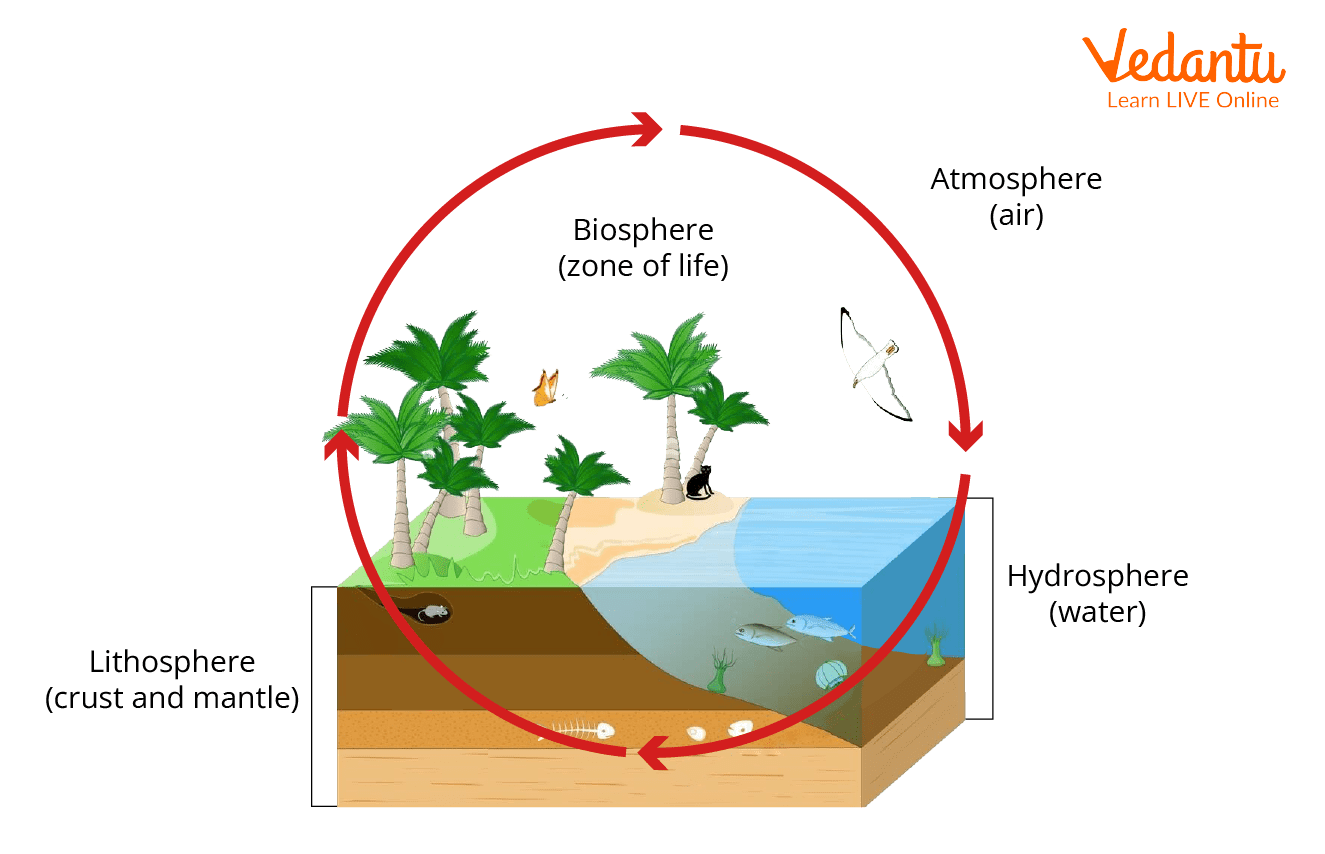
The Biosphere
What is the Biosphere?
The biosphere is the zone where the lithosphere, the hydrosphere, and the atmosphere interact. The biosphere is defined as an area that contains all living organisms and the products of their activities. As a result, it plays a critical role in the maintenance of ecosystems. It is also known as the ecosphere and is the sum of all ecosystems.
The biosphere can also be termed the zone of life on Earth. The biosphere, atmosphere, geosphere, and hydrosphere are combined into a system to form the Ecosphere. Life forms in every part of the earth's biosphere even in the deepest trench (Mariana Trench). From polar ice caps to the equator, it features some form of life. Our biosphere is divided into several biomes. It is a large area inhabited by a community of plants and animals. For example, forest or tundra.
Components of Biosphere
From the highest mountains to the deepest ocean trenches, from the hottest deserts to the thickest jungles, life exists everywhere. The components of air, soil, water, and rocks are all parts of the biosphere.
The biosphere includes dead organic matter and all living organisms. The lithosphere, atmosphere, and hydrosphere all are included in the biosphere.
Lithosphere - It includes rocks and soil on earth.
Atmosphere - It includes all the gases that surround us. Carbon dioxide, nitrogen, and oxygen are important gases in the atmosphere. It is made up of several different layers.
Hydrosphere - It includes all the water on the earth in all forms. All living organisms need air, water, land, energy, and favourable temperature to survive on earth.
Biosphere Resources
There are different resources in the biosphere, that is Biotic and Abiotic Resources. All forms of life depend on these resources to sustain their life which include food, water, sunlight, land, and shelter. Biotic resources are living whereas abiotics are non-living. For example, plants and animals are biotic resources whereas rocks and sunlight are abiotic resources.
The biosphere is like a thin blanket of the Earth’s surface that supports life, reaching from a few kilometres into the atmosphere to deep-sea trenches. These resources have different impacts on the environment.
Importance of Biosphere
The biosphere is the interconnection between a healthy life and the interactions of living organisms. Even a minor change in the biosphere can cause a large impact on the lives of living organisms.
The biosphere promotes the life of the earth by adapting to various environmental changes, favourable climatic conditions, and a source of energy as food is the main importance of the biosphere.
To sustain life on earth, the biosphere also helps recycle nutrients like oxygen and nitrogen. The biosphere also provides food and raw material to different plants, animals, and human beings.
Features of Biosphere
The biosphere provides the ecosystem that is needed for the survival of organisms. It plays an important role in supporting life on the planet earth. It is a crucial element in climate regulation. Adaptation to the climate of the biosphere is expected for living organisms. The biosphere is the only source of food on Earth.
Safe areas for protecting plant and animal kingdoms are known as biosphere reserves. It also helps to protect and restore the tradition of tribals in the region. They preserve the biodiversity of a region. It covers all types of life as well as biomes.
The biosphere acts as the life support system of the earth, helping in the control of atmospheric composition, soil health, and the water cycle. It is the indicator of the contribution of a biome. The little change in the biosphere can cause a large impact on the lives of living organisms. It also helps in recycling nutrients, provides food and raw material, and promotes life on the earth. Adaptation to the biosphere can uphold life on earth.
Biosphere Examples
The biosphere, which includes the land and the air, is the region where organisms live. It is defined as the area where life exists on, above, and below the Earth’s surface. It is also known as the ecosphere.
It is the natural habitat of all living organisms. It is made up of the lithosphere, a lower portion of the atmosphere, and the hydrosphere.
It also provides resources to the humans through which man has evolved and changed the physical world as per the needs. For example, the soil becomes the basis for agriculture, and the river gives us water. It is important for the existence of living organisms.
The biosphere is the ecological system as a whole. It comprises all forms of life on Earth and all habitats capable of sustaining life. The biosphere also consists of biomes that have different climates, adaptations, vegetation, and wildlife. Photosynthesis is the main source of energy for ecosystem processes.
Conclusion
The biosphere is the narrow zone on the surface of the earth where land, water, and air interact to sustain life. Biotic and abiotic resources are the types of the biosphere. The Biosphere is divided into areas known as Biomes. Conservation by maintaining balance among elements of the biosphere is important. This can be achieved by various means like the concept of Biodiversity Conservation, the establishment of national parks, environmental impact assessment, afforestation, and adoption of SDGs.


FAQs on Biosphere The Global Ecosystem of Earth
1. What is the biosphere in biology?
The biosphere is the global sum of all ecosystems and includes all regions of Earth where life exists. It represents the zone of life on Earth and integrates living organisms with their physical environment.
- Includes parts of the atmosphere, hydrosphere, and lithosphere
- Extends from deep ocean floors to the lower atmosphere
- Contains all plants, animals, microorganisms, and their interactions
2. What are the main components of the biosphere?
The main components of the biosphere are the atmosphere, hydrosphere, and lithosphere that support life. These components interact to sustain organisms.
- Atmosphere – provides oxygen, carbon dioxide, and climate regulation
- Hydrosphere – includes all water bodies like oceans, rivers, and lakes
- Lithosphere – Earth's crust and soil where many organisms live
3. How does the biosphere support life on Earth?
The biosphere supports life by providing essential resources and enabling ecological interactions. It maintains balance through energy flow and nutrient cycling.
- Supplies oxygen, water, and nutrients
- Facilitates food chains and food webs
- Regulates climate through the carbon cycle and water cycle
4. What is the difference between biosphere and ecosystem?
The biosphere is the global system of all life on Earth, while an ecosystem is a smaller functional unit within it. The biosphere includes all ecosystems combined.
- Biosphere – largest life-supporting zone on Earth
- Ecosystem – interaction of living organisms with their environment in a specific area
- Example: A forest is an ecosystem; all forests together form part of the biosphere
5. What is the role of the biosphere in the carbon cycle?
The biosphere plays a key role in the carbon cycle by absorbing, storing, and releasing carbon. Living organisms continuously exchange carbon with the atmosphere and oceans.
- Plants absorb carbon dioxide during photosynthesis
- Animals release carbon dioxide through respiration
- Decomposers return carbon to soil and atmosphere
6. How is the biosphere related to the atmosphere, hydrosphere, and lithosphere?
The biosphere interacts continuously with the atmosphere, hydrosphere, and lithosphere to sustain life. It depends on these Earth systems for resources and stability.
- Atmosphere provides gases like oxygen and carbon dioxide
- Hydrosphere supplies water for metabolic activities
- Lithosphere offers minerals and habitat space
7. What are some examples of biosphere regions?
Examples of biosphere regions include terrestrial, aquatic, and atmospheric zones where life exists. These regions vary widely in climate and biodiversity.
- Forests, grasslands, and deserts (terrestrial)
- Oceans, rivers, and lakes (aquatic)
- Lower layers of the troposphere where microorganisms can survive
8. Why is the biosphere important for ecological balance?
The biosphere is important for ecological balance because it regulates energy flow and nutrient cycles across ecosystems. It maintains stability through interconnected biological processes.
- Controls population dynamics through predator-prey relationships
- Recycles nutrients via biogeochemical cycles
- Maintains biodiversity and ecosystem resilience
9. What is a biosphere reserve?
A biosphere reserve is a protected area established to conserve biodiversity and promote sustainable development. It aims to balance conservation with human activity.
- Core zone for strict protection
- Buffer zone for limited research and education
- Transition zone for sustainable resource use
10. How do human activities affect the biosphere?
Human activities affect the biosphere by altering ecosystems, climate, and biodiversity. These impacts can disrupt natural ecological processes.
- Deforestation reduces habitat and carbon storage
- Pollution contaminates air, water, and soil
- Climate change alters temperature and weather patterns



