




Phases of the cell cycle and process of mitosis and meiosis
Imagine your body as a bustling city where every cell is like a busy factory. Just as factories need to update and replace old machinery, cells undergo a continuous cycle to duplicate and renew themselves. This fascinating process, known as the cell cycle and cell division, is essential for growth, repair, and maintenance of life. From detailed cell cycle and cell division notes to interactive quizzes, this guide provides everything you need—from understanding what is cell cycle to exploring types of cell division—making complex biology accessible for students and parents alike.
What is Cell Cycle?
The cell cycle is the series of events that a cell undergoes, beginning with cell growth and DNA duplication, followed by the division of the cytoplasm and organelles into two daughter cells. First discovered in 1824 by Prevost and Dumas, the cell cycle forms the cornerstone of life by ensuring that new cells are produced in a controlled and timely manner.
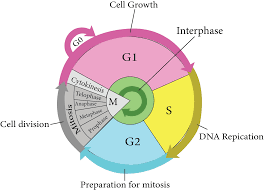
Phases of the Cell Cycle and Cell Division
1. Interphase
Interphase occupies nearly 95% of the cell cycle and is when the cell prepares for division. It is divided into three distinct phases:
G1 Phase of Cell Cycle: The cell grows and carries out routine functions. It is highly metabolically active, setting the stage for DNA replication.
S Phase: DNA replication occurs here. The genetic material doubles (from 2N to 4N), yet the number of chromosomes remains the same.
G2 Phase: The cell synthesises proteins and organelles, preparing all the necessary components for mitosis.
2. M Phase (Mitosis and Cytokinesis)
The M phase is where the cell undergoes physical division. It is divided into:
Mitosis: The nucleus divides into two identical nuclei. This phase includes the stages of prophase, metaphase, anaphase, and telophase.
Cytokinesis: Following mitosis, the cytoplasm divides, resulting in two separate daughter cells. Note that cell division and cell cycle events occur with slight variations between plant and animal cells due to structural differences.
Also, read Meiosis and Mitosis
Cell Cycle Regulation
Regulation is crucial to ensure that each phase of the cell cycle occurs correctly. Various checkpoints and regulatory proteins oversee processes such as the g1 phase of cell cycle and DNA replication. Errors in regulation can lead to uncontrolled cell growth, emphasising the importance of cell cycle regulation in maintaining healthy tissues.
Test Your Knowledge!
Question: What is the primary purpose of the cell cycle?
Answer: To duplicate the cell’s DNA and organelles, resulting in two daughter cells.
Question: During which phase does DNA replication occur?
Answer: The S phase.
Question: What are the two main divisions in the M phase?
Answer: Mitosis and cytokinesis.
Question: Which phase prepares the cell for division by growing and repairing?
Answer: The G1 phase.
Question: How does cytokinesis differ in plant and animal cells?
Answer: Due to a rigid cell wall, plant cells form a cell plate, while animal cells form a cleavage furrow.
Check your answers below!
To duplicate the cell’s DNA and organelles, resulting in two daughter cells.
The S phase.
Mitosis and cytokinesis.
The G1 phase.
Due to a rigid cell wall, plant cells form a cell plate, while animal cells form a cleavage furrow.
Fun Facts About Cell Cycle and Cell Division
Fact 1: A typical human cell cycle takes about 24 hours to complete.
Fact 2: Although the DNA content doubles during the S phase, the number of chromosomes remains unchanged.
Fact 3: Some cells exit the cycle into a quiescent phase (G0) when not actively dividing.
Real-World Applications
Understanding the cell cycle and cell division is critical in many fields:
Medical Research: Insights into cell cycle regulation help in cancer research, where abnormal cell division leads to tumour growth.
Agriculture: Knowledge of cell division aids in developing crops with improved growth and resilience.
Biotechnology: Manipulating the cell cycle is key in tissue engineering and regenerative medicine, ensuring healthy cell populations.


FAQs on Cell Cycle and Division in Eukaryotic Cells
1. What is the cell cycle?
The cell cycle is the ordered sequence of events by which a cell grows, replicates its DNA, and divides into two daughter cells. It consists of two main stages:
- Interphase – cell growth and DNA replication.
- M phase (Mitotic phase) – division of the nucleus and cytoplasm.
2. What are the main phases of the cell cycle?
The main phases of the cell cycle are Interphase and the Mitotic (M) phase. These phases are divided into:
- G1 phase (Gap 1) – cell growth and organelle synthesis.
- S phase (Synthesis) – DNA replication.
- G2 phase (Gap 2) – preparation for division.
- M phase – mitosis and cytokinesis.
3. What happens during interphase?
During interphase, the cell grows, performs normal functions, and replicates its DNA in preparation for division. It includes:
- G1 phase – synthesis of proteins and organelles.
- S phase – duplication of chromosomes.
- G2 phase – final growth and error checking of DNA.
4. What are the stages of mitosis in order?
The stages of mitosis in order are prophase, metaphase, anaphase, and telophase. These stages occur as follows:
- Prophase – chromosomes condense and spindle fibers form.
- Metaphase – chromosomes align at the cell’s equator.
- Anaphase – sister chromatids separate to opposite poles.
- Telophase – nuclear membranes reform around each set of chromosomes.
5. What is the difference between mitosis and meiosis?
The main difference between mitosis and meiosis is that mitosis produces two identical diploid cells, while meiosis produces four genetically different haploid cells. Key differences include:
- Number of divisions: Mitosis has one; meiosis has two.
- Genetic variation: Meiosis involves crossing over; mitosis does not.
- Function: Mitosis is for growth and repair; meiosis is for gamete formation.
6. What is cytokinesis?
Cytokinesis is the division of the cytoplasm that occurs after mitosis or meiosis to form separate daughter cells. It differs in:
- Animal cells – a cleavage furrow pinches the cell into two.
- Plant cells – a cell plate forms and develops into a new cell wall.
7. Why is the cell cycle important?
The cell cycle is important because it enables growth, tissue repair, and reproduction in living organisms. Its significance includes:
- Replacing damaged or dead cells.
- Allowing multicellular organisms to grow.
- Maintaining genetic stability through accurate DNA replication.
8. What are cell cycle checkpoints?
Cell cycle checkpoints are control mechanisms that ensure each stage of the cell cycle is completed accurately before progressing to the next stage. Major checkpoints include:
- G1 checkpoint – checks cell size and DNA integrity.
- G2 checkpoint – verifies DNA replication.
- M checkpoint – ensures chromosomes are properly attached to spindle fibers.
9. What happens during the S phase of the cell cycle?
During the S phase, the cell replicates its DNA so each chromosome forms two identical sister chromatids. Key events include:
- Duplication of all chromosomes.
- Synthesis of histone proteins.
- Formation of identical genetic copies.
10. How is the cell cycle regulated?
The cell cycle is regulated by proteins called cyclins and cyclin-dependent kinases (CDKs) that control progression between phases. Regulation involves:
- Binding of cyclins to CDKs to activate division signals.
- Checkpoint monitoring of DNA damage.
- External signals such as growth factors.



