




What Is Double Circulation Its Process and Significance
The process known as double circulation is vital for efficient oxygen and nutrient transport in humans and other mammals. This unique system ensures blood flows through the heart twice in each complete cycle — once for oxygenation and once for delivery to the rest of the body. Understanding double circulation helps explain how our body maintains oxygen supply for energetic activities and supports overall health.
Double Circulation Definition
Double circulation refers to the mechanism where blood passes through the heart twice during one full round in the body. The first circuit sends deoxygenated blood to the lungs for oxygenation (pulmonary circulation), and the second circuit delivers oxygen-rich blood to body tissues (systemic circulation). This system, present in birds and mammals, maintains high efficiency and a clear separation between oxygenated and deoxygenated blood.
Double Circulation Diagram
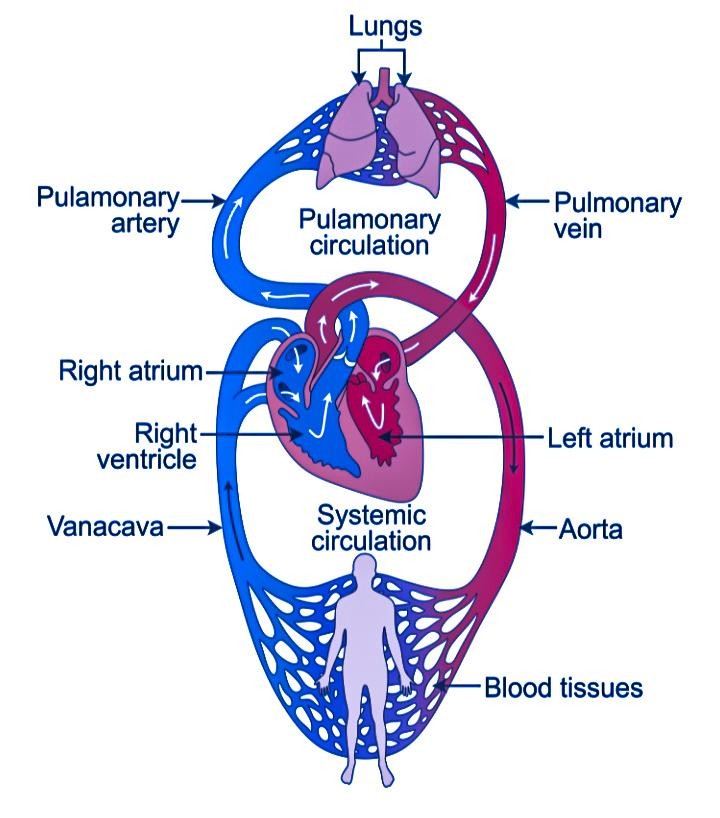
The diagram above illustrates double circulation in the human heart. The blue arrows show the flow of deoxygenated blood, while the red arrows represent oxygenated blood. This clear separation allows for efficient gas exchange and is a feature of advanced vertebrate circulatory systems.
Phases of Double Circulation
Double circulation operates through two main circuits. These work together in a precise sequence to ensure continuous and effective blood transport throughout the body. Here’s how the process unfolds:
- Deoxygenated Blood Enters the Heart: Blood that has delivered oxygen to the body and picked up carbon dioxide returns to the right atrium.
- Pulmonary Circulation: The right ventricle pumps this deoxygenated blood to the lungs through the pulmonary artery.
- Gas Exchange in the Lungs: In the alveoli, blood releases carbon dioxide and absorbs fresh oxygen.
- Oxygenated Blood Returns: Oxygen-rich blood then flows into the left atrium of the heart via pulmonary veins.
- Systemic Circulation: The left ventricle pumps this oxygenated blood to all parts of the body through the aorta.
- Cycle Repeats: After oxygen delivery, blood becomes deoxygenated and returns to the heart, restarting the cycle.
This dual-pathway system allows for a complete separation of oxygenated and deoxygenated blood, increasing the efficiency of the circulatory process in humans and other mammals.
Comparison: Double Circulation vs Single Circulation
| Feature | Double Circulation | Single Circulation |
|---|---|---|
| Number of heart passages per cycle | Blood passes twice | Blood passes once |
| Separation of oxygenated/deoxygenated blood | Complete separation | No separation |
| Main organisms | Mammals, birds | Fish |
| Circulatory pressure | High efficiency, high pressure | Lower pressure |
Double circulation allows mammals and birds to maintain high metabolic rates and active lifestyles, unlike the simpler single circulation in fish.
Key Features of Double Circulation
- Separation of blood types: Oxygenated and deoxygenated blood never mix.
- Two distinct circuits: Pulmonary (heart-lungs-heart) and systemic (heart-body-heart).
- Ensures high-pressure delivery: Oxygen-rich blood reaches tissues efficiently and rapidly.
- Aids temperature regulation: Particularly essential for mammals and birds.
- Supports extensive exercise and activity: Essential for humans and many animals.
This arrangement enables a higher metabolic rate, needed for warmth, growth, and complex organ functions. High-pressure systemic circulation ensures all body parts get sufficient oxygen and nutrients. Double circulation also supports mammals living in diverse climates and active environments.
Double Circulation Explanation with Examples
An easy way to understand double circulation is by comparing how blood flows in humans and many other mammals. Take the example of a person running — their muscles need more oxygen. The heart pumps vigorously, sending oxygen-rich blood through the systemic circuit. Deoxygenated blood returns to the heart, goes to the lungs for fresh oxygen, then re-circulates again. Animals such as cows, dogs, and birds also use double circulation to support their active lifestyles.
- Humans and mammals (e.g., cats, elephants)
- Birds (e.g., pigeons, eagles)
In contrast, organisms like fish exhibit only single circulation. For more on differences, see arteries and veins or other circulatory system topics on Vedantu.
Significance and Benefits
The primary benefit of double circulation is the separation of oxygenated and deoxygenated blood. This maximizes oxygen supply to body organs, supports efficient energy use, and enables a fast response during increased activity. It also helps with removing waste products like carbon dioxide rapidly from tissues. Thus, double circulation is a fundamental advantage in vertebrate evolution and essential for complex life.
Double Circulation in Human Health and Medicine
Understanding double circulation is crucial in medicine for diagnosing heart and lung conditions. For example, defects that allow mixing of the two blood types can lead to health issues. Physicians use this knowledge to interpret heart murmurs and congenital heart diseases. Concepts like the alveoli for gas exchange and heart structure are also linked to double circulation.
Double Circulation Questions & Practice MCQs
Regular practice of objective questions helps consolidate learning about double circulation, especially for double circulation class 12 or entrance exams. Use these sample MCQs:
- Which chamber receives deoxygenated blood in humans?
- What is the main advantage of double circulation?
- Name one animal that shows double circulation.
- List the two primary circuits in double circulation.
For further exploration and quizzes, Vedantu offers plenty of body fluids and circulation resources.
Real-World Relevance and Related Topics
Double circulation is not only a biological concept but also relevant in real-world contexts like environmental adaptation and survival. For instance, temperature regulation via efficient circulation supports life in various climates. To understand more about life processes such as photosynthesis, climate effects, or life processes, explore related lessons on Vedantu:
- Nutrient roles in the body
- Effects of climate change on living beings
- Acquired and inherited traits
- Vertebrate and invertebrate differences
The study of double circulation connects to broader scientific topics like health, environment, and evolution.
Page Summary
Double circulation describes the efficient system through which blood passes twice through the heart — enabling constant oxygen delivery to tissues and robust waste removal. This page highlighted its definition, process, advantages, examples, and its role in health. To master related biological systems, learner-friendly resources are available on Vedantu for deeper understanding.


FAQs on Double Circulation in Human Heart Explained Clearly
1. What is double circulation in biology?
Double circulation is a type of blood circulation in which blood passes through the heart twice during one complete cycle of the body. It consists of two separate pathways:
- Pulmonary circulation – blood flows from the heart to the lungs and back.
- Systemic circulation – blood flows from the heart to the rest of the body and back.
2. How does double circulation work step by step?
Double circulation works by moving blood through two distinct circuits: pulmonary and systemic circulation. The steps are:
- Deoxygenated blood enters the right atrium of the heart.
- It moves to the right ventricle and is pumped to the lungs via the pulmonary artery.
- Oxygenated blood returns to the left atrium through the pulmonary veins.
- It enters the left ventricle and is pumped to the body through the aorta.
3. What are the two types of double circulation?
The two types of double circulation are pulmonary circulation and systemic circulation. They function as follows:
- Pulmonary circulation: Transports deoxygenated blood from the heart to the lungs and returns oxygenated blood to the heart.
- Systemic circulation: Carries oxygenated blood from the heart to body tissues and returns deoxygenated blood to the heart.
4. Why is double circulation important in humans?
Double circulation is important in humans because it ensures efficient oxygen supply and maintains high blood pressure for effective circulation. Its significance includes:
- Prevents mixing of oxygenated and deoxygenated blood.
- Delivers oxygen rapidly to active tissues.
- Maintains higher pressure in systemic circulation.
5. What is the difference between single and double circulation?
The main difference between single and double circulation is that blood passes through the heart once in single circulation and twice in double circulation. Key differences include:
- Single circulation: Found in fishes; blood flows heart → gills → body → heart.
- Double circulation: Found in mammals and birds; blood flows heart → lungs → heart → body → heart.
- Double circulation prevents mixing of blood and maintains higher pressure.
6. In which animals is double circulation found?
Double circulation is found in mammals, birds, and partially in amphibians and reptiles. Examples include:
- Mammals (humans, dogs, whales) – complete double circulation.
- Birds (sparrows, eagles) – complete double circulation.
- Amphibians and reptiles – incomplete double circulation due to partial mixing of blood.
7. What is meant by complete and incomplete double circulation?
Complete double circulation means oxygenated and deoxygenated blood are completely separated, while incomplete double circulation allows partial mixing. The distinction is:
- Complete double circulation: Seen in mammals and birds with a four-chambered heart.
- Incomplete double circulation: Seen in amphibians and most reptiles with a three-chambered heart.
8. What is the role of the heart in double circulation?
The heart acts as a pumping organ that drives blood through both pulmonary and systemic circuits in double circulation. Its roles include:
- Right side pumps deoxygenated blood to the lungs.
- Left side pumps oxygenated blood to the body.
- Maintains separation of oxygen-rich and oxygen-poor blood.
9. Why does blood pass through the heart twice in double circulation?
Blood passes through the heart twice to allow re-pumping after oxygenation and to maintain high systemic pressure. This occurs because:
- First pass: Blood goes to the lungs for oxygenation.
- Second pass: Oxygenated blood is pumped to the entire body.
- This separation improves oxygen delivery efficiency.
10. How does double circulation increase efficiency in the human body?
Double circulation increases efficiency by separating oxygenated and deoxygenated blood and maintaining optimal blood pressure. It helps by:
- Ensuring rapid oxygen transport to tissues.
- Maintaining high pressure in systemic circulation.
- Supporting high metabolic activity in warm-blooded animals.



