




What Is an Epidemic Disaster Definition Causes Types and Prevention
We have all heard the term epidemic a lot in our lives, not in a very positive light. A disease outbreak that quickly spreads to a large population is referred to as an epidemic. A pandemic is what we call an outbreak that spreads widely. A disease can spread from person to person during an epidemic, or it could be spread to people by a non-human entity, such as an insect or polluted water. Let’s learn more about the causes of an epidemic.
What is an Epidemic?
Throughout human history, numerous terrible epidemics have occurred. About 25 million people were murdered by the plague in Europe in the 1300s. It earned the nickname "Black Death." For the following 300 years or so, there were occasional outbreaks of the plague in European cities. The terrible influenza (flu) pandemic occurred from 1918–19. Around the world, more than 20 million people passed away.
The frequency of epidemics has decreased over time. Better healthcare and cleaner living circumstances have slowed the spread of illnesses. However, cholera and malaria epidemics still occur in various places of the world. AIDS first emerged in the 1980s and spread quickly, particularly in Africa. A flu-like condition known as SARS emerged widespread in 2003. Within a few months, SARS spread from Asia to every continent. A disease known as COVID-19 was caused in 2019 by a novel virus type. In a short period, it also spread over the globe.

Epidemic Study
Types of Epidemics
Depending on where the infection comes from and how it spreads, there are several sorts of epidemics.
1. Common Source Outbreaks
Common source outbreaks happen when there is an increase in infection cases following contact with a common dangerous source of infection, such as contaminated food or water, among a group of people.
2. Propagated or Progressive Epidemics
When the sickness spreads from person to person, certain things happen. Infectious agents that spread disease from one host to another can do so directly between individuals, indirectly through vectors (such as mosquitoes in the case of malaria), in water, food, or other environments.
3. Mixed Epidemics
Both shared source and spread epidemic traits are present. Thus, a mixed epidemic may have a common source at first and then spread by transmission. Foodborne infectious organisms are frequently to blame for mixed outbreaks.

Concept of Epidemic
What are the Causes of Epidemic Disasters?
Infectious illness epidemics are typically brought on by several circumstances, such as:
Infections that spread from person to person, from animal to human, via the environment or through other media typically produce disease outbreaks.
At certain times of the year, specific epidemics happen. Whooping cough, for instance, occurs in the spring, whereas measles has two epidemics: one in the winter and one in the spring. In winter, influenza, the common cold, and other upper respiratory tract diseases like sore throat are most prevalent.
Infected food sources, such as toxic water, and the movement of specific animal populations, like rats or mosquitoes, which can serve as disease vectors, are other factors that affect how epidemics break out.
An epidemic often starts when the transmission threshold is reached, and host resistance to either an established pathogen or a newly developing novel pathogen abruptly decreases below that found in the equilibrium state.
The nature of the host population changes (For e.g. increased stress or increase in the density of a vector species).
Introducing a developing disease to a host population or altering the genetic makeup of the pathogen reservoir (by the movement of the pathogen or host).
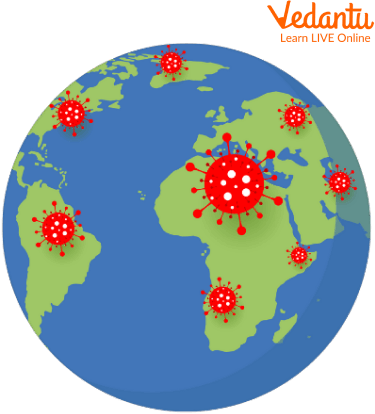
The Spread of Pandemic
Summary
In this article, we have learnt about epidemics, their types and their causes. An epidemic occurs when a disease spreads quickly through a population, affecting many people in a limited amount of time.
Infectious illness epidemics are typically brought on by several circumstances, such as a large change in the local population's environment, an emerging pathogen's arrival, or an unexpected genetic shift in the bacterium pool. Epidemics typically have to do with how illnesses grow. When immunity to a well-known disease or a recently discovered novel disease is suddenly dropped below that observed in the equilibrium time, and the transmission barrier is exceeded, an epidemic may result.


FAQs on Epidemic Disaster in Biology Explained Clearly
1. What is an epidemic disaster?
An epidemic disaster is a large-scale outbreak of an infectious disease that spreads rapidly in a specific community, region, or country and causes significant health, social, and economic disruption. It occurs when the number of cases of a disease exceeds the normal expected level in a population. Key features include:
- Rapid transmission of a pathogen such as a virus, bacterium, or parasite
- A sudden increase in morbidity (illness) and sometimes mortality (death)
- Overburdening of healthcare systems
- Need for emergency public health measures
2. What is the difference between an epidemic and a pandemic?
An epidemic is a disease outbreak limited to a particular region, while a pandemic is an epidemic that spreads across multiple countries or continents. The key differences are:
- Geographic spread: Epidemic is regional; pandemic is global
- Scale of impact: Pandemic affects a much larger population
- Examples: Cholera outbreak in one country (epidemic); COVID-19 worldwide (pandemic)
3. What causes an epidemic disaster?
An epidemic disaster is caused by the rapid spread of a pathogenic microorganism in a susceptible population. Major causes include:
- Introduction of a new or mutated virus or bacterium
- Low immunity or lack of vaccination
- Poor sanitation and hygiene
- High population density and crowding
- Increased travel and migration
4. How does an infectious disease spread during an epidemic?
An infectious disease spreads during an epidemic through efficient transmission of the pathogen from one host to another. Common modes of transmission include:
- Airborne transmission via droplets or aerosols (e.g., influenza)
- Direct contact with infected individuals
- Contaminated food or water (e.g., cholera)
- Vector-borne transmission through insects like mosquitoes (e.g., malaria)
5. What is the role of R₀ in an epidemic?
The basic reproduction number (R₀) indicates the average number of people one infected person can transmit the disease to in a fully susceptible population. Its importance in an epidemic includes:
- If R₀ > 1, the infection spreads rapidly
- If R₀ = 1, the disease remains stable
- If R₀ < 1, the outbreak gradually declines
6. What are common examples of epidemic diseases?
Common epidemic diseases include infectious illnesses that show sudden regional outbreaks. Examples are:
- Cholera – waterborne bacterial infection
- Dengue fever – mosquito-borne viral disease
- Influenza – airborne viral infection
- Ebola virus disease – severe viral hemorrhagic fever
7. How can epidemic disasters be prevented?
Epidemic disasters can be prevented through early detection, vaccination, and effective public health measures. Key prevention strategies include:
- Immunization programs to build herd immunity
- Maintaining proper sanitation and hygiene
- Quarantine and isolation of infected individuals
- Vector control to reduce mosquito or insect populations
- Public health surveillance and rapid response systems
8. What is herd immunity in the context of an epidemic?
Herd immunity is the protection of a population from an infectious disease when a large proportion of individuals are immune. Immunity can be achieved through:
- Vaccination
- Recovery from previous infection
9. What are the biological impacts of an epidemic on the human body?
The biological impact of an epidemic on the human body depends on the type of pathogen and the immune response it triggers. Common effects include:
- Activation of the immune system
- Inflammation and fever
- Damage to specific organs such as lungs (respiratory infections) or intestines (gastrointestinal infections)
- In severe cases, organ failure or death
10. Why is early detection important in controlling an epidemic disaster?
Early detection is crucial because it allows rapid containment before widespread transmission occurs. Benefits of early detection include:
- Timely diagnosis and treatment
- Effective contact tracing
- Implementation of isolation and quarantine measures
- Reduction in overall cases and mortality



