




Definition Classification Characteristics and Major Phyla of Invertebrates
Invertebrates are animals that do not have a backbone (vertebral column). They make up the vast majority of the animal kingdom, accounting for around 97% of all known animal species. From tiny insects in your garden to large squids in the ocean, invertebrates can live in diverse habitats including deserts, rainforests, polar regions, and deep oceans.
Scientists study Invertebrates to understand essential life processes, ecological interactions, and evolutionary patterns. They play many important roles, such as pollinating plants, breaking down organic matter, and serving as a vital part of food chains. This page will help you learn about the different types of these invertebrates animals, their unique features, and their broader importance in nature.
Types of Invertebrates
There are several ways to group invertebrates. A common approach is to group them by habitat:
Land-dwelling: Insects, spiders, worms, millipedes, centipedes, and others
Freshwater: Water fleas, water snails, freshwater sponges, crayfish, and some worms
Marine: Corals, sea stars, sea urchins, jellyfish, crustaceans, and many more
One widely used invertebrates classification recognises 8 groups of invertebrates (major phyla) as follows:
Porifera (Sponges)
Cnidaria (Coelenterata)
Platyhelminthes (Flatworms)
Nematoda (Roundworms)
Annelida (Segmented worms)
Phylum Arthropods (Insects, spiders, crustaceans, etc.)
Phylum Mollusca (Snails, octopuses, clams, etc.)
Echinodermata (Sea stars, sea urchins, etc.)
In everyday learning, many students focus on four major groups: arthropods, molluscs, annelids, and coelenterates. Let us look at the characteristics of invertebrates, followed by these groups in detail.
Characteristics of Invertebrates
Although invertebrates are a very diverse group, they generally share a few key traits:
No Backbone: They lack a vertebral column (backbone). Some have hard outer coverings (exoskeletons) or shells for protection and structure.
Size: Many invertebrates animals are small, but there are exceptions, such as giant squids.
Respiration: Most do not have lungs. They often breathe through their skin, through specialised structures like gills, or using breathing tubes (tracheae in insects).
Heterotrophic: Like all animals, invertebrates cannot produce their own food, so they depend on other organisms for nutrition.
Reproduction: Many reproduce sexually, but some can also reproduce asexually (e.g., budding or fission in simple organisms like hydra and some worms).
Phylum Arthropods
Phylum Arthropods is the largest and most diverse group of invertebrates. Arthropods have:
A segmented body (divided into head, thorax, and abdomen or cephalothorax and abdomen in some groups)
Jointed legs
A strong exoskeleton made mostly of chitin
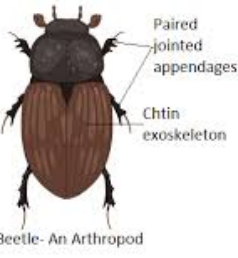
They live in almost every environment: land, air, freshwater, and oceans. Examples include insects (such as bees and beetles), spiders, scorpions, crustaceans like crabs and lobsters, and centipedes. Their exoskeleton protects them, but they must shed (moult) it to grow.
Phylum Mollusca
Phylum Mollusca includes animals with soft bodies. Most molluscs have a mantle, a special fold of tissue that can secrete a shell. Major features include:
Unsegmented bodies
A muscular foot used for movement or for attaching to surfaces
Presence of a mantle that may or may not form an external shell
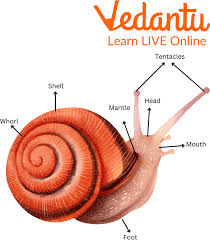
Common examples are snails, octopuses, squids, clams, and oysters. Many molluscs live in the sea or in freshwater, but some (like snails and slugs) are found on land. The colossal squid is one of the largest invertebrates animals known, with only a few specimens ever discovered.
Phylum Annelida
Phylum Annelida comprises segmented worms that include earthworms, leeches, and marine worms. Important traits are:
Body segmentation that repeats along the length of the animal
A body wall made up of ring-like segments
Well-developed organ systems
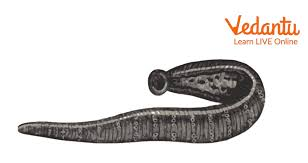
Earthworms are a classic example. They are often considered helpful to humans because they improve soil quality by aerating it and turning organic matter into nutrient-rich compost. The giant Amazon leech is among the largest of these invertebrates animals.
Phylum Coelenterata
Phylum Coelenterata (also called Cnidaria) generally refers to radially symmetrical animals with two body layers:
Ectoderm (outer layer)
Endoderm (inner layer)
They typically have tentacles bearing stinging cells (nematocysts) for capturing prey and for defence. Examples include jellyfish, corals, sea anemones, and hydra. Corals form reefs that host some of the most diverse ecosystems on Earth.
Other Major Invertebrate Groups
While the four phyla above often receive the most attention, there are many other important groups worth knowing about:
Porifera (Sponges): Simplest animals without tissues or organs. They filter feed by pumping water through pores.
Platyhelminthes (Flatworms): Flattened bodies; includes tapeworms and planarians.
Nematoda (Roundworms): Cylindrical worms that often live as parasites or free-living organisms in soil and water.
Echinoderms: Starfish, sea urchins, and brittle stars with spiny skins and unique water vascular systems.
These groups all fit into the broader invertebrates classification and show how diverse and adaptable invertebrates can be.
Unique Add-Ons: Quiz and Mnemonic
Quick Quiz (with Answers)
Which phylum includes animals with jointed legs and an exoskeleton?
Answer: Arthropods
Which invertebrate group typically has a mantle that secretes a shell?
Answer: Mollusca
Name the phylum for segmented worms like earthworms.
Answer: Annelida
Which phylum includes jellyfish and corals?
Answer: Coelenterata (Cnidaria)
What is the main feature that distinguishes invertebrates animals from vertebrates?
Answer: The absence of a backbone (vertebral column)
Simple Mnemonic for 8 Major Invertebrate Groups
You can use the mnemonic “Please Come Play Now And Ask Many Eels” to remember:
P = Porifera
C = Cnidaria (Coelenterata)
P = Platyhelminthes
N = Nematoda
A = Annelida
A = Arthropods
M = Mollusca
E = Echinoderms
Related Topics


FAQs on Invertebrates Animals Without a Backbone
1. What are invertebrates?
Invertebrates are animals that do not have a vertebral column (backbone). They make up about 95% of all animal species on Earth and show great diversity in form and habitat.
- They can be microscopic or very large.
- Many have an exoskeleton, shell, or soft body.
- Examples include insects, worms, mollusks, and jellyfish.
2. What are the main groups of invertebrates?
The main groups of invertebrates are classified into several major phyla based on body structure and organization.
- Porifera – sponges
- Cnidaria – jellyfish and corals
- Platyhelminthes – flatworms
- Nematoda – roundworms
- Annelida – segmented worms
- Mollusca – snails, clams, octopus
- Arthropoda – insects, spiders, crustaceans
- Echinodermata – starfish, sea urchins
3. What is the difference between vertebrates and invertebrates?
The main difference between vertebrates and invertebrates is the presence or absence of a backbone.
- Vertebrates have a vertebral column and internal skeleton.
- Invertebrates lack a backbone and may have an exoskeleton or soft body.
- Vertebrates include fish, amphibians, reptiles, birds, and mammals.
- Invertebrates include insects, worms, and mollusks.
4. Why are invertebrates important in ecosystems?
Invertebrates are important because they play key roles in food chains, pollination, and nutrient cycling.
- Insects pollinate flowering plants.
- Earthworms improve soil fertility through decomposition.
- Many invertebrates serve as food for vertebrates.
- Marine invertebrates maintain aquatic ecosystem balance.
5. Do all invertebrates have an exoskeleton?
No, not all invertebrates have an exoskeleton; only certain groups like arthropods possess one.
- Arthropods (insects, crabs) have a chitinous exoskeleton.
- Mollusks may have a calcium carbonate shell.
- Annelids and cnidarians have soft bodies without a hard outer covering.
6. How do invertebrates reproduce?
Invertebrates reproduce either sexually, asexually, or by both methods depending on the species.
- Sexual reproduction involves fusion of gametes.
- Asexual methods include budding, fragmentation, and parthenogenesis.
- Some species, like earthworms, are hermaphrodites.
7. What is symmetry in invertebrates?
Symmetry in invertebrates refers to the arrangement of body parts around a central axis.
- Asymmetrical – no definite shape (sponges).
- Radial symmetry – body arranged around a central axis (jellyfish).
- Bilateral symmetry – left and right halves are mirror images (insects, worms).
8. What is the largest group of invertebrates?
The largest group of invertebrates is the phylum Arthropoda.
- It includes insects, arachnids, crustaceans, and myriapods.
- Arthropods have jointed appendages and a chitinous exoskeleton.
- Insects alone represent the most diverse group of animals on Earth.
9. How do invertebrates breathe?
Invertebrates use different respiratory structures depending on their habitat.
- Gills are used by aquatic invertebrates like crustaceans.
- Tracheal systems are found in insects.
- Book lungs occur in some arachnids.
- Simple diffusion occurs across the body surface in small or soft-bodied forms.
10. Can you give examples of common invertebrates?
Common examples of invertebrates include animals from several major phyla without a backbone.
- Earthworm (Annelida)
- Butterfly (Arthropoda)
- Snail (Mollusca)
- Starfish (Echinodermata)
- Jellyfish (Cnidaria)



