




Causes Symptoms Types Stages and Treatment of Lung Cancer
Cancer is a disease in which cells in the body grow out of control. When cancer starts in the lungs, it is called lung cancer. Lung cancer begins in the lungs and may spread to lymph nodes or other organs in the body, such as the brain. Cancer from other organs also may spread to the lungs. When cancer cells spread from one organ to another, they are called metastases.
Lung cancers usually are grouped into two main types called small cell and non-small cell (including adenocarcinoma and squamous cell carcinoma). These types of lung cancer grow differently and are treated differently. Non-small cell lung cancer is more common than small cell lung cancer. For more information, visit the National Cancer Institute’s Lung Cancer.
Lungs in Body
The lungs are a pair of spongy, air-filled organs situated on one or the other side of the chest (midsection). The windpipe (windpipe) conducts breathed air into the lungs through its cylindrical branches, called bronchi. The bronchi likewise partition into increasingly fewer s (bronchioles), eventually getting bitsy.
The bronchioles in the long run end in bunches of bitsy air sacs called alveoli. Carbon dioxide, a byproduct of digestion, is an entry from the blood to the alveoli, where it very well may be breathed out. Between the alveoli is a dainty layer of cells called the interstitium, which contains veins and cells that assist with supporting the alveoli.
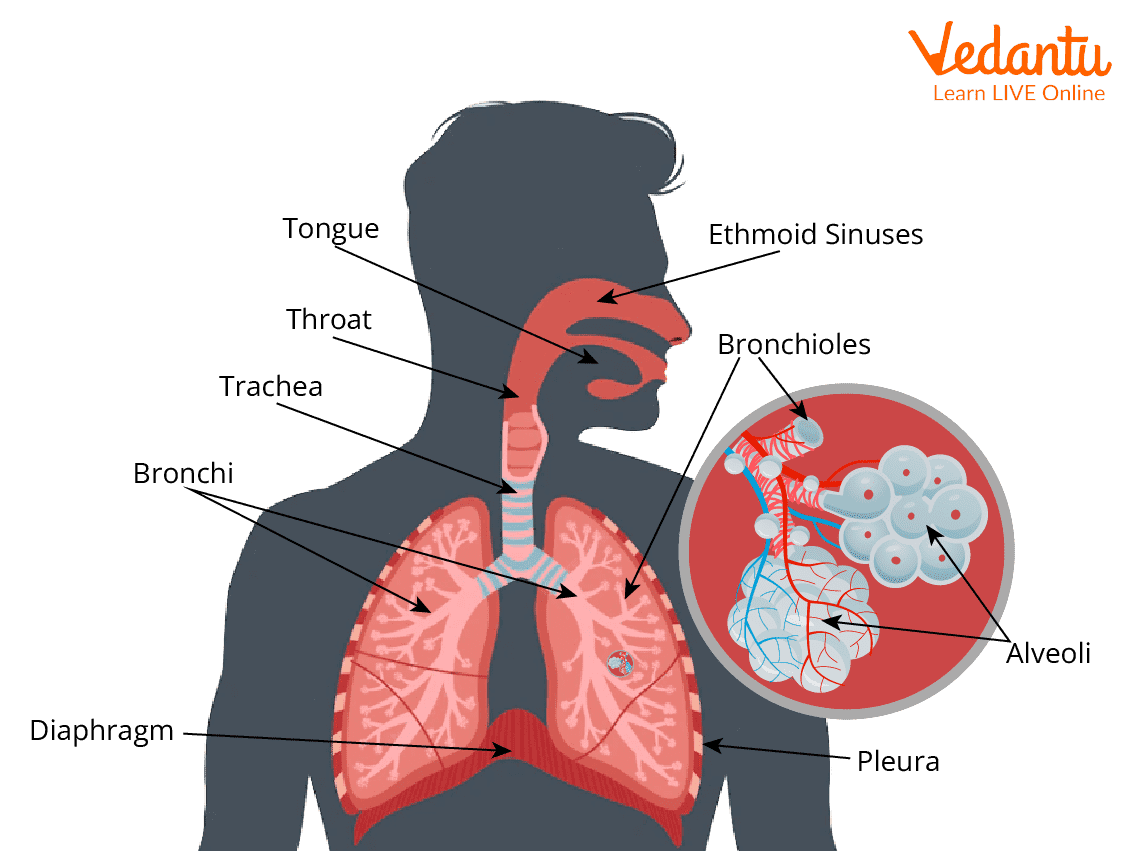
Labelling of Respiratory Parts in Human Body
Lung Cancer Symptoms
Lung cancer generally does not beget signs and symptoms in its foremost stages. Signs and symptoms of lung cancer generally do when the complaint is advanced.
A new cough that does not go down
Coughing up blood, indeed a small quantum
Breathing problem
Chest pain
Hoarseness
Losing weight without trying
Bone pain
Headache
Stage 1 Lung Cancer Symptoms - Some people with stage 1 lung cancer will witness symptoms, but they vary from person to person.
The common trusted source symptoms of lung cancer include the following:
Breathing problems cancer-related daily tasks.
Patient cough that has not vanished after 2 – 3 weeks.
Coughing up blood or blood-stained mucus.
Other symptoms of lung cancer include the following:
Appetite loss
Weight loss
General fatigue
Shoulder, chest, or back pain
Croaky voice
Continual lung problems, similar to bronchitis or pneumonia
Lung Cancer Causes
Smoking causes the majority of lung cancers — both in smokers and in people exposed to derivative smoke. But lung cancer also occurs in people who nowise smoked and in those who nowise had dragged exposure to secondary smoke. In these cases, there will be no sign of lung cancer.
How Smoking Causes Lung Cancer
Doctors believe smoking causes lung cancer by harming the cells that line the lungs. When you inhale cigarette smoke, which is full of cancer-causing cancer small (carcinogens), changes in the lung tissue begin nearly directly. At first, your body may be suitable to repair this damage. But with each repeated exposure, normal cells that line your lungs are sharply damaged. Over time, the damage causes cells to act abnormally and ultimately cancer may develop.
Types of Lung Cancer
Doctors divide lung cancer into two major types predicated on the appearance of lung cancer cells under the microscope. Your doctor makes treatment opinions predicated on which major type of lung cancer you have.
Types of lung cancer include the following:
Small cell lung cancer occurs nearly simply in heavy smokers and is less commotion-small cell lung cancer.
Non-small cell lung cancer - Non-small cell lung cancer is an umbrella term for several types of lung cancers. Non-small cell lung cancers include scaled cell cancer, adenocarcinoma, and large cell melanoma.
Stages of Lung Cancer
Cancer stages inform us how far cancer has spread and help guide treatment. The chance of successful or healing treatment is much more advanced when lung cancer is diagnosed and treated beforehand. Because lung cancer affects the symptoms in the earlier stages, opinion frequently comes after it has spread.
Non-small Cell Lung Cancer (NSCLC) Stages
Stage 1 - Cancer is found in the lung, but it has not spread outside the lung.
Stage 2 - Cancer is found in the lung and close lymph knots.
Stage 3 - Cancer is in the lung and lymph bumps in the middle of the chest.
Stage 3A - Cancer is found in lymph knots, but only on the same side of the chest where the cercancert started growing.
Stage 3B - Cancer has spread to lymph knots on the contrary side of the chest or to lymph bumps above the collarbone.
Stage 4 - Cancer has spread to both lungs, into the area around the lungs, or to distant organs.
Small Cell Lung Cancer (SCLC) Stages
There are two stages of SCLC, limited and expansive. In the limited stage, cancer is found in only one lung or near lymph bumps on the same side of the chest.
The expansive stage means cancer has spread
Throughout one lung
On the contrary lung
To lymph nodes on the contrary side
To fluid around the lung
To bone marrow
To distant organs
About 2 out of 3 people rushed to Source with SCLC are earlier in the expansive stage when their cancer is diagnosed.
Interesting Facts
Lung Cancer in the lungs is the main disease enemy of all kinds of people in America. Almost 400,000 individuals in the US are living with lung cancer in the lungs. 81% of those living with lung cancer in the lungs are over the age of 60. The infection troubles the older the most harshly.
Important Questions
1. Give some preventive measures for lung cancer.
Do Not Smoke - However, do not start, If you've nowise smoked. Talk to your children about not smoking so that they can understand how to avoid this major threat factor for lung cancer. Begin conversations about the risks of smoking with your children beforehand so that they know how to respond to peer pressure.
Stop Smoking-Stop Smoking Now - Quitting reduces your danger of lung cancer, indeed if you've smoked for eras. Talk to your doctor about remedies and stop-smoking aids that can help you quit. Options include nicotine relief products, medicines and support groups.
2. What are the complications that a person faces suffering from lung cancer?
Below are some complications for lung cancer:
Pain - Advanced lung cancer that spreads to the lining of a lung or another area of the body, similar to a bone, can affect pain. Tell your doctor if you suffer pain, as numerous treatments are available to control pain.
Fluid in the Chest (Pleural Effusion) - Lung cancer can affect fluid to accumulate in the space that surrounds the affected lung in the chest hollow (pleural space).
Fluid Accumulating in the Chest can Affect Shortness of Breath - Treatments are available to drain the fluid from your chest and reduce the threat that pleural effusion will do again.
Key Features
Lung Cancer in the lungs is the most conspicuous reason for cancer-related mortality around the world.
Around 60% of those determined to have lung cancer in the lung span of one year after determination and the five-year endurance for all patients with lung cancer in the lungs is just 16%, a rate that has been tumours fundamentally in the beyond 10 years.


FAQs on Lung Cancer Overview and Key Concepts
1. What is lung cancer?
Lung cancer is a disease in which abnormal cells in the lungs grow uncontrollably and form a malignant tumor.
- It begins in the cells lining the airways, especially the bronchi.
- Uncontrolled cell division leads to tumor formation.
- It can invade nearby tissues and spread to distant organs through metastasis.
2. What are the main types of lung cancer?
The two main types of lung cancer are non-small cell lung cancer (NSCLC) and small cell lung cancer (SCLC).
- NSCLC: Accounts for about 80–85% of cases and includes adenocarcinoma, squamous cell carcinoma, and large cell carcinoma.
- SCLC: Less common but more aggressive and spreads rapidly.
3. What causes lung cancer?
Lung cancer is primarily caused by long-term exposure to carcinogens that damage the DNA of lung cells.
- Tobacco smoke is the leading cause.
- Exposure to radon gas, asbestos, and air pollution increases risk.
- Genetic mutations in oncogenes and tumor suppressor genes drive abnormal cell growth.
4. How does lung cancer develop at the cellular level?
Lung cancer develops when genetic mutations disrupt normal regulation of the cell cycle in lung epithelial cells.
- DNA damage activates oncogenes (e.g., EGFR) or inactivates tumor suppressor genes (e.g., TP53).
- Cells evade apoptosis and continue dividing.
- Accumulated mutations lead to tumor formation and possible metastasis.
5. What are the early symptoms of lung cancer?
Early lung cancer often has mild or no symptoms, but persistent respiratory changes are common warning signs.
- Chronic cough or worsening cough
- Shortness of breath
- Chest pain
- Coughing up blood (hemoptysis)
6. How does lung cancer spread in the body?
Lung cancer spreads through a process called metastasis, where cancer cells travel to other parts of the body.
- Invades nearby tissues directly.
- Spreads via the lymphatic system to lymph nodes.
- Enters the bloodstream to reach organs such as the brain, liver, and bones.
7. What is the difference between small cell and non-small cell lung cancer?
The main difference between small cell lung cancer (SCLC) and non-small cell lung cancer (NSCLC) is their growth rate and cellular appearance under a microscope.
- SCLC: Small, round cells; grows rapidly and metastasizes early.
- NSCLC: Larger cells; generally grows and spreads more slowly.
- Treatment strategies differ based on type and stage.
8. How is lung cancer diagnosed?
Lung cancer is diagnosed through imaging tests and confirmation by microscopic examination of lung tissue.
- Chest X-ray or CT scan detects abnormal masses.
- Biopsy confirms cancer by examining cells histologically.
- Molecular testing identifies specific genetic mutations for targeted therapy.
9. What is the role of smoking in lung cancer?
Smoking is the leading risk factor for lung cancer because it exposes lung tissue to carcinogenic chemicals that damage DNA.
- Tobacco smoke contains over 60 known carcinogens.
- These chemicals cause mutations in lung epithelial cells.
- Risk increases with duration and intensity of smoking.
10. Can lung cancer be prevented?
Lung cancer risk can be significantly reduced by minimizing exposure to known carcinogens.
- Avoid or quit smoking.
- Reduce exposure to secondhand smoke and radon gas.
- Undergo low-dose CT screening if at high risk.



