




What is Monera Definition Characteristics Structure and Types
The monera kingdom represents some of the earliest and simplest organisms on the planet. Before eukaryotes ever emerged, these single-celled life forms thrived in hot springs, polar ice caps, deep oceans, and even inside living hosts. Curious to learn more? Let’s delve into what are the salient features of monera, their diverse classification, and why they continue to fascinate scientists worldwide.
What Makes Monera Unique?
When talking about monera kingdom characteristics, students often wonder about their distinctive traits. Here’s an overview:
Prokaryotic Nature: Monerans lack a true nucleus. Their genetic material (DNA) is found “naked” within the cytoplasm without any nuclear membrane.
Size & Shape: Although these organisms are microscopic, the monera cell wall is rigid and primarily made of peptidoglycan. This cell wall not only shapes the organism but also protects it.
Unicellular Existence: They are single-celled organisms. Despite this simplicity, they exhibit remarkable survival strategies.
70S Ribosomes: Their cytoplasm contains 70S ribosomes, vital for protein synthesis.
No Membrane-Bound Organelles: Organelles such as mitochondria, Golgi bodies, and plastids are absent in monerans.
Locomotion: Many have flagella, whereas others possess pili for attachment or minimal movement.
Versatile Reproduction: They mostly reproduce asexually through binary fission or budding.
Nutrition: From autotrophic bacteria that synthesise their own food to heterotrophic bacteria that rely on external sources—monerans display numerous metabolic pathways.
If you are curious about monera pronunciation, it is generally pronounced as mə-NEE-rə or moh-NEE-rə, depending on regional accents.
Monera Kingdom Classification
The monera kingdom classification often divides these organisms into three sub-kingdoms:
Archaebacteria
Archaebacteria are found in extreme conditions like salt lakes (halophiles), hot springs (thermoacidophiles), and marshy areas (methanogens).
Cell wall structure often lacks the typical peptidoglycan. Instead, it can contain pseudopeptidoglycan, enabling survival in harsh environments.
Autotrophic modes of nutrition are common.
Eubacteria (True Bacteria)
Eubacteria possess a rigid monera cell wall made of peptidoglycans.
Many move with the help of flagella.
Pili help in attachment and genetic exchange (conjugation) during reproduction.
Categorised into gram-positive and gram-negative based on their cell wall composition and staining reactions.
Examples include Rhizobium, Clostridium, E. coli, and Lactobacillus.
Cyanobacteria (Blue-Green Algae)
Known for their photosynthetic capabilities, containing chlorophyll, carotenoids, and phycobilins.
Often found in aquatic habitats, forming blooms.
Some species, like Nostoc and Anabaena, fix atmospheric nitrogen.
Also, read the Five Kingdom Classification
What are 5 Examples of Monera?
Escherichia coli (E. coli) – Common in the human intestine, helpful in vitamin K production.
Mycoplasma pneumoniae – Notable for its lack of cell wall.
Nostoc – A type of cyanobacterium involved in nitrogen fixation.
Methanobacterium – An archaebacterium living in anaerobic environments, producing methane.
Streptococcus – A genus of bacteria that can form chains, some strains of which are pathogenic.
Bacterial Shapes and Adaptations
Cocci: Spherical or oval; can appear singly (micrococci), in pairs (diplococci), chains (streptococci), clusters (staphylococci), or fours (tetracocci).
Bacilli: Rod-shaped cells, often with flagella.
Vibrios: Comma-shaped bacteria, typically with a single flagellum.
Spirilla: Spiral or coiled forms, often possessing flagella at one or both ends.
Filamentous: Resembling fungal mycelia with elongated cells.
Stalked: Feature a stalk-like extension.
Budding Forms: Cells exhibit swollen regions where budding occurs.
These variations highlight the versatility of the monera kingdom in adapting to diverse ecosystems.
Additional Insights Beyond Basics
To make this discussion more comprehensive (and outshine any other resource), here are some extra points:
Plasmids: Many monerans carry extra-chromosomal DNA called plasmids, which can impart antibiotic resistance or specialised functions.
Genetic Exchange: Alongside binary fission, monerans can exchange genetic material via conjugation (through pili), transformation (uptake of DNA from surroundings), and transduction (mediated by viruses).
Ecological Significance: Monerans act as decomposers, nitrogen fixers, and are crucial in biogeochemical cycles.
Pathogenic vs Beneficial: While some bacteria cause diseases, others play beneficial roles in fermentation, digestion, and biotechnology.
Kingdom Monera Diagram
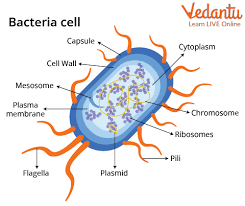
Conclusion
From their diverse metabolic pathways to their remarkable ability to survive in some of the harshest environments on Earth, the monera kingdom is a cornerstone of life’s evolutionary history. By understanding what are the salient features of monera, students gain insights not only into the past but also potential applications in medicine, industry, and ecology. We hope this comprehensive guide has satisfied your curiosity and helped you master essential concepts better than any other resource. Keep exploring and let your knowledge of these microscopic marvels grow!
Quick Quiz
Test your knowledge of the monera kingdom classification and what are the salient features of monera with this short quiz:
Which component primarily makes up the monera cell wall in eubacteria?
Name one unique location where archaebacteria thrive that most other organisms cannot survive.
Which type of monerans are photosynthetic?
State one main difference between archaebacteria and eubacteria in terms of their cell wall structure.
What are 5 examples of monera? (Name at least three to pass!)
Check Your Answers
Peptidoglycan
Extremely salty lakes, hot springs, or marshy methane-rich areas
Cyanobacteria (blue-green algae)
Archaebacteria often have pseudopeptidoglycan, while eubacteria have peptidoglycan.
Possible answers: E. coli, Mycoplasma pneumoniae, Nostoc, Methanobacterium, Streptococcus, etc.


FAQs on Monera Kingdom Overview Structure Classification and Importance
1. What is Monera in biology?
Monera is a biological kingdom that includes all prokaryotic organisms, meaning organisms without a true nucleus or membrane-bound organelles.
Key features of Kingdom Monera include:
- Cells lack a nuclear membrane and membrane-bound organelles
- Genetic material is present in a nucleoid region
- Mostly unicellular and microscopic
- Reproduce mainly by binary fission
2. What are the main characteristics of Monera?
The main characteristics of Monera are that they are unicellular, prokaryotic, and lack a true nucleus.
Important characteristics include:
- Presence of a cell wall (usually made of peptidoglycan in bacteria)
- No membrane-bound organelles like mitochondria or chloroplasts
- DNA is circular and lies in the nucleoid
- May have structures like flagella, pili, or capsule
- Can be autotrophic or heterotrophic in nutrition
3. What are examples of organisms in Kingdom Monera?
Examples of organisms in Kingdom Monera include bacteria, cyanobacteria, and mycoplasma.
Common examples are:
- Escherichia coli (E. coli) – found in the human intestine
- Nostoc and Anabaena – photosynthetic cyanobacteria
- Mycoplasma – bacteria lacking a cell wall
4. How do Monera reproduce?
Monera reproduce mainly by asexual reproduction through binary fission.
The process of binary fission involves:
- Replication of circular DNA
- Elongation of the cell
- Division of cytoplasm into two identical daughter cells
5. What is the cell structure of Monera?
The cell structure of Monera is prokaryotic, meaning it lacks a true nucleus and membrane-bound organelles.
Main parts of a moneran cell include:
- Cell wall (usually peptidoglycan)
- Plasma membrane
- Cytoplasm with 70S ribosomes
- Nucleoid containing circular DNA
- Optional structures like flagella, pili, and capsule
6. What is the difference between Monera and Protista?
The main difference between Monera and Protista is that Monera are prokaryotic while Protista are eukaryotic.
Key differences include:
- Monera: No true nucleus, no membrane-bound organelles
- Protista: True nucleus and membrane-bound organelles present
- Monera are always unicellular prokaryotes
- Protista are mostly unicellular but structurally more complex
7. Are cyanobacteria included in Monera?
Yes, cyanobacteria are included in Monera because they are prokaryotic organisms.
Cyanobacteria, also called blue-green algae, have the following features:
- Lack a true nucleus
- Perform photosynthesis using chlorophyll a
- Often fix atmospheric nitrogen
8. What is the nutrition mode in Monera?
Monera show diverse modes of nutrition, including autotrophic and heterotrophic types.
Nutrition in Monera can be:
- Autotrophic – photosynthetic (cyanobacteria) or chemosynthetic (nitrifying bacteria)
- Heterotrophic – saprophytic, parasitic, or symbiotic
9. Why is Monera important in the ecosystem?
Monera are important in the ecosystem because they play key roles in nutrient cycling and decomposition.
Ecological importance includes:
- Decomposition of organic matter
- Nitrogen fixation by bacteria like Rhizobium
- Participation in biogeochemical cycles
- Symbiotic relationships with plants and animals
10. Do all Monera have a cell wall?
No, not all Monera have a cell wall, although most bacteria possess one made of peptidoglycan.
For example:
- Most bacteria have a rigid cell wall made of peptidoglycan
- Mycoplasma lack a cell wall and have only a plasma membrane



