




What Are Plant Roots Definition Types Structure and Functions
Plants are an essential part of our ecosystem, evolving over billions of years to become the green lungs of our planet. The root system in plants is a crucial component that not only supports the plant but also plays a significant role in water and nutrient absorption. In this guide, we will explore what a root is, the various types of roots in plants, and their vital functions. Whether you’re a student, educator, or simply curious about nature, this detailed yet easy-to-understand article is for you.
Also Check: Plant Growth and Development
What is Root?
A root is the underground part of a plant that anchors it to the soil and absorbs water and dissolved minerals. Every root system in plants is designed to support the overall health of the plant by:
Anchoring: Keeping the plant stable in the soil.
Absorbing: Taking up water and essential nutrients.
Storing: Acting as a reservoir for food in the form of starch.
Reproducing: In some cases, contributing to vegetative propagation.
Types of Roots in Plants
1. Taproot System
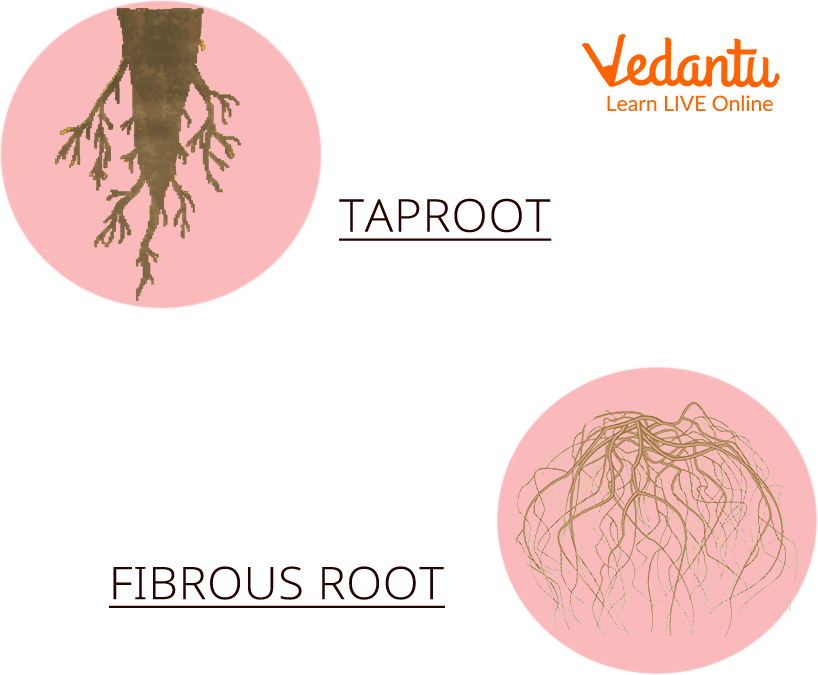
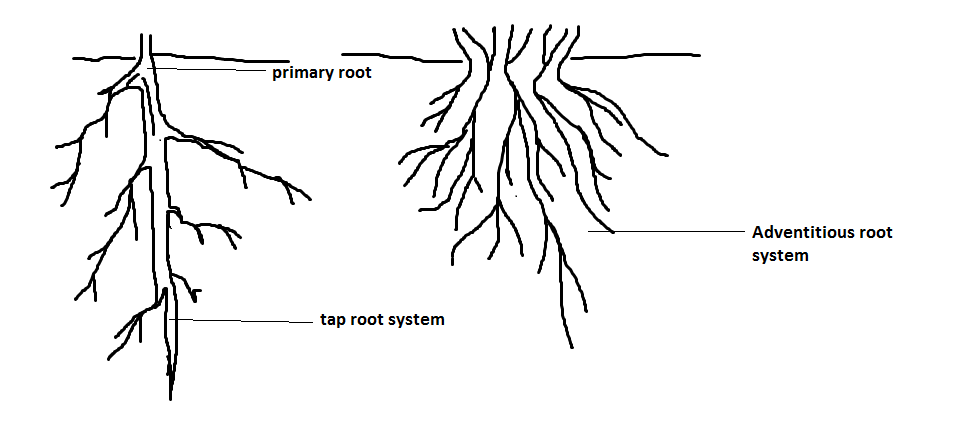
The taproot system is characterised by a single, large primary root that grows vertically downward. Smaller lateral roots branch off from the taproot. This type is common in many dicotyledonous plants such as:
Carrot
Beetroot
Parsley
These are excellent examples when discussing types of roots with examples because they demonstrate the deep-penetrating nature of taproots, which is ideal for accessing water from deeper soil layers.
2. Fibrous Root System
In contrast, the fibrous root system consists of numerous, thin roots spreading out in a network rather than one central taproot. This system is typical of monocotyledonous plants, for example:
Rice
Wheat
Maize
This explanation of types of roots in plants helps illustrate why plants with a fibrous system tend to have a more bushy and expansive root structure that efficiently collects moisture from the surface layers of soil.
3. Adventitious Roots
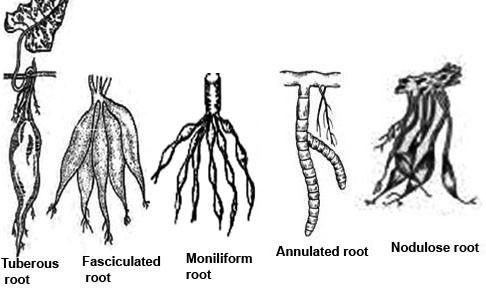
Another category is the adventitious roots, which develop from non-root tissues such as stems or leaves. These roots are especially important for:
Support (as seen in the aerial roots of the banyan tree)
Extra absorption in specialised conditions
Special functions like respiration and storage
Adventitious roots highlight the diversity in different types of roots and showcase how versatile the concept of what is root can be in adapting to various environmental challenges.
Also Read: Anatomy of Monocot and Dicot Plants
Functions of the Root System in Plants
The root system in plants performs several critical roles:
Anchorage: Prevents soil erosion by keeping the plant firmly attached.
Absorption: Uptakes water and minerals essential for photosynthesis.
Storage: Stores nutrients and food, which is vital during unfavourable conditions.
Reproduction: In certain plants, roots can generate new individuals, an example of vegetative propagation.
Ecological Impact: Maintains soil health and supports a wide range of microorganisms, contributing to a balanced ecosystem.
Also Check: Morphology of Flowering Plants
Unique Insights and Additional Information
Beyond the standard information, here are some unique aspects that set our guide apart:
Symbiotic Relationships: Many roots form symbiotic associations with fungi (mycorrhizae) and bacteria, enhancing nutrient uptake—a detail often not emphasised enough.
Adaptations to Environment: Some plants have evolved specialised roots, such as aerial roots that not only absorb nutrients from the air but also assist in climbing and support.
Innovative Root Structures: In some aquatic and semi-aquatic plants, roots can filter and trap sediments, contributing to water purification processes.
Also Check: Mycorrhiza
Interactive Quiz
Question 1:What is the primary function of roots in plants?
A. Carrying out photosynthesis
B. Absorbing water and minerals from the soil
C. Producing flowers and fruits
D. Releasing oxygen into the atmosphere
Correct Answer: B. Absorbing water and minerals from the soil
Explanation: Roots are primarily responsible for anchoring the plant and absorbing essential water and dissolved minerals, which are crucial for plant growth and photosynthesis.
Question 2: Which term best describes the main central root from which smaller lateral roots branch off?
A. Adventitious root
B. Fibrous root
C. Taproot
D. Aerial root
Correct Answer: C. Taproot
Explanation: The taproot is the dominant central root that grows downward and from which lateral roots emerge, as seen in plants like carrots and beetroot.
Question 3: Which type of root system is most common in monocotyledonous plants such as rice and wheat?
A. Taproot
B. Fibrous root
C. Adventitious root
D. Storage root
Correct Answer: B. Fibrous root
Explanation: Monocot plants typically have a fibrous root system, characterised by many thin roots forming a dense network, which efficiently collects water from the soil’s surface.
Question 4: What distinguishes adventitious roots from taproots?
A. They grow exclusively above the ground.
B. They develop from non-root tissues such as stems or leaves.
C. They are always thicker and more robust.
D. They only serve as storage organs.
Correct Answer: B. They develop from non-root tissues such as stems or leaves.
Explanation: Unlike taproots, which originate from the radicle, adventitious roots arise from other parts of the plant, providing additional support and sometimes serving specialised functions like respiration or extra nutrient absorption.
Question 5: How many main types of roots are there as discussed in our guide on the root system in plants?
A. One
B. Two
C. Three
D. Four
Correct Answer: C. Three
Explanation: Our guide explains that there are three main types of roots: taproots, fibrous roots, and adventitious roots. Each type has its unique structure and function, contributing to the overall health and stability of the plant.
Read More:


FAQs on Plant Roots Structure and Functions in Plants
1. What are plant roots?
Plant roots are the underground vegetative organs of a plant that anchor it in the soil and absorb water and minerals. The root system develops from the radicle of the seed and usually grows downward into the soil. Roots typically:
- Anchor the plant firmly in the ground
- Absorb water and mineral nutrients
- Store food in some plants (e.g., carrot, beetroot)
- Transport absorbed substances to the stem
2. What is the main function of roots in plants?
The main function of roots is to absorb water and minerals from the soil and anchor the plant. In addition to this primary role, roots also:
- Provide mechanical support
- Conduct water through the xylem to aerial parts
- Store food in modified roots
- Help in vegetative propagation in some species
3. What are the different types of root systems?
The two main types of root systems are the taproot system and the fibrous root system. They differ in structure and occurrence:
- Taproot system: One main primary root with lateral branches; common in dicot plants like pea and mustard.
- Fibrous root system: Many thin roots of similar size arising from the stem base; common in monocot plants like wheat and rice.
4. What is the difference between taproot and fibrous root?
The difference between a taproot and a fibrous root lies in their structure and origin. Key differences include:
- Taproot: Develops from the radicle, has one main root with branches, found in dicots.
- Fibrous root: Develops from the base of the stem, consists of many similar-sized roots, found in monocots.
- Taproots often grow deeper, while fibrous roots spread near the soil surface.
5. What are the main parts of a root?
The main parts of a root are the root cap, meristematic zone, elongation zone, and maturation zone. These regions include:
- Root cap: Protects the root tip as it pushes through soil.
- Meristematic zone: Contains actively dividing cells.
- Zone of elongation: Cells increase in length.
- Zone of maturation: Cells differentiate and form root hairs.
6. What are root hairs and what is their function?
Root hairs are tiny hair-like extensions of epidermal cells that increase the surface area for absorption. They are found in the zone of maturation and help in:
- Absorbing water by osmosis
- Taking in dissolved mineral ions
- Enhancing contact between root and soil particles
7. How do roots absorb water from the soil?
Roots absorb water from the soil mainly by the process of osmosis through root hairs. The steps include:
- Water enters root hairs due to a concentration gradient.
- It moves across the cortex via apoplast and symplast pathways.
- Water reaches the xylem and is transported upward.
8. What are modified roots with examples?
Modified roots are roots that change their structure to perform special functions other than absorption and anchorage. Examples include:
- Storage roots: Carrot, radish (store food).
- Prop roots: Banyan tree (provide support).
- Pneumatophores: Mangroves (help in respiration).
- Adventitious roots: Sweet potato (arise from stem).
9. What is the role of roots in preventing soil erosion?
Roots help prevent soil erosion by binding soil particles together and stabilizing the ground. The root network:
- Holds soil firmly in place
- Reduces runoff during rainfall
- Improves soil structure and aeration
10. Do roots perform photosynthesis?
Roots generally do not perform photosynthesis because they lack chlorophyll and are located underground. Most roots do not contain chloroplasts, so they cannot capture light energy. However, in rare cases like aerial roots of some orchids, limited photosynthesis may occur if chlorophyll is present.



