




Respiration Definition Types and Stepwise Process Explained
Respiration is a fundamental metabolic process that every living organism relies on to produce energy. Whether you are asking, what is respiration in biology, or wondering what is respiration in plants and what is respiration in humans, this guide will walk you through every aspect of this vital process in clear, simple language.
Introduction
Have you ever wondered, what is respiration? In its simplest form, respiration is the process by which cells convert food into energy (ATP) by oxidising organic molecules. This process is not only crucial in humans and animals but also plays a key role in plants and other organisms. Here, we answer fundamental questions such as what is respiration in biology, what is respiration in plants and what is respiration in humans, ensuring that students at every level can grasp these core concepts easily.
What is Respiration?
In biology, respiration is the chemical process through which living cells obtain energy. So, if you are asking, what is respiration, the answer is that it is the process by which complex organic substances (like glucose) are broken down in the presence (or absence) of oxygen to produce ATP, water, carbon dioxide, and other by-products.
In everyday language, what is respiration in biology? It is the energy-releasing mechanism that fuels growth, repair, and all other metabolic activities. This essential process occurs in every living organism, from single-celled bacteria to complex multicellular organisms like humans and plants.
Types of Respiration
Respiration can be broadly classified into two types:
Aerobic Respiration
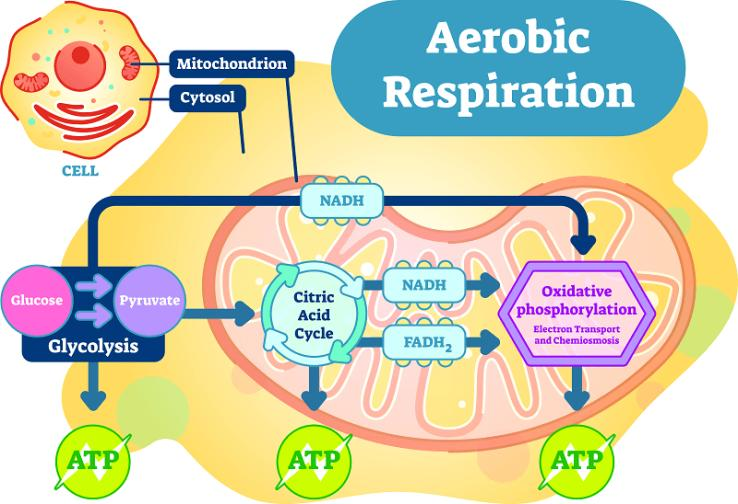
Aerobic respiration occurs in the presence of oxygen. This process is highly efficient and occurs in the mitochondria of eukaryotic cells. The overall reaction can be summarised as:
Glucose (C₆H₁₂O₆) + Oxygen (6O₂) → Carbon Dioxide (6CO₂) + Water (6H₂O) + Energy (ATP)
This process answers the query about respiration in biology when oxygen is available, making it the primary energy source for most higher organisms.
Anaerobic Respiration
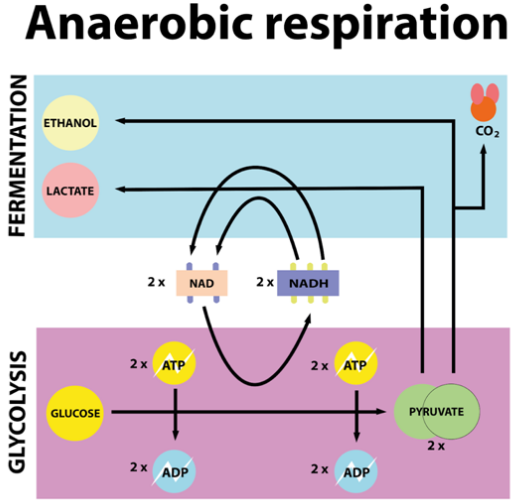
Anaerobic respiration takes place in the absence of oxygen and is less efficient compared to its aerobic counterpart. It is common among certain bacteria, yeast, and muscle cells under strenuous conditions. The simplified reaction is:
Glucose (C₆H₁₂O₆) → Alcohol (or Lactic Acid) + Carbon Dioxide + Energy (ATP)
Even though anaerobic respiration yields less energy, it is crucial for survival in oxygen-deficient environments.
Phases of Respiration
The respiration process comprises several distinct stages that work together to extract energy from glucose:
Glycolysis
Glycolysis is the first step of cellular respiration, where one molecule of glucose is split into two molecules of pyruvate. This stage occurs in the cytoplasm and produces a small amount of ATP and NADH. If you are wondering, what is respiration in biology at the molecular level, glycolysis is the gateway reaction that begins the energy extraction process.
Also Read: Differences Between Aerobic and Anaerobic Respiration
The Citric Acid (Krebs) Cycle
After glycolysis, pyruvate is transported into the mitochondria, where it is converted into acetyl-CoA. The Citric Acid Cycle (or Krebs cycle) then oxidises acetyl-CoA, releasing carbon dioxide and generating additional ATP and electron carriers (NADH and FADH₂). This cycle is a cornerstone of understanding what respiration is in the context of energy metabolism.
Oxidative Phosphorylation
The final phase of respiration, oxidative phosphorylation, occurs in the inner mitochondrial membrane. Here, the electrons carried by NADH and FADH₂ pass through the electron transport chain, ultimately reducing oxygen to water and producing a large amount of ATP. This step provides the energy required for nearly all cellular functions.
Respiration in Plants
Many students ask, what is respiration in plants? While plants are best known for photosynthesis (their method of producing food), they also carry out respiration continuously to meet their energy needs. In plant cells, respiration occurs in the mitochondria much like in animals.
Transpiration Vs. Respiration in Plants
It is also important to understand what transpiration is. Transpiration is the process of water evaporation from plant leaves. Unlike respiration—which involves the breakdown of glucose to release energy—transpiration helps in cooling the plant and in the transport of nutrients from the roots. Thus, when considering what is respiration in plants, it is equally crucial to distinguish it from what is transpiration, another vital plant process.
Remember, for a comprehensive grasp of plant physiology, one should know both what is respiration in plants and is transpiration to appreciate how energy production and water movement work together in the life of a plant.
Respiration in Humans
Humans, like all other animals, rely on respiration to generate the energy necessary for survival. So, what is respiration in humans? It is a complex process that involves the intake of oxygen, its utilisation in the mitochondria to break down food molecules, and the release of carbon dioxide as a waste product.
This process not only answers the question of what is respiration in biology but also specifically addresses what is respiration in humans. Every cell in the human body depends on this continuous process to produce ATP, which fuels everything from muscle contractions to neural functions.
Respiration Vs. Excretion
Another important comparison in biology is between respiration and excretion. While you may wonder what excretion is, it is essential to note that excretion is the process by which organisms remove waste products generated during metabolism. In contrast, respiration is focused on energy production.
Understanding what excretion is alongside respiration provides a broader perspective on how organisms maintain homeostasis. Thus, while respiration extracts energy from nutrients, excretion ensures that harmful by-products are efficiently eliminated from the body.
Real-Life Applications of Respiration
Athletics and Exercise Science
Enhanced Performance: Athletes benefit immensely from understanding what respiration is in humans. By optimising aerobic respiration, trainers can help improve endurance and performance. For example, monitoring oxygen intake during workouts allows athletes to refine their training routines and boost overall efficiency.
Recovery and Health Monitoring: Breath analysis and oxygen uptake tests are utilised in sports science to track recovery rates. Knowing what is respiration in biology enables coaches and medical staff to design effective recovery protocols, reducing injury risk and enhancing long-term health.
Medical and Health Sciences
Managing Respiratory Conditions: Medical professionals rely on detailed knowledge of what is respiration in humans to diagnose and treat respiratory illnesses such as asthma, chronic obstructive pulmonary disease (COPD), and pneumonia. This understanding aids in developing targeted therapies that support efficient oxygen utilisation.
Critical Care and Surgery: In hospitals, particularly in critical care settings, monitoring respiratory function is vital. Devices such as ventilators are used to support patients who cannot breathe adequately on their own. A solid grasp of what is respiration in biology ensures these interventions are both safe and effective.
Environmental and Agricultural Applications
Optimising Plant Growth: Farmers and horticulturists use insights into what is respiration in plants to enhance crop yield and health. By understanding how plant mitochondria generate energy, agricultural experts can improve cultivation practices, ensuring that plants utilise nutrients more efficiently.
Balancing Transpiration and Respiration: In plant physiology, it is essential to distinguish between what is respiration and what is transpiration. While respiration in plants is crucial for energy production, transpiration—the process of water loss through leaves—also plays a key role in nutrient transport and cooling. Balancing these processes can lead to more resilient crops, especially in drought-prone regions.
Climate Change Research: Studying ecosystem respiration helps scientists understand the carbon cycle and assess how changes in respiration rates impact global carbon dioxide levels. This research is critical in developing strategies to mitigate climate change.
Industrial and Biotechnological Applications
Fermentation Processes: Industries such as brewing and biofuel production heavily depend on anaerobic respiration—a process that answers what is respiration in biology under oxygen-limited conditions. Microorganisms convert sugars into alcohol or other valuable compounds, making fermentation a cornerstone of industrial biotechnology.
Bioreactor Design: Engineers and biotechnologists apply principles of cellular respiration when designing bioreactors. By optimising conditions that promote efficient respiration, they can enhance the production of pharmaceuticals, enzymes, and other bioproducts, thereby improving industrial yields.


FAQs on Respiration Process and Energy Release in Living Organisms
1. What is respiration in biology?
Respiration is the biological process by which cells break down glucose to release energy (ATP) for life activities. It occurs in all living organisms and can be aerobic or anaerobic. In cellular respiration:
- Glucose is the main fuel molecule.
- Energy is captured in the form of ATP.
- Waste products such as carbon dioxide and sometimes water are produced.
2. What is the difference between aerobic and anaerobic respiration?
The main difference between aerobic respiration and anaerobic respiration is that aerobic respiration requires oxygen, while anaerobic respiration does not. Key differences include:
- Aerobic respiration: Uses oxygen, produces more ATP, end products are carbon dioxide and water.
- Anaerobic respiration: Occurs without oxygen, produces less ATP, end products may be lactic acid (in muscles) or ethanol and carbon dioxide (in yeast).
3. What are the stages of cellular respiration?
Cellular respiration occurs in three main stages: glycolysis, Krebs cycle, and electron transport chain. These stages include:
- Glycolysis: Breakdown of glucose into pyruvate in the cytoplasm.
- Krebs cycle: Occurs in the mitochondrial matrix and releases carbon dioxide.
- Electron transport chain: Produces most ATP using oxygen in the inner mitochondrial membrane.
4. Where does respiration take place in the cell?
Respiration mainly takes place in the mitochondria, known as the powerhouse of the cell. The locations include:
- Glycolysis occurs in the cytoplasm.
- Krebs cycle occurs in the mitochondrial matrix.
- Electron transport chain occurs in the inner mitochondrial membrane.
5. What is the chemical equation for aerobic respiration?
The balanced chemical equation for aerobic respiration is: C₆H₁₂O₆ + 6O₂ → 6CO₂ + 6H₂O + energy (ATP). This means:
- One molecule of glucose reacts with six molecules of oxygen.
- It produces six molecules of carbon dioxide and six of water.
- Energy is released in the form of ATP.
6. Why is respiration important for living organisms?
Respiration is important because it provides the ATP needed for all cellular activities. Its importance includes:
- Powering muscle contraction and movement.
- Supporting active transport across membranes.
- Enabling growth, repair, and cell division.
7. What is glycolysis and why is it important?
Glycolysis is the first stage of cellular respiration where glucose is split into two molecules of pyruvate. It is important because:
- It occurs in the cytoplasm of all cells.
- It does not require oxygen.
- It produces a small amount of ATP and NADH.
8. What happens during anaerobic respiration in human muscles?
During anaerobic respiration in human muscles, pyruvate is converted into lactic acid when oxygen is limited. This process:
- Occurs during intense exercise.
- Produces a small amount of ATP.
- Leads to temporary muscle fatigue due to lactic acid buildup.
9. How is respiration different from breathing?
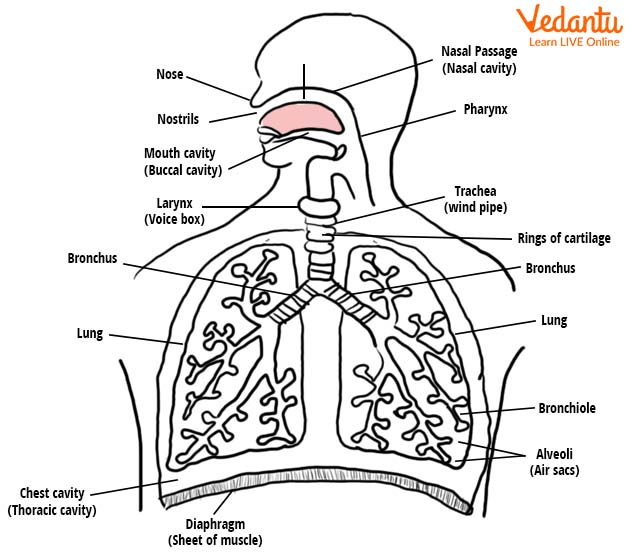
Respiration is a chemical process in cells that releases energy, while breathing is the physical process of inhaling and exhaling air. The key differences are:
- Breathing: Mechanical movement of air into and out of lungs.
- Respiration: Cellular breakdown of glucose to produce ATP.
- Breathing supplies oxygen needed for aerobic respiration.
10. How much ATP is produced during aerobic respiration?
Aerobic respiration produces approximately 30–32 ATP molecules per molecule of glucose in eukaryotic cells. The ATP yield comes from:
- 2 ATP from glycolysis.
- 2 ATP from the Krebs cycle.
- About 26–28 ATP from the electron transport chain.



