




Structure and Function of the Inner Ear in Balance Control
Have you ever noticed what happens when you spin around for a minute? You cannot stand firmly, right? Why does spinning make us feel dizzy? All of the above happens because of our ears and the fluid-filled inside them. Ear is our sense organ that helps us in hearing. There are different parts of the ear like the outer ear, middle ear, and inner ear. It is because of the fluid and related ear mechanism we can stand firm. This fluid is endolymph which is filled in semicircular canals. As a result, our ear plays a significant role in balancing our bodies and keeps us static. But, the question is how?
So, in this article, you will learn all about balance in the ear and how the ear balances the body.

Child Feeling Dizzy after Spinning
What is Ear?
The ear is the organ that creates our sense of hearing and balance. Also called the sense organ of hearing. This organ is in charge of capturing sounds around us and sending signals to the brain so we can react accordingly.
For example, imagine hearing the siren of an ambulance. Your ear collects the vibrations from the siren and signals your brain for you to move out of the way of the ambulance.
What is Ear Balance?
The balance, which is maintained and regulated by the help of our ears and their related structures, is called the balance in the ear. The part of the inner ear is responsible for this. Medication, ear infections, and head injuries can cause ear balance problems.
Structure or Anatomy of the Ear
The ear is divided into three parts: the outer ear, the middle ear, and the inner ear.
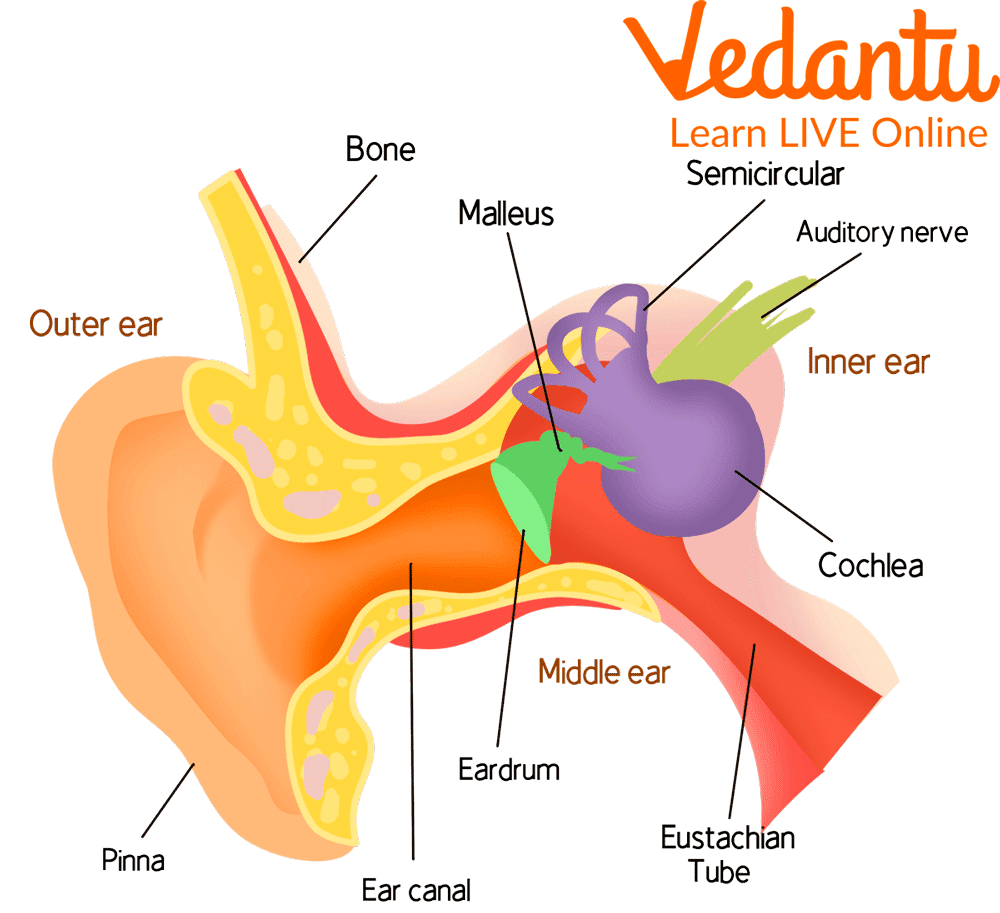
Three Divisions of the Ear
The Outer Ear
The outer ear is made up of two parts: The Oracle and the Auditory canal.
The Oracle or the ear lobe/pinna - It is the part of the ear that captures sound waves. The auditory canal is the part of the ear through which sound travels to reach the middle ear. The outer ear also has some hair and wax-producing glands that help the ear to be clean and guard it against harmful bacterial attacks.
The Middle Ear
The middle ear comprises the eardrum and three small bones: the hammer, the incus, and the stapes. They transmit sound to the cochlea. A tube (named Eustachian tube) is also located in the middle ear. This tube connects the middle ear to the throat. The primary function of this is to equalise the pressure within the ears so that the eardrum can correctly translate sound vibrations to the auditory nerves.
The eardrum is a membrane similar to a drum head located between the outer and inner ear. When sounds reach in tympanic tissue, it vibrates and causes the tiny bones to move. Next, the tiny bone called the hammer, incus, and stapes start moving and raise the vibration transmitted by the ear drum, then the bones send the amplified signal to the cochlea.
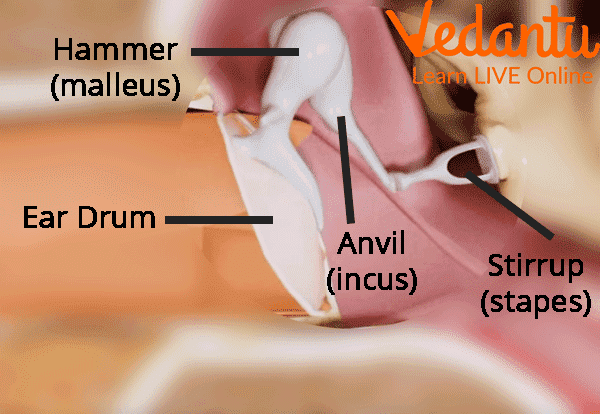
Tiny Ear Bones/Ossicles
The Inner Ear
The cochlea is located in the inner ear and is a structure of elastic which is usually coiled and looks like a snail shell. This part of the ear is in charge of converting the vibration received by the middle year into a nerve signal to send it to the brain through auditory nerves.
Along with the cochlea are connected the semicircular canals, which are usually three tiny tubes that are interconnected, and their job is to help to maintain the body's balance. The semicircular Canals are filled with fluid that is the essential liquid in the ear for balance.
The Main Balancing Portion: The Semicircular Canals
The semicircular canals are filled with fluid, and their walls are lined with tiny hair. When we move our heads, the fluid in the canal moves around and reaches the hair. The hair sends our position information as a signal through nerves to our Brain. The brain interprets those signals and messages towards the muscle and helps us stay balanced.
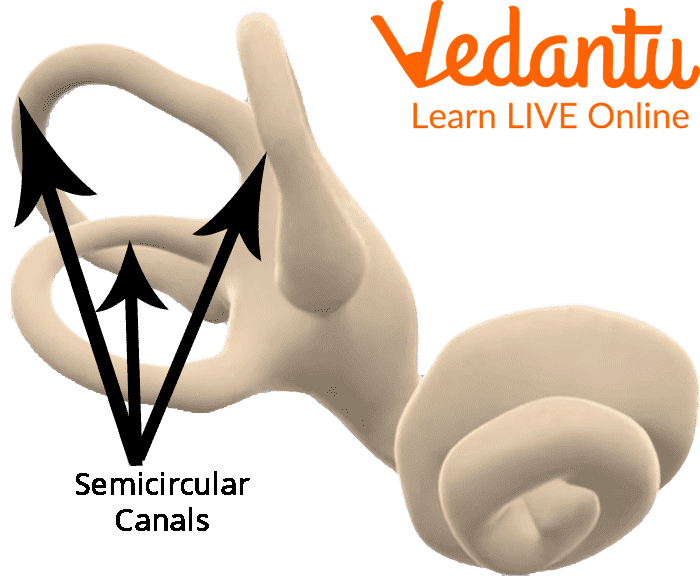
Semicircular Canals
The movement of the fluid of the semicircular canal is the sole reason behind the dizziness we feel after spinning around. When we spin around and stop, we feel dizzy because the fluid in our semicircular canal also sloshes around, again and again, giving our brain the idea that we are still spinning when we have stopped; when the fluid stops moving, the dizziness goes away.
Fluid in Ear Balance
The fluid in ear balance that helps us maintain our balance is called endolymph, which is usually filled in the ear's semicircular canals. Another liquid in the ear for balance is the perilymph. The whole semicircular canal is filled with endolymph and floats in the perilymph. Both these fluids work together and maintain our body balance.
Summary
The ear is the sense organ that aids in hearing. The ear is also helping in maintaining balance which is known as ear balance. Ear balance is an essential mechanism for humans to stand still and maintain balance, which is regulated by the fluid filled inside the semicircular canals known as endolymph. If there is fluid imbalance because of injury or infection, ear balance gets disturbed. Dizziness occurs because of this fluid if disturbed.
In this article, we discussed the anatomy of the ear and its parts outer ear, middle ear, and inner ear and their respective parts and functions. We hope we were able to clarify all the concepts and queries regarding balance in the ear.


FAQs on How the Ear Maintains Body Balance and Equilibrium
1. What is the role of the ear in maintaining body balance?
The inner ear maintains body balance by detecting head movements and position and sending signals to the brain for posture control. The balance function is performed by the vestibular system, which works along with the eyes and muscles.
- The semicircular canals detect rotational movements.
- The utricle and saccule detect linear movements and gravity.
- Signals are sent to the brain via the vestibular nerve to maintain equilibrium.
2. Which part of the ear is responsible for balance?
The inner ear, specifically the vestibular apparatus, is responsible for maintaining balance. It is located next to the cochlea and consists of:
- Three semicircular canals (anterior, posterior, lateral)
- Utricle
- Saccule
3. How do semicircular canals help in maintaining balance?
The semicircular canals help maintain balance by detecting rotational or angular movements of the head. Each canal is filled with endolymph fluid and oriented in a different plane.
- When the head rotates, endolymph moves inside the canal.
- This movement bends sensory hair cells in the ampulla.
- The stimulated hair cells send nerve impulses to the brain.
4. What is the function of the utricle and saccule in balance?
The utricle and saccule detect linear movements and the position of the head relative to gravity. They are collectively called the otolith organs.
- They contain sensory hair cells embedded in a gelatinous layer with tiny calcium carbonate crystals called otoliths.
- When the head tilts or moves linearly, otoliths shift.
- This shift bends hair cells and generates nerve impulses.
5. What is the vestibular system in the ear?
The vestibular system is the balance-maintaining system of the inner ear that detects head movement and spatial orientation. It consists of:
- Semicircular canals (for rotational movement)
- Utricle and saccule (for linear movement and gravity)
- Vestibular nerve (to transmit impulses)
6. How does the ear send balance information to the brain?
The ear sends balance information to the brain through the vestibular nerve, which carries impulses from sensory hair cells. The process occurs as follows:
- Movement stimulates hair cells in the vestibular apparatus.
- Hair cells convert mechanical stimuli into electrical signals.
- Signals travel through the vestibular nerve to the cerebellum and brainstem.
7. What is the difference between static and dynamic equilibrium in the ear?
Static equilibrium maintains balance when the body is stationary, while dynamic equilibrium maintains balance during movement. The difference lies in the structures involved:
- Static equilibrium: Controlled by the utricle and saccule; detects gravity and linear acceleration.
- Dynamic equilibrium: Controlled by the semicircular canals; detects rotational movements.
8. Why do we feel dizzy when the inner ear is disturbed?
We feel dizzy when the vestibular system is disturbed because incorrect balance signals are sent to the brain. This mismatch between signals from the ear, eyes, and muscles causes a sensation called vertigo.
- Inner ear infections can affect fluid movement.
- Excess fluid pressure can disturb hair cells.
- Conflicting signals confuse the brain.
9. How does fluid in the inner ear help in maintaining balance?
The fluid in the inner ear, called endolymph, helps maintain balance by moving in response to head motion and stimulating sensory hair cells. Its role includes:
- Flowing inside semicircular canals during rotation.
- Bending hair cells in the ampulla.
- Triggering nerve impulses for the brain.
10. How do the ear, eyes, and muscles work together to maintain balance?
The ear, eyes, and muscles maintain balance through coordinated sensory input and motor responses. The process involves:
- The vestibular system detecting head position and movement.
- The eyes providing visual information about surroundings.
- Proprioceptors in muscles and joints sensing body position.



