



When is National Science Day 2026? and What is National Science Day 2026?
National Science Day 2026 is celebrated every year on 28 February in India to honour the discovery of the Raman Effect by Sir C V Raman in 1928. This day highlights the importance of science in daily life and encourages students to develop scientific temper, curiosity, and innovation.
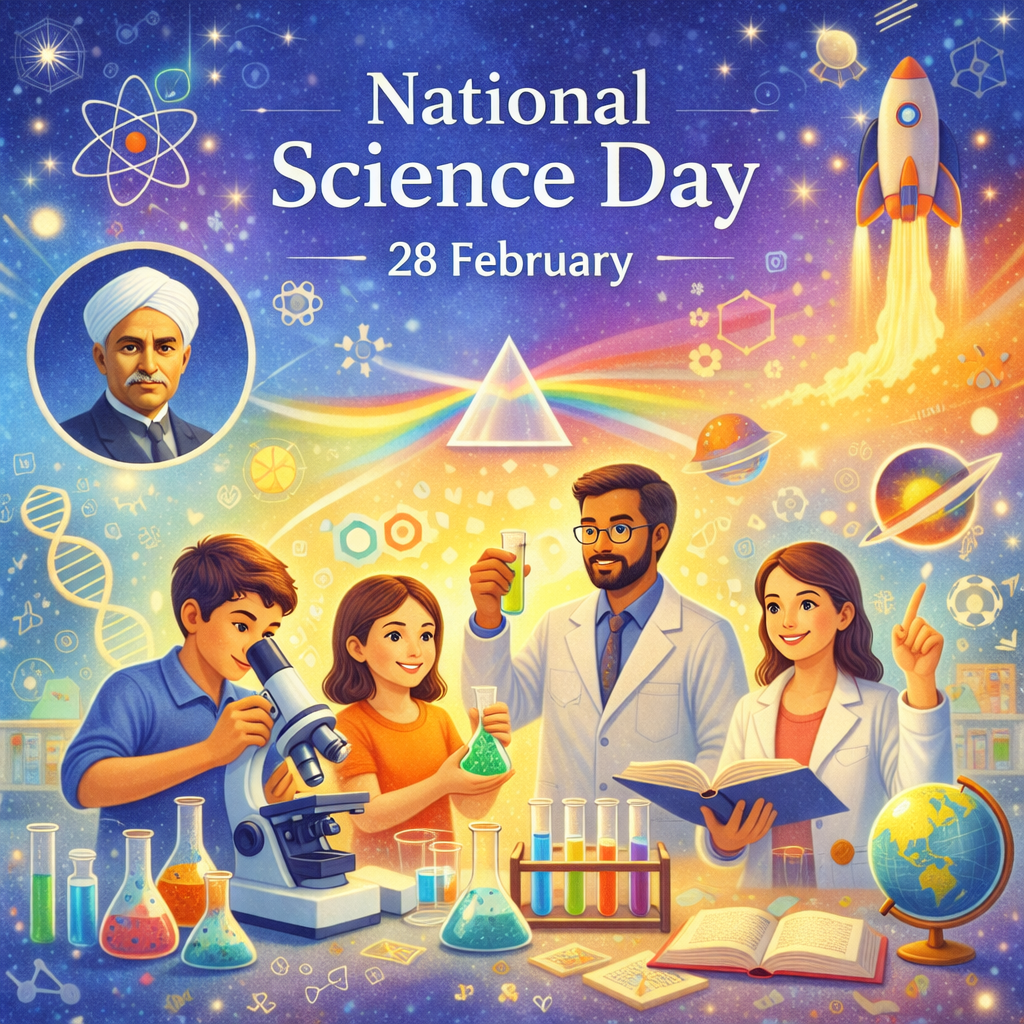
From schools and colleges to research institutes and laboratories, National Science Day 2026 will be observed across the country with science exhibitions, speeches, poster making, drawings, quizzes, and awareness programs. The day reminds students that science is not limited to textbooks but is deeply connected to real-world problem solving and national development.
What is National Science Day 2026?
National Science Day 2026 is observed on 28 February 2026 in India to commemorate C V Raman’s discovery of the Raman Effect. The day promotes scientific thinking, innovation, and awareness about the role of science and technology in sustainable development and global well-being.
National Science Day 2026 Date
National Science Day 2026 Date: 28 February 2026
First Observed: 1987
Declared By: Government of India in 1986
Reason: Discovery of the Raman Effect on 28 February 1928
The History of Science Day
National Science Day in India is celebrated every year on February 28th to honour the remarkable discovery of the Raman Effect by Dr. C.V. Raman in 1928. This day marks the achievement of a groundbreaking contribution to the field of physics, which earned Dr. Raman the Nobel Prize in Physics in 1930.
The idea of observing National Science Day was proposed by Dr. Raman himself, and it was officially recognized by the Government of India in 1986. The primary goal of the day is to promote the importance of science in everyday life and to celebrate the contributions of scientists towards the progress of the nation.
February 28th was chosen as the date for C.V. Raman National Science Day because it was on this day in 1928 that Dr. Raman and his colleagues discovered the phenomenon of scattering of light, known as the Raman Effect. This discovery was crucial in advancing the understanding of light scattering and laid the foundation for many other scientific developments. Dr. C.V. Raman's work continues to inspire generations of scientists, making this day an important occasion to highlight the significance of scientific exploration. This is a significant part of National Science Day history, a day that celebrates the legacy of scientific achievement and encourages innovation and discovery in modern science.
Why is National Science Day Celebrated on 28 February?
National Science Day is celebrated on 28 February because on this day in 1928, Indian physicist Sir Chandrasekhara Venkata Raman announced his discovery of the Raman Effect, which explains how light changes its wavelength when passing through a transparent medium.
This discovery earned him the Nobel Prize in Physics in 1930, making him the first Asian to receive a Nobel Prize in science. To honour this achievement and inspire future scientists, India observes National Science Day every year.
National Science Day Theme 2026
The national science day theme 2026 is expected to focus on:
Science and Technology for Sustainable Future
Women in Science
Global Science for Global Well-Being
Innovation and Integrated Technological Growth
The theme of National Science Day 2026 highlights the role of science in solving global challenges such as climate change, healthcare, clean energy, and inclusive growth.
Importance of National Science Day 2026
National Science Day 2026 plays a crucial role in shaping a science-aware society.
1. Promotes Scientific Temper
Encourages students to question, observe, experiment, and think logically instead of believing in myths or misinformation.
2. Inspires Students Towards Science Careers
Motivates students to pursue careers in science, technology, engineering, medicine, defence research, and space science.
3. Highlights India’s Scientific Achievements
Showcases India’s progress in ISRO missions, medical research, digital technology, and sustainable innovation.
4. Supports Sustainable Development
The science day theme 2026 emphasises sustainability, innovation, and responsible use of technology for future generations.
C V Raman and National Science Day
C V Raman National Science Day celebrations revolve around his life and contribution.
Born: 7 November 1888
Discovery: Raman Effect (1928)
Nobel Prize: Physics (1930)

His journey inspires students by proving that curiosity, dedication, and observation can lead to world-changing discoveries.
How National Science Day 2026 Will Be Celebrated
Across India, science day 2026 celebrations will include:
Science exhibitions and working models
National science day poster and drawing competitions
National science day speech and essay contests
Seminars and science quizzes
Awareness programs on sustainable development
Schools and colleges often display national science day images, posters, and charts explaining scientific concepts in simple language.
National Science Day Quotes
“The essence of science is independent thinking and hard work.” – C V Raman
“Science empowers us to build a better and sustainable future.”
"Science is a way of thinking much more than it is a body of knowledge." – Carl Sagan
"The important thing is to never stop questioning." – Albert Einstein
"Science knows no country, because knowledge belongs to humanity, and is the torch which illuminates the world." – Louis Pasteur
"Science is the great antidote to the poison of enthusiasm and superstition." – Adam Smith
"The good thing about science is that it’s true whether or not you believe in it." – Neil deGrasse Tyson
National Science Day Speech (Short Idea)
National Science Day reminds us that science is the backbone of modern society. From clean water to space exploration, science improves lives. On National Science Day 2026, students should pledge to think logically, respect facts, and use science for the welfare of humanity.
National Science Day 2026 – Key Points
Date: 28 February
First Celebration: 1987
Discovery Remembered: Raman Effect
Nobel Prize Year: 1930
Focus: Scientific temper and innovation
Conclusion
National Science Day 2026 is not just a celebration but a reminder of India’s deep-rooted scientific spirit, inspired by the legacy of Sir C. V. Raman. It encourages students to explore science beyond textbooks, ask meaningful questions, and apply scientific thinking to real-life challenges.
As we celebrate Science Day on 28 February 2026, let us honour scientists, nurture curiosity in young minds, and collectively work towards a sustainable, innovative, and knowledge-driven future.
Echoing this vision, Vedantu believes that science education should be experiential, concept-based, and accessible to every learner. By combining strong fundamentals with practical understanding, Vedantu empowers students to think critically, innovate confidently, and grow as future scientists and problem-solvers.
Warm wishes on National Science Day 2026 from Vedantu—celebrating curiosity, discovery, and the joy of learning science.
Happy National Science Day 2026! 🔬✨
FAQs on National Science Day 2026: Theme, Date, History, Importance & Celebration in India
1. What is National Science Day?
National Science Day is celebrated in India on 28 February to honour the discovery of the Raman Effect by C V Raman.
2. When is National Science Day 2026?
National Science Day 2026 will be observed on 28 February 2026.
3. What is the national science day theme 2026?
The theme of National Science Day 2026 focuses on science and technology for sustainable future, innovation, and global well-being.
4. Why is National Science Day important for students?
It encourages scientific thinking, innovation, curiosity, and awareness about science careers.
5. Who discovered the Raman Effect?
The Raman Effect was discovered by Sir C V Raman in 1928.
6. What is the impact of National Science Day on society?
National Science Day helps in raising awareness about the role of science in society, encouraging scientific research and inspiring future generations to explore the world of science and technology.



