



Why Bangalore Is Called India’s Famous Garden City
Bangalore, officially known as Bengaluru, is popularly called the Garden City of India due to its pleasant climate, lush greenery, and numerous parks and gardens. Located in the southern state of Karnataka, Bangalore is not only famous for its natural beauty but also for being the Silicon Valley of India. The city beautifully blends modern technology with green landscapes, making it one of the most livable cities in the country. This topic is important for General Knowledge, competitive exams, and academic studies related to Indian geography and urban development.
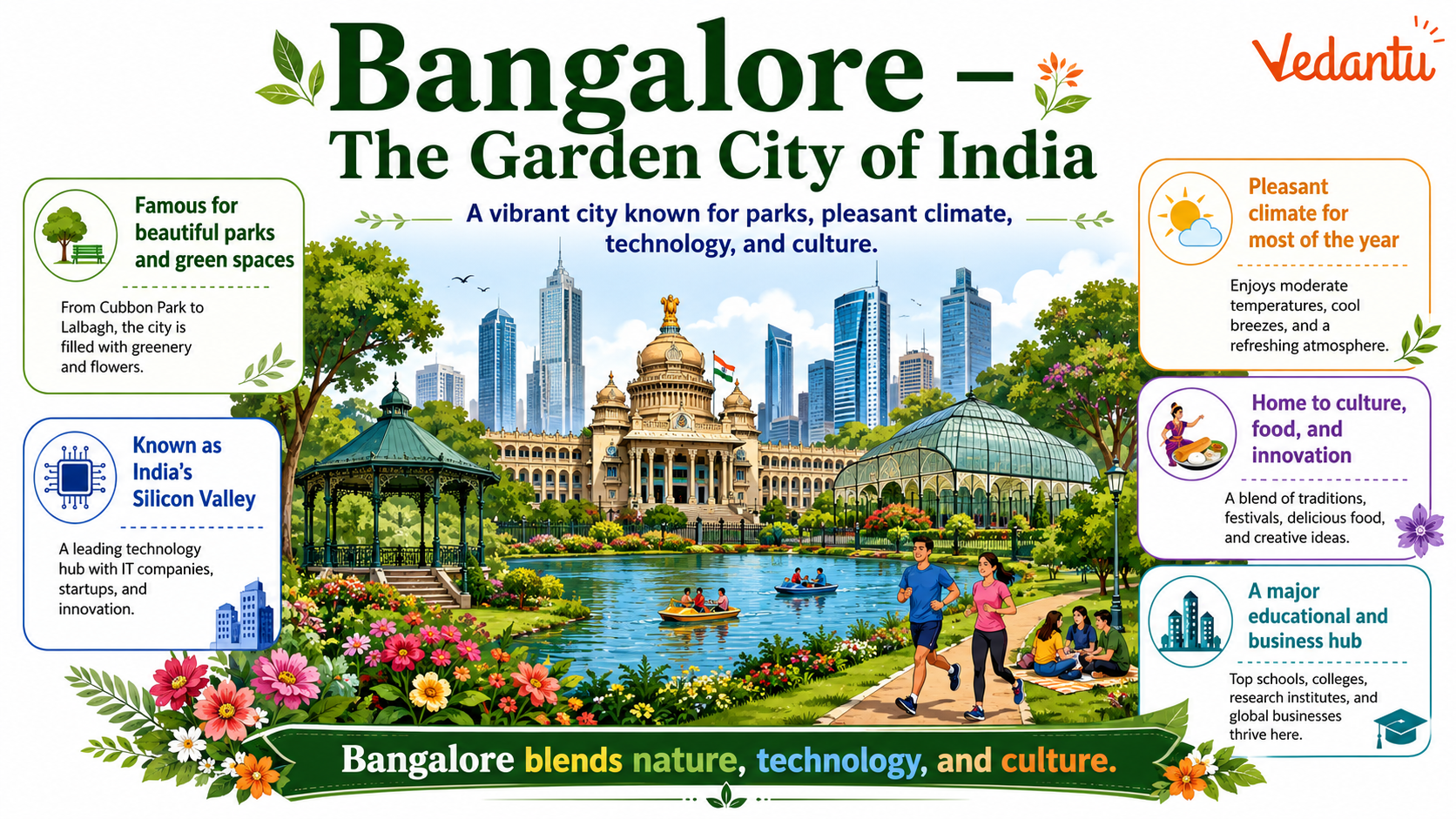
Why is Bangalore Called the Garden City of India?
Bangalore earned the title Garden City of India because of its well-planned gardens, tree-lined streets, and large green spaces developed during the rule of Hyder Ali and Tipu Sultan, and later expanded during British rule. The city's moderate climate also supports the growth of a wide variety of plants and trees.
- Presence of famous gardens like Lalbagh Botanical Garden and Cubbon Park.
- Tree-lined avenues and well-maintained public parks.
- Pleasant and moderate climate throughout the year.
- Government initiatives for urban greenery and conservation.
Historical Background of Bangalore’s Greenery
Lalbagh Botanical Garden
Lalbagh was commissioned by Hyder Ali in the 18th century and later expanded by Tipu Sultan. It is home to rare tropical plants and hosts the famous annual flower shows. The garden spreads over 240 acres and contains a glass house inspired by London's Crystal Palace.
Cubbon Park
Cubbon Park was established in 1870 during British rule. Spread across 300 acres, it serves as a green lung for the city. It contains numerous species of plants, statues of historical figures, and important government buildings.
Geographical and Climatic Features
Bangalore is located on the Deccan Plateau at an elevation of about 900 meters above sea level. This high altitude gives the city a moderate climate compared to other major Indian cities.
- Elevation - Approximately 900 meters above sea level.
- Climate - Pleasant and moderate throughout the year.
- Average Temperature - Ranges between 15°C and 35°C.
- Monsoon - Receives rainfall from both Southwest and Northeast monsoons.
Important Gardens and Parks in Bangalore
| Name of Garden | Established | Special Feature |
|---|---|---|
| Lalbagh Botanical Garden | 18th Century | Glass House and Annual Flower Show |
| Cubbon Park | 1870 | Large Green Area with Statues and Libraries |
These gardens contribute significantly to Bangalore's identity as the Garden City of India. They not only enhance the beauty of the city but also support biodiversity and provide recreational spaces for residents.
Bangalore as a Modern Green City
Despite rapid urbanization and its growth as an IT hub, Bangalore continues efforts to maintain its green cover. The city administration and environmental groups promote tree plantation drives and lake restoration projects.
- Restoration of lakes such as Ulsoor Lake and Bellandur Lake.
- Promotion of eco-friendly urban planning.
- Public awareness campaigns on environmental conservation.
Educational and Exam Importance
The title Garden City of India is a frequently asked question in school exams and competitive examinations. Students should remember that Bangalore is also known as the Silicon Valley of India due to its IT industry. Understanding its geographical location, climate, and historical development helps in strengthening general awareness.
- Learn important gardens and their founders.
- Remember the state in which Bangalore is located - Karnataka.
- Understand the climatic reasons behind its greenery.
- Revise common titles associated with Indian cities.
Conclusion
Bangalore's title as the Garden City of India reflects its rich green heritage, well-maintained parks, and favorable climate. From Lalbagh and Cubbon Park to its tree-lined roads, the city stands as a symbol of natural beauty combined with modern development. For students and competitive exam aspirants, remembering the key facts about Bangalore enhances general knowledge and strengthens preparation for various examinations.
FAQs on Bangalore – The Garden City of India: A Student Guide
1. Why is Bangalore called the Garden City of India?
Bangalore is called the Garden City of India because of its numerous parks, green spaces, and pleasant climate.
• Famous gardens like Lalbagh Botanical Garden and Cubbon Park
• Tree-lined streets and well-planned layouts
• Moderate and pleasant weather throughout the year
• Historical development of public parks during British rule
This nickname highlights Bangalore’s identity as a green city, eco-friendly urban center, and city of parks.
2. Where is Bangalore located in India?
Bangalore is located in the southern part of India and is the capital of Karnataka.
• Situated on the Deccan Plateau
• Approximately 900 meters above sea level
• Well connected by air, rail, and road
• Officially known as Bengaluru
It is one of the major metropolitan cities in South India and an important educational and economic hub.
3. Who founded the city of Bangalore?
Bangalore was founded by Kempe Gowda I in 1537.
• A chieftain under the Vijayanagara Empire
• Built a mud fort and several temples
• Designed markets and water tanks
• Considered the founder of modern Bengaluru
Kempe Gowda’s planning laid the foundation for Bangalore’s growth into a major urban city.
4. What are the famous gardens in Bangalore?
The most famous gardens in Bangalore are Lalbagh Botanical Garden and Cubbon Park.
• Lalbagh Botanical Garden – Known for the Glass House and rare plant species
• Cubbon Park – A large green area in the heart of the city
• Bannerghatta Biological Park – A wildlife attraction
These gardens enhance Bangalore’s reputation as the Garden City of India.
5. What is the climate of Bangalore like?
Bangalore has a moderate and pleasant climate throughout the year.
• Cool mornings and evenings
• Mild summers compared to other Indian cities
• Moderate rainfall during the monsoon
• Located at a high elevation on the Deccan Plateau
This comfortable weather is one reason why Bangalore is known as a pleasant city and a livable metropolitan area.
6. Why is Bangalore also called the Silicon Valley of India?
Bangalore is called the Silicon Valley of India because it is the country’s leading IT and technology hub.
• Headquarters of major IT companies and startups
• Presence of global tech giants like Infosys and Wipro
• Large number of software professionals
• Major center for innovation and research
This title reflects its importance in India’s information technology industry and digital economy.
7. What are the major tourist attractions in Bangalore?
Bangalore offers several tourist attractions combining nature, history, and modern landmarks.
• Lalbagh Botanical Garden
• Cubbon Park
• Bangalore Palace
• Vidhana Soudha
• ISKCON Temple
These attractions make Bengaluru a popular destination for students, families, and competitive exam aspirants studying Indian cities.
8. What is the official name of Bangalore?
The official name of Bangalore is Bengaluru.
• Renamed in 2014 by the Karnataka government
• Bengaluru reflects the original Kannada name
• Both names are commonly used
The change aimed to preserve the city’s cultural heritage and regional identity.
9. What is the importance of Lalbagh Botanical Garden?
Lalbagh Botanical Garden is important for its rich collection of plants and historical significance.
• Established by Hyder Ali and expanded by Tipu Sultan
• Houses rare and exotic plant species
• Famous for its Glass House flower shows
• Major center for botanical research
It is a symbol of Bangalore’s identity as the Garden City of India.
10. Why is Bangalore important for education and research?
Bangalore is important for education and research due to its prestigious institutions and innovation centers.
• Home to the Indian Institute of Science (IISc)
• Numerous engineering and medical colleges
• Research centers in science and technology
• Hub for startups and innovation labs
This makes Bengaluru a leading educational hub, research center, and knowledge-based city in India.
