



Major Government and Community Measures to Conserve Wildlife
Wildlife conservation refers to the protection and preservation of wild animals, birds, plants, and their natural habitats. Rapid industrialization, deforestation, poaching, pollution, and climate change have led to a significant decline in wildlife populations across the world. To prevent extinction and maintain ecological balance, several steps have been taken at national and international levels. Understanding the steps taken for the conservation of wildlife is important for students, competitive exam aspirants, and environmentally conscious citizens.
Why Wildlife Conservation is Important
Wildlife plays a crucial role in maintaining ecological balance. Every species, whether large or small, contributes to the functioning of ecosystems. The loss of wildlife can disturb food chains, reduce biodiversity, and negatively impact human life.
- Maintains ecological balance and biodiversity.
- Supports pollination and seed dispersal.
- Provides medicinal and economic resources.
- Preserves natural heritage for future generations.
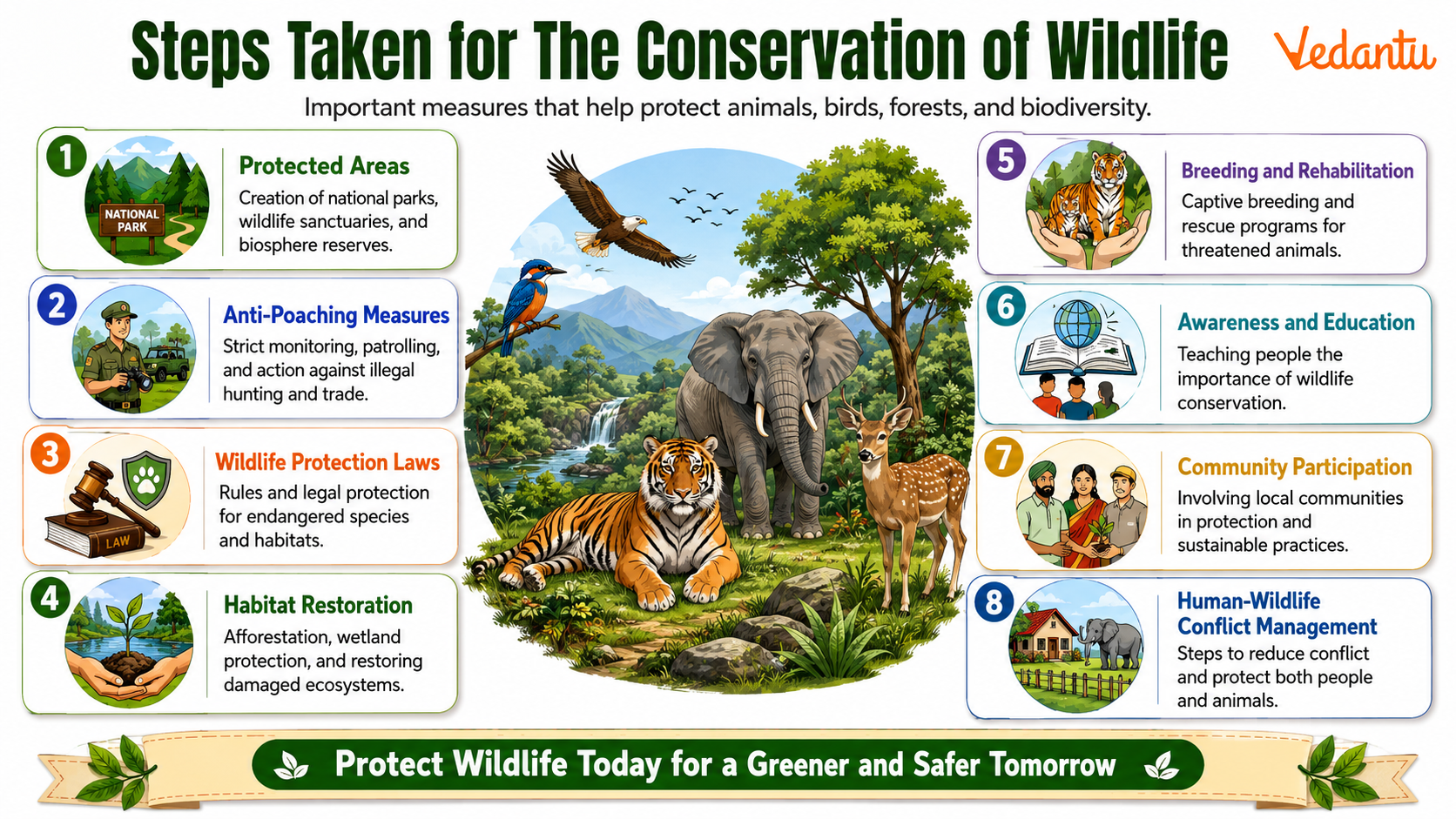
Major Steps Taken For The Conservation Of Wildlife
1. Establishment of Protected Areas
Governments have created protected areas such as national parks, wildlife sanctuaries, and biosphere reserves to provide safe habitats for wildlife. Human activities like hunting, logging, and construction are strictly regulated in these areas.
- National Parks - Strict protection with no human interference.
- Wildlife Sanctuaries - Limited human activities allowed.
- Biosphere Reserves - Conservation with sustainable development.
2. Wildlife Protection Laws
Strong legal frameworks have been established to prevent poaching, illegal trade, and exploitation of wildlife. In India, the Wildlife Protection Act of 1972 provides legal protection to many endangered species and regulates hunting and trade.
- Ban on hunting endangered species.
- Strict penalties for illegal wildlife trade.
- Creation of wildlife crime control bureaus.
3. Species Specific Conservation Programs
Special conservation projects have been launched to protect endangered species. These programs focus on habitat restoration, breeding, and monitoring of species.
- Project Tiger to protect tigers and their habitats.
- Project Elephant for elephant conservation.
- Crocodile Conservation Project.
4. Anti Poaching Measures
Poaching is one of the biggest threats to wildlife. Governments have increased patrolling, surveillance, and monitoring in forest areas to prevent illegal hunting.
- Deployment of forest guards and special task forces.
- Use of drones and camera traps for monitoring.
- Strict punishment for wildlife crimes.
5. Afforestation and Habitat Restoration
Deforestation leads to habitat loss. To restore natural habitats, large scale afforestation and reforestation programs are undertaken. Degraded lands are rehabilitated to support wildlife.
- Planting native tree species.
- Restoration of wetlands and grasslands.
- Creation of wildlife corridors.
6. Public Awareness and Community Participation
Local communities play a vital role in conservation. Awareness programs educate people about the importance of wildlife and encourage sustainable practices.
- Eco development programs for villagers.
- Wildlife education in schools and colleges.
- Promotion of eco tourism.
7. International Cooperation
Wildlife conservation is a global concern. Countries collaborate through international agreements to protect endangered species and regulate trade.
- CITES - Convention on International Trade in Endangered Species.
- IUCN Red List to classify threatened species.
- Global wildlife conservation funds.
Summary of Key Conservation Measures
| Conservation Step | Purpose | Example |
|---|---|---|
| Protected Areas | Provide safe habitat | National Parks |
| Legal Protection | Prevent hunting and trade | Wildlife Protection Act 1972 |
| Species Programs | Save endangered species | Project Tiger |
The above measures collectively aim to reduce wildlife extinction, protect natural habitats, and maintain biodiversity. Effective implementation and public cooperation are essential for the success of these conservation efforts.
Conclusion
The steps taken for the conservation of wildlife are crucial for sustaining life on Earth. Through protected areas, strict laws, anti poaching actions, species specific projects, habitat restoration, and international cooperation, governments and communities are working together to safeguard biodiversity. Continued awareness, scientific research, and responsible human behavior are necessary to ensure that wildlife thrives for future generations.
FAQs on Steps for Wildlife Conservation and Protection Explained
1. What are the major steps taken for the conservation of wildlife?
The major steps taken for wildlife conservation focus on protecting endangered species and preserving natural habitats.
• Establishment of National Parks, Wildlife Sanctuaries, and Biosphere Reserves
• Implementation of the Wildlife Protection Act, 1972
• Launch of species-specific programs like Project Tiger and Project Elephant
• Ban on hunting and illegal poaching
• Promotion of afforestation and habitat restoration programs
2. What is the Wildlife Protection Act, 1972?
The Wildlife Protection Act, 1972 is a major Indian law enacted to protect wild animals, birds, and plants.
• Provides legal protection against hunting and poaching
• Establishes protected areas like sanctuaries and national parks
• Regulates trade in wildlife products
• Lists endangered species under different schedules for protection
3. What is Project Tiger and why was it launched?
Project Tiger is a wildlife conservation program launched in 1973 to protect the endangered Bengal tiger.
• Aims to increase the tiger population in India
• Protects tiger habitats through tiger reserves
• Controls poaching and illegal wildlife trade
• Promotes ecological balance and biodiversity conservation
4. How do national parks help in wildlife conservation?
National Parks help conserve wildlife by providing safe and protected natural habitats.
• No human activities like grazing or hunting allowed
• Preserve endangered species and biodiversity
• Maintain ecological balance
• Support research and environmental education
5. What is the role of wildlife sanctuaries in protecting animals?
Wildlife Sanctuaries are protected areas created to safeguard animals in their natural environment.
• Provide shelter to rare and threatened species
• Allow limited human activities under regulation
• Prevent habitat destruction and poaching
• Support conservation awareness programs
6. Why is wildlife conservation important?
Wildlife conservation is important to maintain ecological balance and protect biodiversity.
• Prevents extinction of endangered species
• Maintains the food chain and ecosystem stability
• Supports scientific research and tourism
• Preserves natural heritage for future generations
7. What are biosphere reserves and how do they help conservation?
Biosphere Reserves are large protected areas aimed at conserving biodiversity and promoting sustainable development.
• Protect plants, animals, and microorganisms
• Divide areas into core, buffer, and transition zones
• Encourage research and environmental monitoring
• Promote sustainable use of natural resources
8. What are some government initiatives for wildlife conservation in India?
The Indian government has launched several initiatives for wildlife protection and biodiversity conservation.
• Project Elephant (1992)
• Project Rhino
• Establishment of National Board for Wildlife
• Anti-poaching laws and wildlife crime control bureaus
9. How does afforestation help in wildlife conservation?
Afforestation helps wildlife conservation by restoring lost habitats and increasing forest cover.
• Provides shelter and food for animals
• Prevents soil erosion and climate imbalance
• Enhances biodiversity and ecosystem health
• Reduces human-wildlife conflict
10. What are the main causes of wildlife depletion?
The main causes of wildlife depletion include habitat destruction and illegal activities.
• Deforestation and urbanization
• Poaching and illegal wildlife trade
• Pollution and climate change
• Overgrazing and industrial expansion
