



What is Fermentation and Why is it Important?
Fermentation is an enzyme-catalysed anaerobic metabolic process in which sugar or starch is converted into alcohol, acid, or other products with the release of energy. It is mainly an anaerobic process, meaning it can occur without oxygen. Organisms such as yeast and some bacteria use fermentation to release energy when oxygen is unavailable.
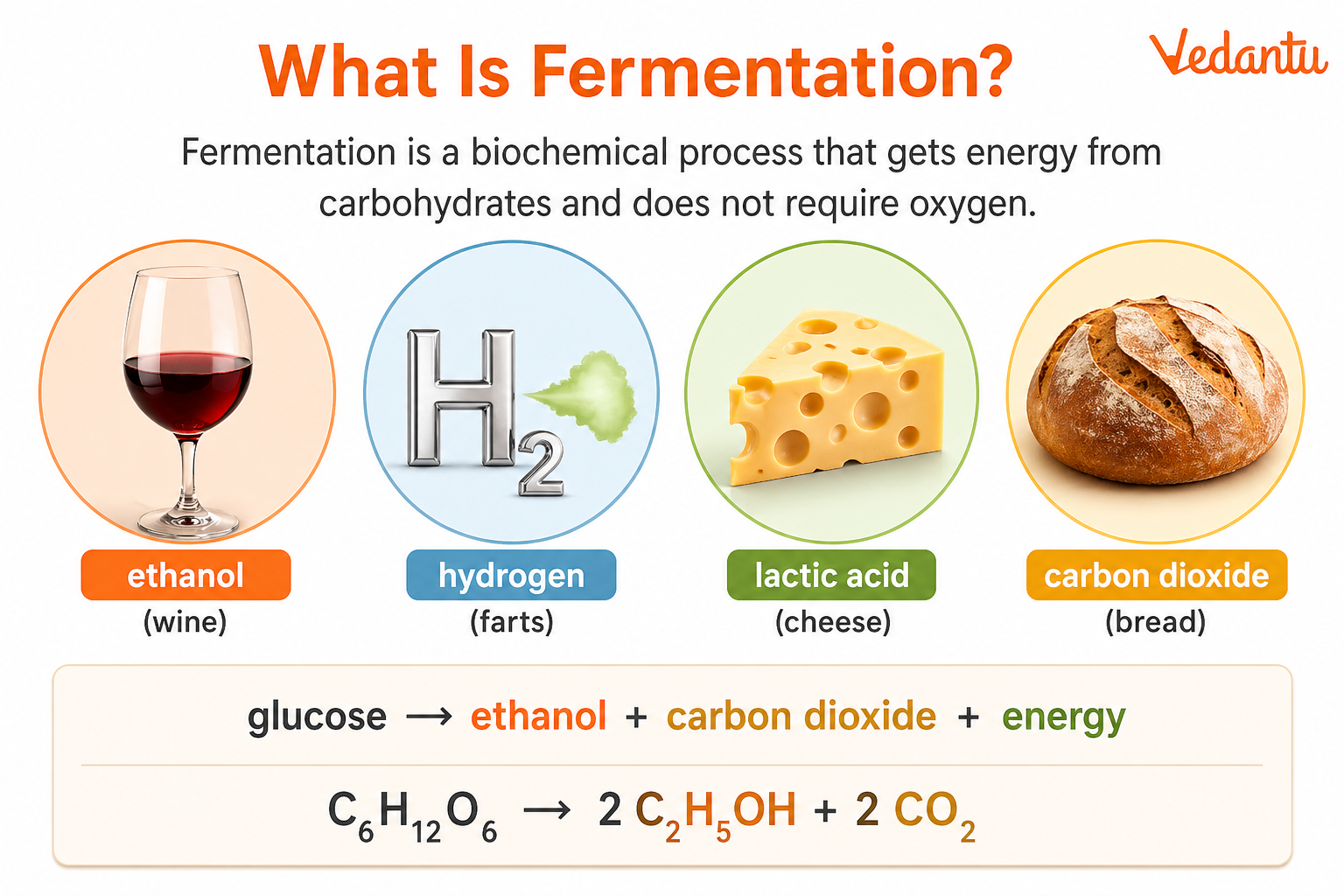
This process is important in biology because it demonstrates how cells can produce ATP even in the absence of oxygen. It is also important in industries because it is used to prepare food, beverages, antibiotics, vitamins, biofuels, and many other useful products.
Fermentation Process
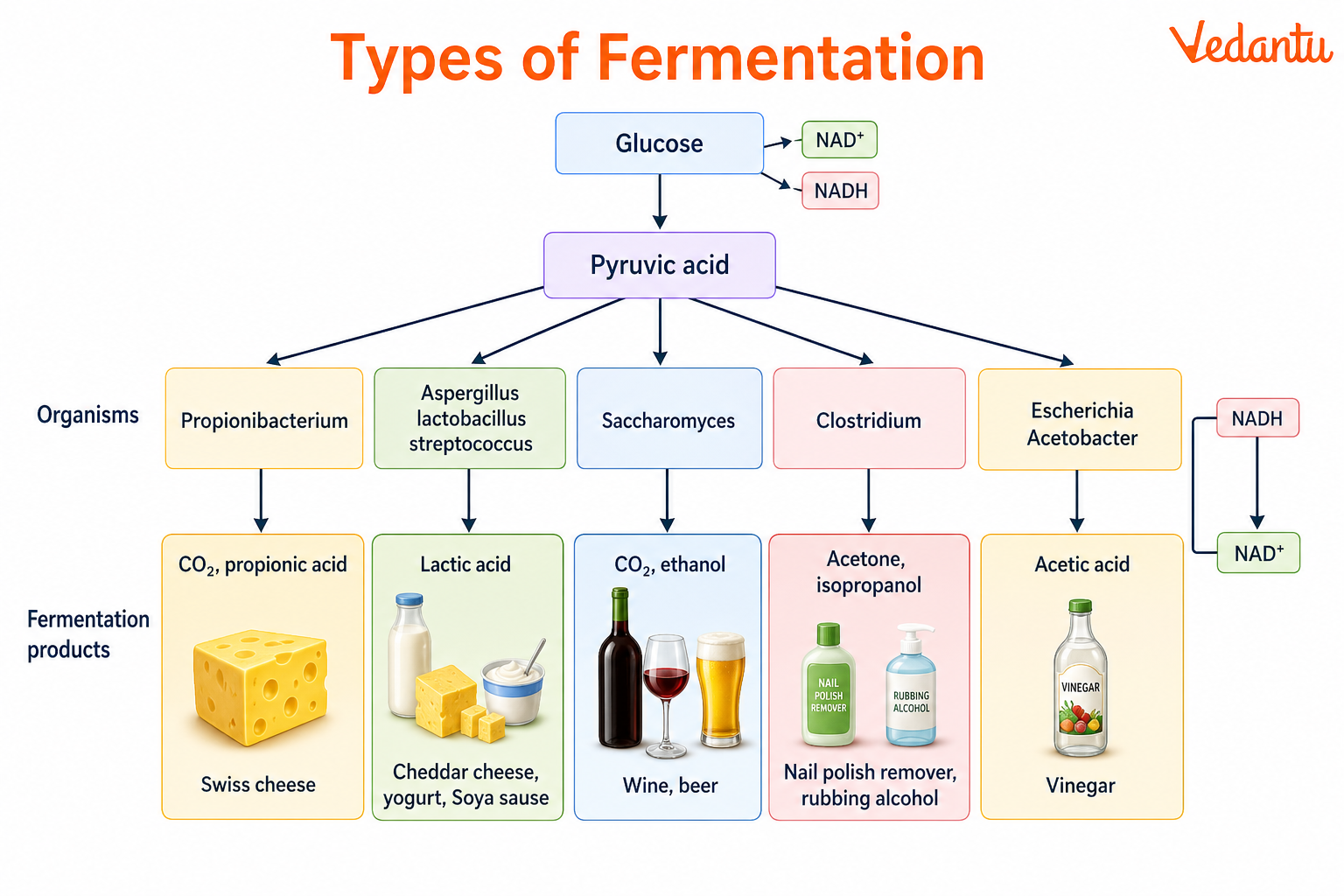
The fermentation process begins with glycolysis, the same first step seen in cellular respiration. During glycolysis, glucose is broken down into pyruvic acid, and a net gain of 2 ATP molecules is produced.
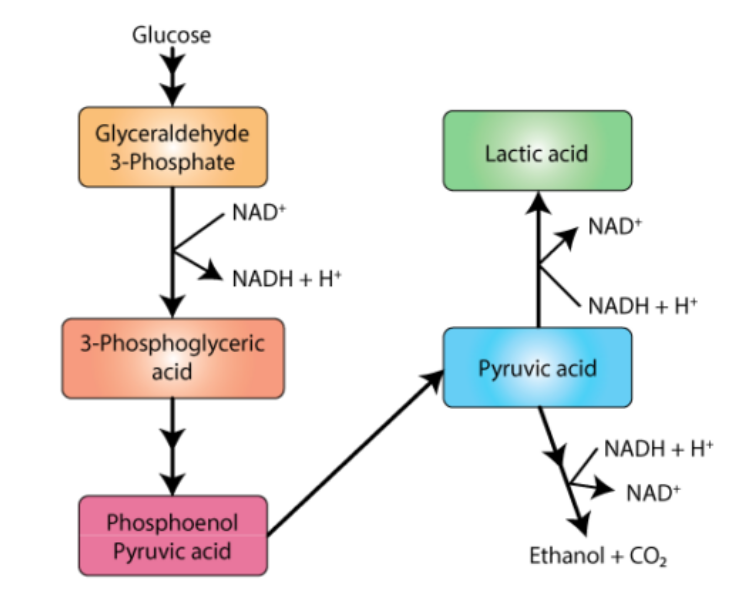
After glycolysis, pyruvate is further converted into different products depending on the organism and type of fermentation. These products may include:
Lactic acid
Ethanol
Acetic acid
Butyric acid
Carbon dioxide
A very important part of fermentation is the regeneration of NAD⁺ from NADH. This NAD⁺ is reused in glycolysis, allowing the cell to continue producing ATP even without oxygen.
Step-by-Step Fermentation Process
Glucose → Pyruvic Acid → Lactic Acid / Ethanol / Acetic Acid / Butyric Acid
For alcoholic fermentation:
Glucose → Pyruvate → Acetaldehyde + CO₂ → Ethanol
For lactic acid fermentation:
Glucose → Pyruvate → Lactic Acid
This diagram helps students understand that glycolysis is common, but the final product changes based on the type of fermentation.
Who Discovered Fermentation?
The scientific understanding of fermentation was developed mainly through the work of Louis Pasteur. He showed that fermentation is caused by living microorganisms such as yeast and bacteria. His work proved that fermentation is a biological process, not just a chemical change.
Pasteur’s discoveries helped establish the role of microbes in fermentation and laid the foundation for microbiology and industrial fermentation.
Types of Fermentation
Fermentation may be classified in two ways.
Based on the Number of Products Formed
Based on End Product Formed
The main types of fermentation are:
Lactic acid fermentation
Alcohol fermentation
Acetic acid fermentation
Butyric acid fermentation
Lactic Acid Fermentation
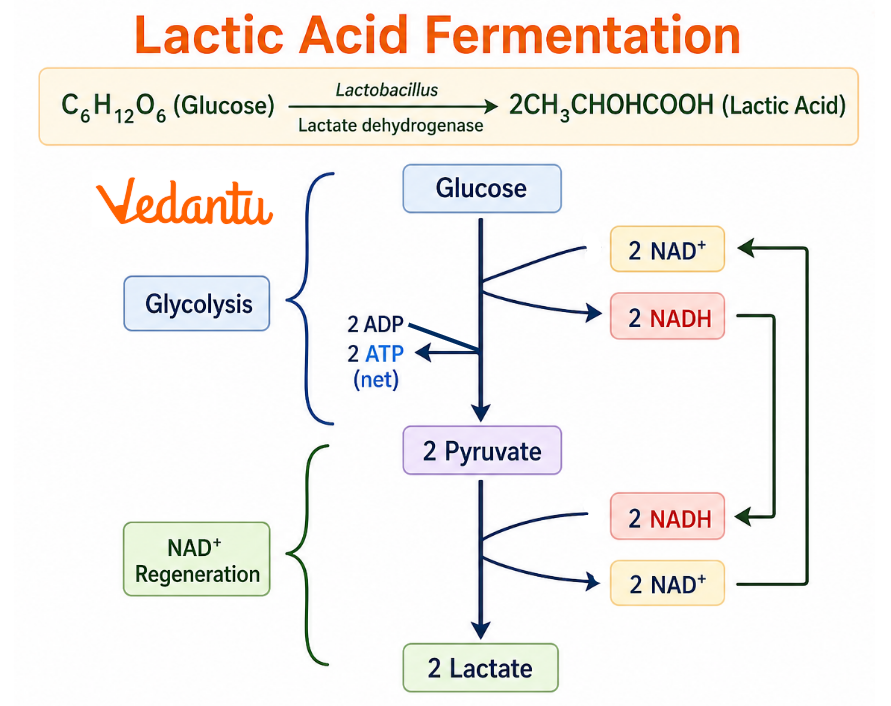
In lactic acid fermentation, pyruvate formed during glycolysis is converted into lactic acid. During this conversion, NADH is oxidised back to NAD⁺, which is then reused in glycolysis. The enzyme involved in this reaction is lactate dehydrogenase.
Examples of Lactic Acid Fermentation
Conversion of milk into curd by Lactobacillus
Lactic acid formation in muscles during intense exercise
Production of sour foods containing lactic acid
During heavy exercise, oxygen supply to muscles may become insufficient. In such conditions, muscles produce energy through lactic acid fermentation. Lactic acid accumulates in muscle cells, causing fatigue.
Alcohol Fermentation
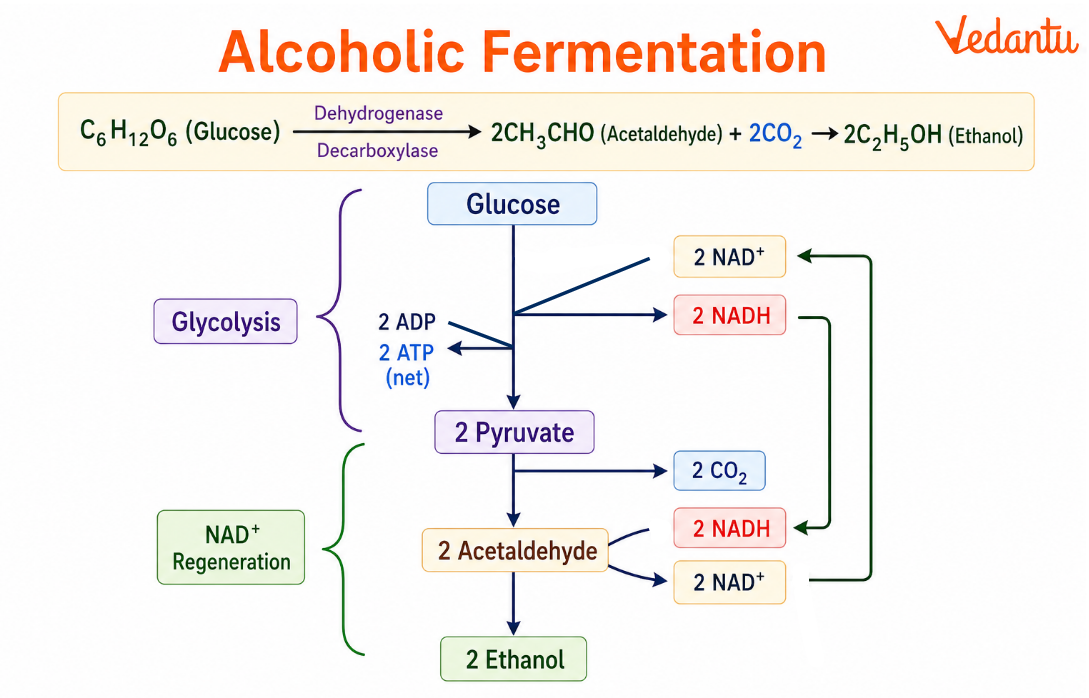
Alcohol fermentation produces ethanol and carbon dioxide as end products. It is carried out by yeast and some bacteria. This type of fermentation is widely used in the production of wine, beer, bread, and biofuels.
Process of Alcohol Fermentation
Pyruvic acid is converted into acetaldehyde.
Carbon dioxide is released.
Acetaldehyde is converted into ethanol.
NADH is converted back into NAD⁺.
The enzymes involved are:
Pyruvic acid decarboxylase
Alcohol dehydrogenase
Examples
Wine production
Beer production
Bread making
Biofuel production
Acetic Acid Fermentation
Acetic acid fermentation is mainly used for vinegar production. It occurs in two stages.
C₂H₅OH (ethanol) + O₂ ⟶ (acetobacter) ⟶ CH₃COOH (acetic acid) + H₂O
Step 1: Alcohol Formation
Sugar is first converted into ethyl alcohol anaerobically by yeast.
Step 2: Acetic Acid Formation
Ethyl alcohol is oxidised into acetic acid by Acetobacter bacteria. Unlike many other fermentation steps, this microbial oxidation of alcohol to acid is aerobic.
Example
Vinegar production
Butyric Acid Fermentation
Butyric acid fermentation is commonly seen in obligate anaerobic bacteria of the genus Clostridium. It produces butyric acid and is associated with several natural and industrial processes.
Occurrence of Butyric Acid Fermentation
Retting of jute fibre
Rancid butter
Tobacco processing
Tanning of leather
Human colon during dietary fibre fermentation
In the human colon, butyric acid acts as an important energy source for colorectal epithelial cells. This type of fermentation yields relatively high energy, producing about 3 ATP molecules.
Comparison of Types of Fermentation
Advantages of Fermentation
Fermentation has many biological and industrial advantages. It is one of the oldest metabolic processes and occurs in both prokaryotes and eukaryotes. It can occur under various environmental conditions and is widely used across industries.
Produces useful food products
Helps preserve food
Improves flavour and texture
Makes food more digestible
Supports the growth of beneficial intestinal bacteria
Reduces lactose intolerance
Improves immunity
May show anti-cancer benefits
Produces industrial products like biofuels, antibiotics, and vitamins
Products Formed by Fermentation
Fermentation is used to produce many useful products, such as:
Wine
Beer
Biofuels
Yoghurt
Pickles
Bread
Sour foods containing lactic acid
Certain antibiotics
Vitamins
Uses of Fermentation in Daily Life
Fermentation is not just a laboratory concept. It is deeply connected to everyday life.
Food Industry
Fermentation is used to prepare curd, yoghurt, cheese, bread, pickles, vinegar, and fermented beverages.
Health and Digestion
Fermented foods may improve digestion and help maintain useful intestinal bacteria.
Industrial Production
Microorganisms are used to produce ethanol, acetic acid, citric acid, antibiotics, enzymes, and vitamins.
Sewage Treatment
Methane is produced by fermentation in sewage treatment plants and freshwater sediments.
Fermentation vs Aerobic Respiration
Importance of Fermentation for NEET
Fermentation is important for NEET because it connects multiple chapters, such as:
Respiration in plants
Microbes in human welfare
Biomolecules
Human physiology
Industrial microbiology
Important exam points include:
Fermentation is anaerobic.
Glycolysis produces a net of 2 ATP.
NAD⁺ regeneration is essential.
Yeast performs alcoholic fermentation.
Lactobacillus converts milk into curd.
Acetic acid fermentation produces vinegar.
Clostridium performs butyric acid fermentation.
FAQs on Fermentation: Definition, Process, Types, Diagram and Uses
1. What is called fermentation?
Fermentation is a biological process in which complex substances, such as sugars, are broken down into simpler compounds by microorganisms, including yeast and bacteria. This process is commonly used to produce foods and beverages like bread, yoghurt, kimchi, beer, and wine.
2. Are fermented foods good for autoimmune disease?
Fermented foods can be beneficial for people with autoimmune conditions because they support gut health. Foods like yoghurt, kefir, kimchi, and sauerkraut contain probiotics that help maintain a healthy gut microbiome, which may help regulate immune responses and reduce inflammation.
3. What are the 4 types of fermentation?
The four main types of fermentation are alcoholic, lactic, acetic, and alkali. Each type produces different end products and is carried out by specific microorganisms, such as yeast in alcohol production.
4. Who defined fermentation?
Louis Pasteur played a key role in defining fermentation in the 19th century. In 1857, he demonstrated that fermentation is a biological process carried out by microorganisms, helping establish the foundation of germ theory.
5. What are the top 5 fermented foods?
Some commonly consumed fermented foods include yoghurt, kimchi, kefir, sauerkraut, and kombucha. Other popular options are miso, cheese, and sourdough bread, all of which are known for their probiotic benefits.
6. What are 5 signs your body has inflammation?
Common signs of inflammation include redness or discolouration of the skin, pain or tenderness, swelling in the affected area, warmth to the touch, and sometimes reduced function of the affected part.
7. What are the health risks of fermentation?
Fermented foods are generally safe, but some people may experience mild side effects such as gas or bloating when they first start consuming them. These effects are usually temporary as the body adjusts to the probiotics.
8. Can fermented foods lower cholesterol?
Yes, fermented foods may help reduce cholesterol levels. They can increase the production of short-chain fatty acids, which may lower cholesterol by reducing its production in the liver or helping remove it from the bloodstream.
