




How to Identify Nouns, Verbs, and Adjectives in Sentences
Categorize the Words
1. Place the words from the word bank into the correct columns in the table below.
Word Bank: quickly, beautiful, run, book, she, happy, slowly, read, table, sunny, they, sing, carefully, delicious, jump
Multiple Choice Questions (MCQs)
1. Which part of speech is the word clever in the sentence: "The clever fox outsmarted the hunter."?
(a) Noun
(b) Verb
(c) Adjective
(d) Adverb
2. Identify the part of speech for the word under in the sentence: "The cat is sleeping under the table."
(a) Conjunction
(b) Preposition
(c) Interjection
(d) Pronoun
3. In the sentence, "Wow! That was an amazing performance," what part of speech is Wow?
(a) Adverb
(b) Verb
(c) Conjunction
(d) Interjection
Fill in the Blanks
1. The children played ________ in the park.
(a) happiness
(b) happy
(c) happily
2. I wanted to go swimming, ________ it started to rain.
(a) but
(b) so
(c) because
3. My sister gave ________ a beautiful new pencil box.
(a) I
(b) me
(c) my
Underline the Correct Word
1. Underline all the nouns in the following sentence:
The teacher put the books on the desk for her students.
2. Underline the verb in the following sentence:
A small bird built a nest in our garden.
3. Underline the adverb in the following sentence:
The turtle walked slowly across the road.
Match the Columns
Match the part of speech in Column A with its definition in Column B.
True or False
1. An adjective is a word that describes a noun or a pronoun. __________
2. The word "and" is a preposition. __________
3. A verb always shows an action. __________
Short Answer Questions
1. Write a sentence using the noun "school", the verb "learn", and the adjective "new".
___________________________________________________________________________
2. Write a sentence that includes a preposition and a conjunction.
___________________________________________________________________________
Answer Key
Categorize the Words
1. Nouns: book, table; Pronouns: she, they; Verbs: run, read, sing, jump; Adjectives: beautiful, happy, sunny, delicious; Adverbs: quickly, slowly, carefully
Multiple Choice Questions (MCQs)
1. (c) Adjective
2. (b) Preposition
3. (d) Interjection
Fill in the Blanks
1. (c) happily
2. (a) but
3. (b) me
Underline the Correct Word
1. The teacher put the books on the desk for her students.
2. A small bird built a nest in our garden.
3. The turtle walked slowly across the road.
Match the Columns
1 - E, 2 - D, 3 - C, 4 - A, 5 - B
True or False
1. True
2. False (It is a conjunction.)
3. False (It can also show a state of being, e.g., is, are, was.)
Short Answer Questions
1. (Sample Answer) We learn new things at our school.
2. (Sample Answer) I will go to the park after I finish my homework, and then I will play.
How to Identify Nouns, Verbs, and Adjectives in Sentences
This worksheet helps students in Class English improve their grammar by identifying parts of speech in sentences. Through hands-on practice, learners gain confidence in using nouns, verbs, and adjectives correctly in the English subject.
Parents notice progress as children apply grammar rules to real-world writing and speaking. The topic, English Grammar Parts Of Speech, supports strong communication skills and boosts understanding of sentence structure, a popular search for homework help.
Strengthen English with Fun Grammar Challenges
Working through this English worksheet, students revisit parts of speech, such as pronouns and adverbs, which they see in daily reading and conversations.
For students, exploring the Topic: English Grammar Parts Of Speech in their Subject encourages curiosity and better marks. These grammar challenges help learners answer questions like, “How do I identify parts of speech?”—a common search for students and parents looking for easy revision.
FAQs on Parts of Speech Practice Worksheet for Grade 2
1. What are the 8 parts of speech in English?
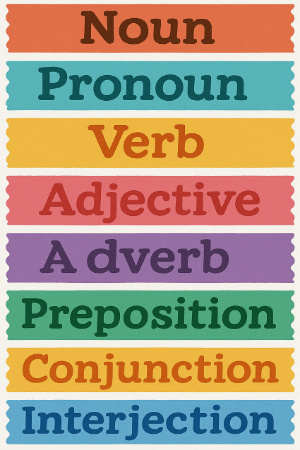
The 8 parts of speech in English grammar are essential building blocks for sentences:
- Noun
- Pronoun
- Verb
- Adjective
- Adverb
- Preposition
- Conjunction
- Interjection
Each part defines how words function and relate within sentences.
2. Why are parts of speech important?
Parts of speech are important because they help us:
- Identify and classify words in a sentence
- Understand correct sentence structure
- Form clear, meaningful sentences
- Build strong grammar skills needed for reading and writing in English.
3. How do you teach parts of speech to children?
To teach parts of speech to children:
- Use fun, age-appropriate worksheets
- Include activities like "circle the noun" or "underline the verb"
- Use pictures and examples to link words to meanings
- Encourage spoken and written practice for better retention.
4. What is an example of an adjective?
An adjective describes or adds information about a noun. For example:
- In the sentence: "The tall tree is green."
"Tall" is the adjective, as it tells us more about the tree.
5. What is the easiest way to learn parts of speech?
The easiest way to learn parts of speech is through practice:
- Use printable worksheets
- Identify words in sentences by their function
- Play matching and fill-in-the-blank games
- Practice regularly with real examples for strong understanding.
6. Does this worksheet include an answer key?
Yes, this parts of speech worksheet for Grade 2 provides an answer key so that parents and teachers can check students' answers and support effective learning.
7. Is this worksheet printable?
Yes, this English grammar parts of speech worksheet is available as a free printable PDF for easy classroom or home practice and is designed for convenient printing.
8. What age group is this worksheet best for?
This parts of speech practice worksheet is specially designed for Grade 2 students (generally ages 7–8), with large fonts, simple instructions, and age-appropriate examples to support learning.
9. How can I use this worksheet at home?
To use this parts of speech worksheet at home:
- Download and print the PDF
- Let your child solve grammar activities
- Use the answer key for checking
- Repeat with similar worksheets for regular practice and better understanding.
10. How does this worksheet reinforce concept retention?
This worksheet reinforces concept retention by:
- Repeating core grammar drills (circle, underline, fill-in-the-blank)
- Using visuals and examples to support word recognition
- Engaging students with interactive activities for better memory.
11. Can I use this worksheet digitally on a tablet?
Yes, you can open and solve this parts of speech worksheet on a tablet using annotation tools or PDF editors, making it suitable for both digital and print practice.
12. What skills are built by doing these activities?
These grammar activities build key skills:
- Word identification
- Reading comprehension
- Understanding sentence structure
- Developing writing accuracy and grammar confidence
