



Are Abyssinian Cats Good Family Pets? Temperament, Size, and Grooming Needs
The Abyssinian is one of the oldest and most admired domestic cat breeds in the world. Known for its warm, glowing coat and playful personality, this cat looks like a tiny wild feline but behaves like a loving family companion. Abyssinian facts often highlight its intelligence, energy, and strong bond with humans. Let’s explore the Abyssinian’s characteristics, habitat, diet, life cycle, and what makes this beautiful cat truly special.
Quick Facts About Abyssinian
| Feature | Details |
|---|---|
| Common Name | Abyssinian |
| Scientific Name | Felis catus (Domestic Cat) |
| Animal Group | Mammal |
| Size | Medium-sized cat |
| Weight | 3–5 kg (approx.) |
| Lifespan | 12–16 years or more |
| Diet | Carnivore |
| Habitat | Domestic homes |
| Temperament | Curious, social, energetic |
Appearance and Physical Characteristics
- Body Shape: Slim, muscular, and elegant.
- Head: Slightly wedge-shaped with large, alert ears.
- Eyes: Almond-shaped, usually gold or green.
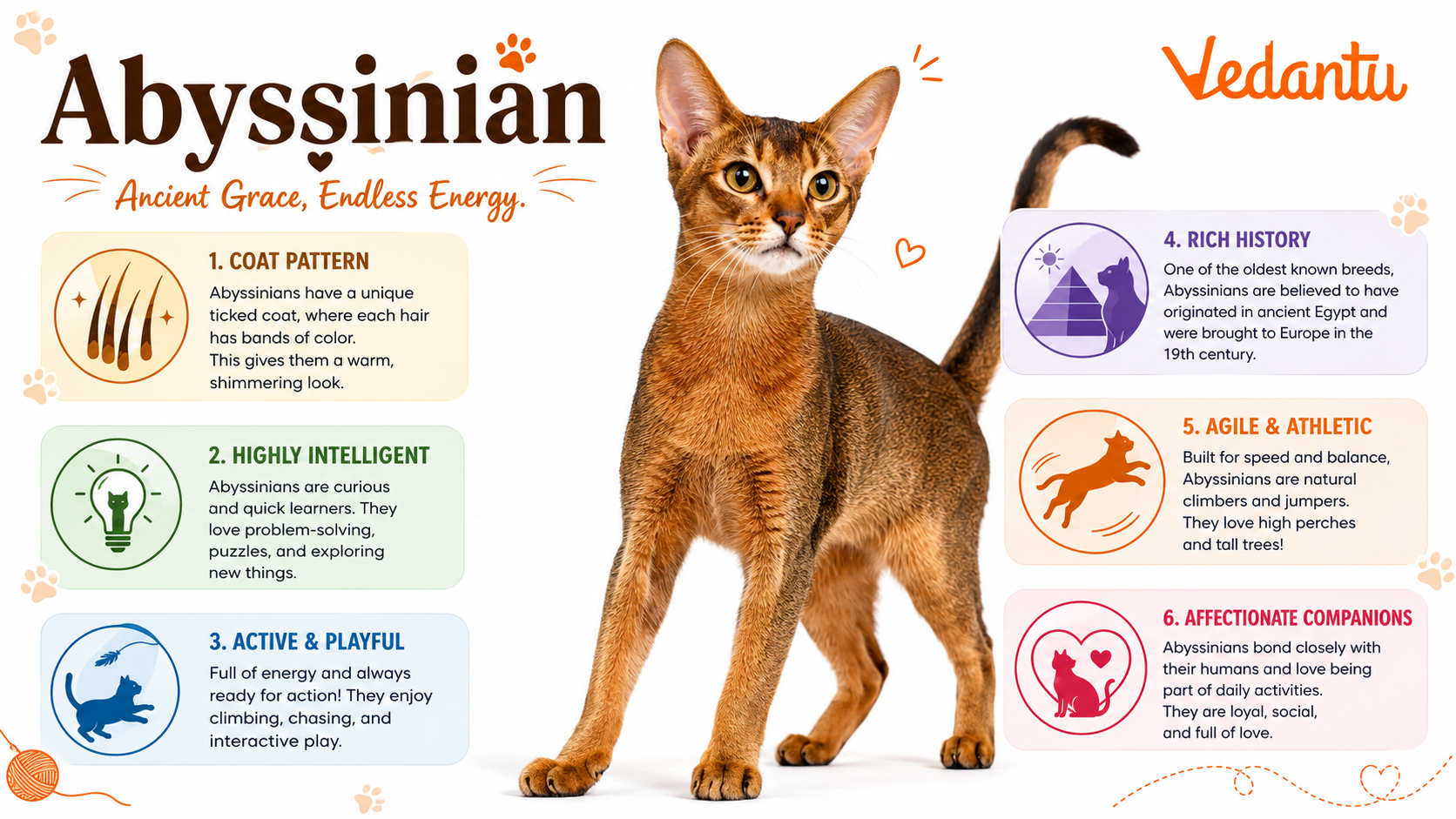
- Coat: Short, soft, and “ticked” (each hair has multiple colour bands).
- Colours: Ruddy (reddish-brown), sorrel, blue, and fawn.
The most unique Abyssinian characteristics include its glowing coat and expressive eyes. The ticking effect gives the fur a sparkling look, almost like a wild jungle cat.
Habitat and Domestic Life
The Abyssinian habitat is not wild forests or deserts—it lives happily in homes with families.
- Prefers warm, comfortable indoor spaces.
- Loves climbing high shelves and cat trees.
- Needs space to run and play.
- Enjoys interactive toys and scratching posts.
Though it looks like a wild cat, the Abyssinian is fully domesticated and thrives best indoors where it is safe and cared for.
Diet and Feeding Habits
- Type: Carnivore
- Main Food: High-quality cat food rich in protein
- Natural Preference: Meat-based diet
- Feeding Style: Small meals throughout the day
Like all domestic cats, the Abyssinian diet must include animal protein to stay healthy. Clean water and balanced nutrition are essential for its long life.
Behaviour and Personality
Unlike some lazy cat breeds, the Abyssinian rarely sits still for long. It prefers being part of family activities.
Life Cycle of an Abyssinian
- Kitten Stage (0–6 months): Very playful and fast-growing.
- Young Cat (6 months–2 years): Energetic and curious.
- Adult Stage (2–10 years): Active, intelligent, and social.
- Senior Stage (10+ years): Slower but still affectionate and alert.
The Abyssinian life cycle is similar to other domestic cats, but they often remain playful even as adults.
What Makes the Abyssinian Special?
Importance and Role in Human Life
- Provides companionship and emotional comfort.
- Encourages active play and interaction in families.
- Participates in cat shows due to its unique appearance.
- Helps children learn responsibility and care for animals.
Amazing Abyssinian Facts
Interesting Facts About Abyssinian
- The breed resembles ancient Egyptian cats seen in paintings.
- It is one of the most popular short-haired breeds worldwide.
- Abyssinians love interactive puzzle toys.
- They prefer companionship and may feel lonely if left alone too long.
Fun Facts for Kids
FAQs on Abyssinian Cat Breed Guide: Personality, Care, and History
1. What is an Abyssinian cat?
The Abyssinian is a playful and intelligent short-haired cat breed known for its ticked coat and active personality.
- One of the oldest known cat breeds
- Famous for its warm, glowing ticked fur pattern
- Highly energetic and curious
- Often called the “Aby” by cat lovers
- Popular among families and kids
2. Where do Abyssinian cats come from?
The Abyssinian cat is believed to have origins linked to ancient Egypt and was developed in Britain.
- Often connected to ancient Egyptian cats
- Name comes from Abyssinia (modern-day Ethiopia)
- Modern breed refined in England in the 1800s
- Resembles cats seen in ancient artwork
3. What does an Abyssinian cat look like?
An Abyssinian has a slim body, large ears, and a short, shiny coat with unique ticking.
- Medium-sized and muscular body
- Large, alert ears
- Almond-shaped expressive eyes
- Short coat with ticked fur pattern
- Common colors: ruddy, red, blue, and fawn
4. Are Abyssinian cats good for kids?
Yes, Abyssinian cats are generally great for kids because they are playful and social.
- Love interactive games
- Enjoy attention and family time
- Very active and energetic
- Do well in busy households
5. Are Abyssinian cats friendly?
The Abyssinian cat is known for being friendly, affectionate, and people-oriented.
- Forms strong bonds with owners
- Enjoys being involved in activities
- Gets along with other pets
- Not usually shy or distant
6. How active are Abyssinian cats?
The Abyssinian is one of the most active and energetic cat breeds.
- Loves climbing and jumping
- Needs toys and playtime daily
- Very curious and adventurous
- Enjoys puzzle feeders and interactive games
7. How long do Abyssinian cats live?
The average Abyssinian cat lifespan is around 12 to 15 years, and sometimes longer with good care.
- Healthy diet supports long life
- Regular vet check-ups are important
- Indoor cats often live longer
- Active lifestyle keeps them fit
8. Do Abyssinian cats need a lot of grooming?
The Abyssinian cat requires minimal grooming because of its short coat.
- Weekly brushing is enough
- Low shedding compared to long-haired breeds
- Regular nail trimming needed
- Clean ears occasionally
9. Are Abyssinian cats intelligent?
Yes, the Abyssinian is considered one of the smartest cat breeds.
- Quick learners
- Can learn tricks and commands
- Enjoy mental challenges
- Very observant and curious
10. Are Abyssinian cats rare?
The Abyssinian cat breed is popular but less common than some other domestic cats.
- Recognized by major cat associations
- Highly valued for appearance and personality
- Often purchased from reputable breeders
- Demand is high among cat lovers
