



Roe Deer Habitat, Diet, Lifespan, and Unique Adaptations
The Roe Deer is a small and elegant wild deer found across Europe and parts of Asia. Known for its gentle appearance and quick movements, it is one of the most common deer species in forests and grasslands. Roe Deer are shy, alert, and perfectly adapted to woodland life. In this page, you will explore Roe Deer facts, Roe Deer habitat, Roe Deer diet, characteristics, life cycle, and their importance in nature in a fun and easy way.
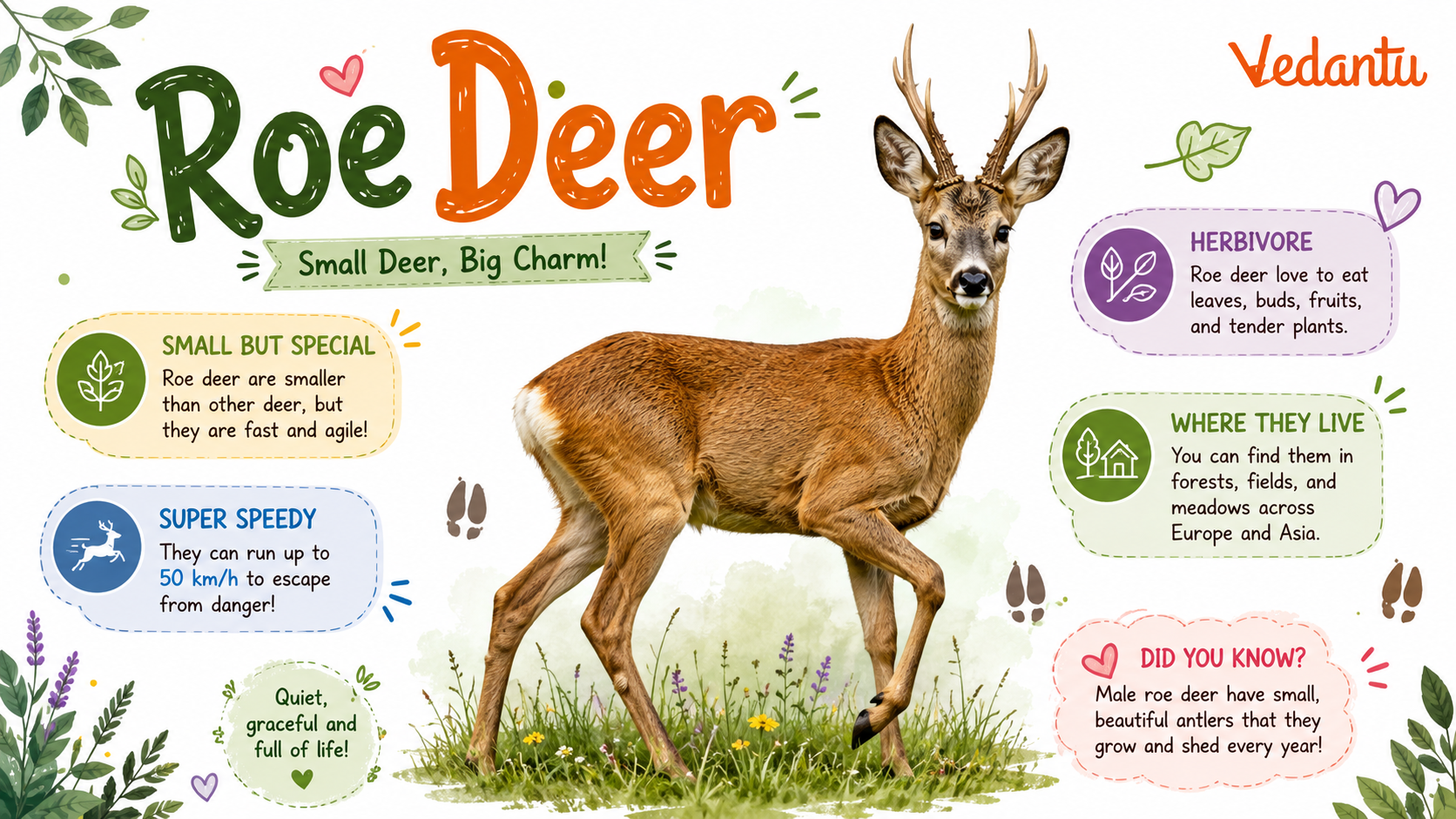
Quick Facts About Roe Deer
| Feature | Details |
|---|---|
| Common Name | Roe Deer |
| Scientific Name | Capreolus capreolus |
| Animal Group | Mammal |
| Average Height | 60–75 cm at the shoulder |
| Weight | 15–35 kg |
| Lifespan | 8–12 years in the wild |
| Habitat | Woodlands, grasslands, farmland edges |
| Diet | Herbivore – leaves, grass, shoots |
| Young One | Fawn |
| Conservation Status | Least Concern |
Appearance and Physical Characteristics
- Small and slender body compared to other deer species.
- Reddish-brown coat in summer and grey-brown coat in winter.
- Short tail that is barely visible.
- White patch on the rump (back side), very noticeable.
- Males (bucks) have short antlers with up to three points.
Roe Deer Habitat and Distribution
- Found widely across Europe and parts of western Asia.
- Prefer mixed woodlands with open spaces nearby.
- Also live near farmland, hedgerows, and grassy meadows.
- Adapt well to temperate climates.
Roe Deer Diet and Feeding Habits
- Eat grass, leaves, herbs, and young shoots.
- Also feed on berries, buds, and agricultural crops.
- Use their sensitive lips to select soft and nutritious plants.
- Usually feed during early morning and evening.
Roe Deer play an important role in controlling plant growth and maintaining balance in forest ecosystems.
Behaviour and Lifestyle
- Mostly solitary or found in small family groups.
- Active during dawn and dusk (crepuscular behaviour).
- Very alert and rely on sharp hearing and smell.
- Run in quick zigzag patterns to escape predators.
- Males mark territories during the breeding season.
Roe Deer Life Cycle
- Mating Season: Takes place in summer (July–August).
- Delayed Implantation: The embryo pauses development for a few months.
- Birth: Fawns are born in late spring (May–June).
- Young Stage: Fawns have white spots for camouflage.
- Adult Stage: Reach maturity at about 1–2 years.
What Makes Roe Deer Special?
Sound or Call
- Make short, loud barking sounds when alarmed.
- Fawns make soft squeaking sounds to call their mothers.
- Bucks may grunt during mating season.
Importance and Role in Nature
Amazing Roe Deer Facts
- Roe Deer can run up to 60 km/h when escaping danger.
- Their antlers are smaller than most other deer species.
- They can swim across rivers if needed.
- They have a special white rump patch used for communication.
- Fawns are almost scentless to avoid predators.
- They are highly adaptable to human-altered landscapes.
Interesting Facts About Roe Deer
Fun Facts for Kids
- Baby Roe Deer are called fawns.
- They have cute white spots when young.
- They can jump over fences easily.
- Their ears are always moving to catch sounds.
- They are shy and quickly run away if disturbed.
FAQs on Roe Deer: Fascinating Facts, Habitat, and Behavior Explained
1. What is a Roe Deer?
A Roe Deer is a small, graceful wild deer commonly found in Europe and parts of Asia.
- Scientific name: Capreolus capreolus
- Belongs to the deer family (Cervidae)
- Known for its small size and reddish-brown coat
- Often seen in forests, woodlands, and grasslands
- Popular in wildlife studies and nature education for kids
2. Where do Roe Deer live?
Roe Deer live mainly in Europe and western Asia in areas with trees and open land.
- Found in woodlands, forests, and meadows
- Prefer places with bushes for hiding
- Can live near farms and rural villages
- Adapt well to different habitats, including countryside landscapes
3. What do Roe Deer eat?
Roe Deer are herbivores, which means they eat only plants.
- Grass and leaves
- Young shoots and buds
- Wild berries and fruits
- Crops and herbs in farmland areas
- They search for food mostly at dawn and dusk
4. How big is a Roe Deer?
A Roe Deer is one of the smallest deer species in Europe.
- Height: about 60–75 cm (2–2.5 feet) at the shoulder
- Weight: between 10–35 kg
- Short body with long legs
- Males are slightly larger than females
5. Do Roe Deer have antlers?
Yes, male Roe Deer grow small antlers each year.
- Only males (bucks) have antlers
- Antlers usually have three points
- Shed in late autumn and regrow in winter
- Used for fighting during the mating season (rut)
6. What is a baby Roe Deer called?
A baby Roe Deer is called a fawn.
- Born in late spring or early summer
- Usually 1–2 fawns per birth
- Have spotted coats for camouflage
- Stay hidden in tall grass for safety
7. How long do Roe Deer live?
Roe Deer can live up to about 10–12 years in the wild.
- Life span depends on predators and environment
- Common predators include wolves and lynx
- Road accidents are also a major threat
- Live longer in protected wildlife areas
8. Are Roe Deer active during the day or night?
Roe Deer are most active during dawn and dusk, which is called being crepuscular.
- Feed early in the morning
- Rest during the middle of the day
- Become active again in the evening
- This behavior helps them avoid predators
9. How can you recognize a Roe Deer?
You can recognize a Roe Deer by its small size and white rump patch.
- Reddish-brown coat in summer
- Gray-brown coat in winter
- Distinct white patch on the rear
- Short tail that is barely visible
10. Why are Roe Deer important to the ecosystem?
Roe Deer play an important role in keeping the ecosystem balanced.
- Help control plant growth by grazing
- Serve as prey for large predators
- Spread plant seeds through movement
- Support biodiversity in forests and grasslands
