



Australian Shepherd Temperament, Training Needs, Exercise Requirements, and Family Compatibility
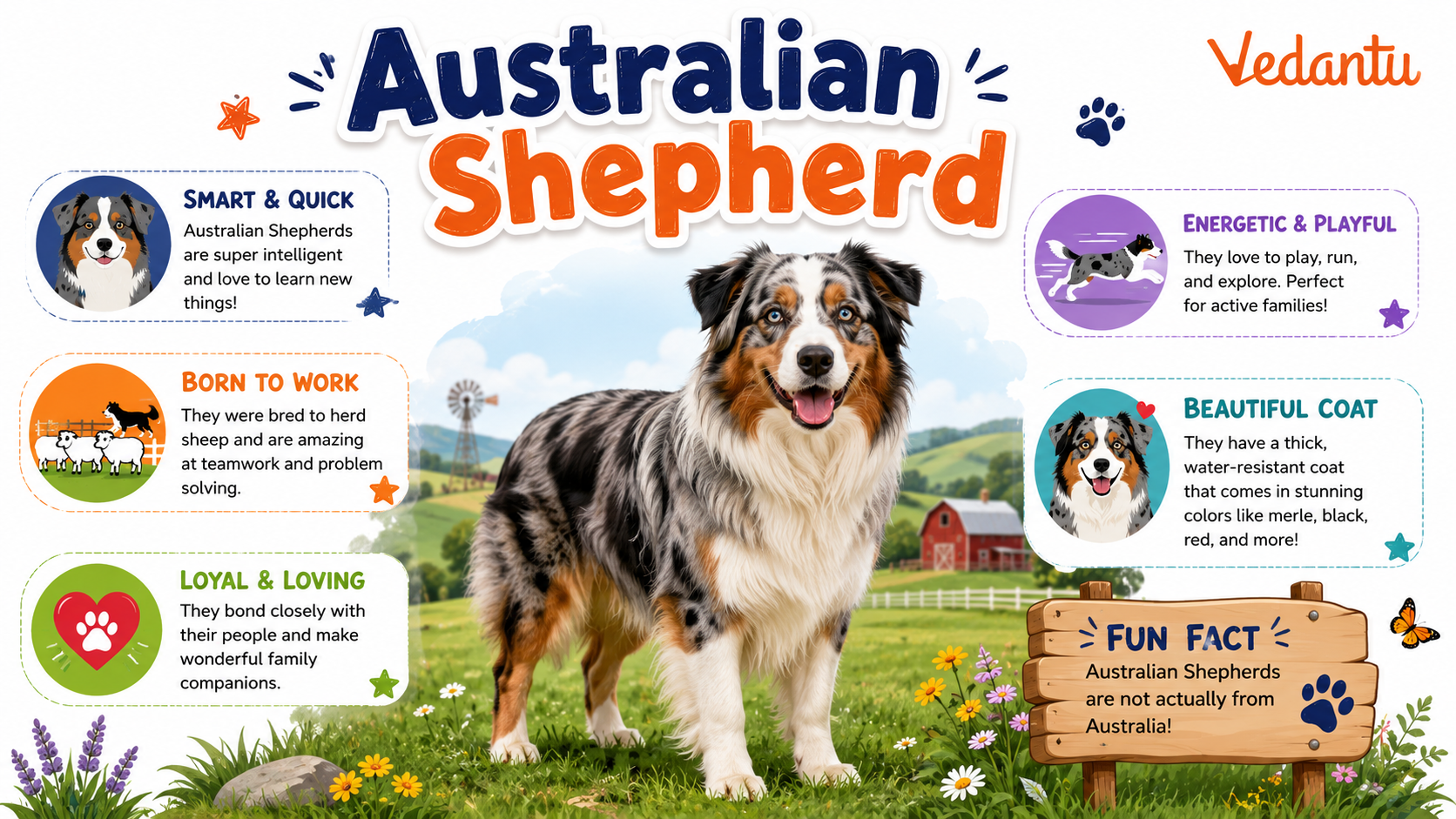
Quick Facts About Australian Shepherd
| Feature | Details |
|---|---|
| Common Name | Australian Shepherd |
| Scientific Name | Canis lupus familiaris |
| Animal Group | Mammal (Dog Breed) |
| Breed Type | Herding Dog |
| Height | 18–23 inches (46–58 cm) |
| Weight | 16–32 kg |
| Lifespan | 12–15 years |
| Diet | Omnivore (mainly meat-based dog food) |
| Habitat | Domestic homes, farms, ranches |
| Young One | Puppy |
Appearance and Physical Characteristics
- Medium-sized, strong and athletic body.
- Thick double coat that can be straight or slightly wavy.
- Common colours: blue merle, red merle, black, and red.
- White and tan markings on face, chest, and legs.
- Bright eyes that may be blue, brown, amber, or even two different colours.
- Natural bobtail or long bushy tail.
Habitat and Distribution
- Common in the USA, Canada, Europe, and Australia.
- Lives in homes, farms, and large open spaces.
- Needs space to run and play.
- Adapts well to different climates if properly cared for.
The Australian Shepherd habitat usually includes active households or farms where the dog can exercise daily. Without enough activity, this energetic breed may become bored.
Diet and Feeding Habits
Australian Shepherd diet is mainly high-quality dog food rich in protein.
Protein for muscles, fats for energy, and vitamins for healthy fur.
Usually fed 2 balanced meals per day.
Needs fresh water daily, especially after exercise.
Behaviour and Lifestyle
- Very intelligent and quick learners.
- Extremely active and playful.
- Protective and loyal to family members.
- Alert and good watchdogs.
- Social but may be shy with strangers.
They enjoy activities like running, agility sports, herding games, and obedience training. Because of their intelligence, they need mental challenges as well as physical exercise.
Life Cycle of an Australian Shepherd
- Puppy Stage (0–1 year): Fast growth, playful behaviour, basic training begins.
- Adolescent Stage (1–2 years): High energy, learns advanced commands.
- Adult Stage (2–7 years): Strong, active, excellent working or family dog.
- Senior Stage (8+ years): Slower movement, needs special care and regular vet checkups.
Temperament and Domestic Life
Very affectionate and forms strong bonds.
Learns commands quickly and enjoys training.
Requires daily physical activity and playtime.
Active families, farms, and outdoor lovers.
What Makes Australian Shepherd Special?
Naturally skilled at guiding sheep and cattle.
Often ranked among the smartest dog breeds.
Excellent in dog sports and competitions.
Loves having tasks and responsibilities.
Importance of Australian Shepherd
- Helping farmers manage livestock.
- Serving as therapy and service dogs.
- Participating in search-and-rescue missions.
- Being loyal and protective family companions.
Amazing Australian Shepherd Facts
Fun Facts for Kids
- An Australian Shepherd may gently “herd” children by circling them.
- They love learning new tricks.
- Their eyes can sparkle in blue or amber shades.
- They enjoy playing fetch and frisbee.
- They are sometimes called “Aussies” for short.
FAQs on Australian Shepherd Dog Breed Guide: Personality, Care, and Characteristics
1. What is an Australian Shepherd?
An Australian Shepherd is a smart and energetic herding dog breed known for its intelligence and colorful coat.
- The Australian Shepherd dog was originally bred to herd livestock like sheep and cattle.
- Despite its name, the breed was developed in the United States.
- It is often called an Aussie as a nickname.
- Aussies are popular as family pets, farm dogs, and working dogs.
2. Are Australian Shepherds good family dogs?
Yes, Australian Shepherds can be great family dogs when they get enough exercise and attention.
- They are loyal and protective of their families.
- Aussies are playful and enjoy spending time with kids.
- They need daily physical activity and mental challenges.
- Early dog training and socialization help them behave well at home.
3. How big do Australian Shepherds get?
An adult Australian Shepherd is a medium-sized dog with a strong and athletic build.
- Height: about 18–23 inches tall at the shoulder.
- Weight: usually 40–65 pounds.
- Males are often slightly larger than females.
- Their size makes them agile and great at herding and dog sports.
4. Do Australian Shepherds bark a lot?
Yes, Australian Shepherds can bark frequently because they are alert and protective dogs.
- They bark to warn about strangers or unusual sounds.
- As natural herding dogs, they like to stay aware of their surroundings.
- Proper training can help control excessive barking.
- Giving them enough exercise reduces boredom barking.
5. How much exercise does an Australian Shepherd need?
An Australian Shepherd needs a lot of daily exercise to stay happy and healthy.
- At least 1–2 hours of physical activity each day.
- Activities like running, hiking, and playing fetch.
- Mental games like puzzle toys and obedience training.
- Dog sports such as agility and flyball are great options.
6. What colors do Australian Shepherds come in?
The Australian Shepherd is famous for its beautiful and unique coat colors.
- Common colors: black, red, blue merle, and red merle.
- They may have white markings and tan points.
- Some Aussies have bright blue or multi-colored eyes.
- Their thick double coat helps protect them in different weather conditions.
7. Are Australian Shepherds easy to train?
Yes, Australian Shepherds are highly intelligent and usually easy to train.
- They rank among the smartest dog breeds.
- They learn commands quickly and enjoy working.
- Positive reinforcement works best for training.
- They need consistent rules and mental challenges to stay focused.
8. Do Australian Shepherds shed a lot?
Yes, Australian Shepherds shed moderately to heavily throughout the year.
- They have a thick double coat.
- Shedding increases during spring and fall.
- Regular brushing (2–3 times a week) helps control loose hair.
- Proper grooming keeps their coat healthy and shiny.
9. How long do Australian Shepherds live?
The average lifespan of an Australian Shepherd is about 12–15 years.
- Good nutrition supports long-term health.
- Regular vet checkups are important.
- Daily exercise keeps them fit and active.
- Responsible breeding reduces genetic health problems.
10. What health problems do Australian Shepherds have?
Like many purebred dogs, Australian Shepherds can have certain genetic health issues.
- Hip dysplasia (joint problems).
- Eye disorders like cataracts or progressive retinal atrophy.
- Epilepsy in some cases.
- Regular health screenings and responsible breeders help lower risks.
