



Why Are Crows So Smart? Diet, Habitat, and Fascinating Facts
Crows are among the smartest birds in the world. You can see them in cities, villages, forests, and even mountains. Known for their shiny black feathers and loud “caw” sound, crows are highly adaptable and quick learners. These birds are famous for their intelligence, problem-solving skills, and strong memory. Let’s explore interesting Crow facts, their habitat, diet, characteristics, life cycle, and importance in nature.
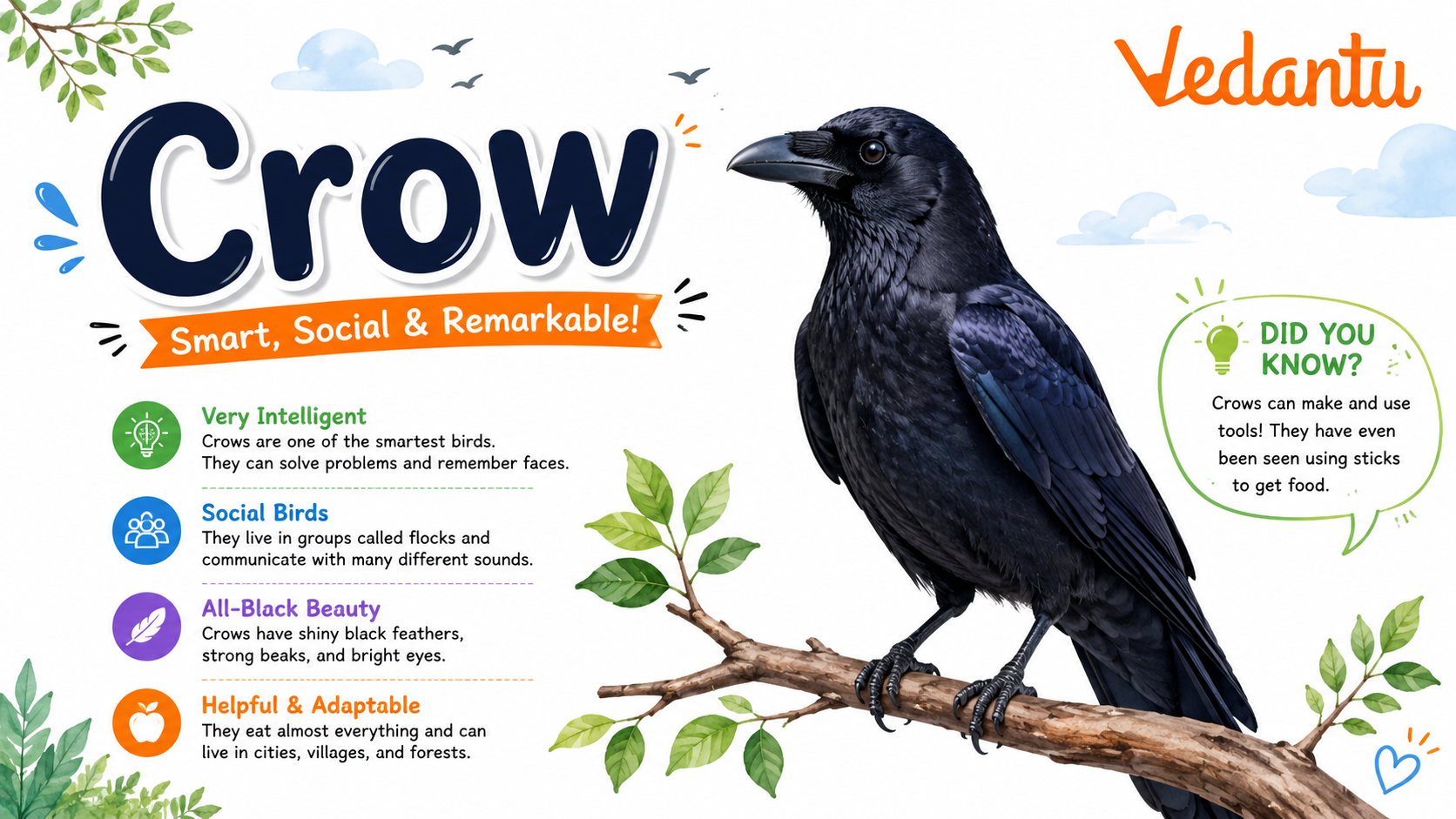
Quick Facts About Crow
| Feature | Details |
|---|---|
| Common Name | Crow |
| Scientific Name | Corvus species |
| Animal Group | Bird |
| Size | 40–50 cm long (varies by species) |
| Weight | 300–600 grams |
| Lifespan | 7–15 years in the wild |
| Diet | Omnivore (plants and animals) |
| Habitat | Forests, cities, farms, mountains |
| Sound | “Caw” call |
Appearance and Physical Characteristics
- Medium-sized bird with a strong body.
- Glossy black feathers, sometimes with a bluish shine.
- Sharp, strong black beak.
- Bright and alert eyes.
- Long legs and strong claws for gripping branches.
Crow Habitat and Distribution
- Found on almost every continent except Antarctica.
- Live in forests, grasslands, mountains, and coastal areas.
- Common in cities and towns because they adapt easily.
- Build nests high in trees using sticks and twigs.
Crow Diet and Feeding Habits
- Eat grains, fruits, seeds, and nuts.
- Feed on insects, worms, small animals, and eggs.
- Also eat leftover food and waste.
- Use their strong beak to tear food.
Behaviour and Lifestyle
- Very social birds; often seen in groups called a “murder” of crows.
- Active during the day (diurnal).
- Communicate using different calls and sounds.
- Extremely intelligent and capable of solving puzzles.
- Sometimes use tools to get food.
Life Cycle of a Crow
- Egg Stage: Female lays 3–6 eggs in a nest.
- Incubation: Eggs hatch after about 18 days.
- Chick Stage: Baby crows (chicks) are fed by parents.
- Fledgling: Young birds learn to fly after 4–5 weeks.
- Adult: Become independent and may form family groups.
Flight Adaptations
- Strong wings for steady flight.
- Lightweight hollow bones.
- Powerful chest muscles.
- Broad wings help in gliding and soaring.
Sound or Call
- Make a loud “caw-caw” sound.
- Use different calls to warn others of danger.
- Communicate to find food or gather in groups.
What Makes Crows Special?
Importance of Crow in Nature
Amazing Crow Facts
- Crows are considered one of the most intelligent birds.
- They can live longer in captivity than in the wild.
- Crows sometimes play games with each other.
- They can mimic some sounds.
- They work together to protect their nests.
- Crows hold “funerals” for dead crows.
Fun Facts for Kids
FAQs on Crow Bird Guide: Facts, Behavior, and Unique Traits
1. What is a crow?
A crow is a highly intelligent black bird known for its loud cawing sound and smart behavior.
- It belongs to the Corvidae family, which includes ravens and magpies.
- Crows are found in forests, cities, farms, and villages.
- They are famous for their problem-solving skills and memory.
- People also ask: Are crows smart birds? Yes, they are among the smartest birds in the world.
2. Where do crows live?
Crows live almost everywhere in the world except Antarctica.
- They build nests in trees, buildings, and cliffs.
- Crows adapt well to urban areas, parks, forests, and farmland.
- They prefer places with easy access to food and water.
- People also search: crow habitat, where do crows build nests.
3. What do crows eat?
Crows are omnivores, which means they eat both plants and animals.
- They eat seeds, fruits, insects, and worms.
- Crows also eat small animals, eggs, and leftovers.
- They are known as scavengers because they eat dead animals.
- People also ask: Do crows eat meat? Yes, they do.
4. Why are crows considered intelligent birds?
Crows are considered intelligent because they can solve problems and use tools.
- They use sticks to pull insects out of holes.
- Crows can recognize human faces.
- They remember safe and dangerous places.
- People also search: how smart are crows, crow IQ comparison.
5. How do crows communicate?
Crows communicate using different sounds and body movements.
- Their most common sound is a loud “caw”.
- They use special calls to warn others about danger.
- Crows also communicate through wing and head movements.
- People also ask: Do crows talk to each other? Yes, they have complex calls.
6. What is the difference between a crow and a raven?
The main difference between a crow and a raven is their size and sound.
- Ravens are bigger than crows.
- Crows make a cawing sound, while ravens make a deeper croaking sound.
- Ravens have a more shaggy throat and wedge-shaped tail.
- People also search: crow vs raven differences.
7. How long do crows live?
Crows can live many years, especially in safe environments.
- Wild crows live around 7–8 years on average.
- Some crows in captivity can live up to 20 years.
- Their lifespan depends on food, habitat, and predators.
- People also ask: What is the lifespan of a crow?
8. Are crows social birds?
Yes, crows are very social and often live in groups called a murder of crows.
- They work together to find food.
- Crows warn each other about threats.
- Young crows may stay with parents to help raise new chicks.
- People also search: group of crows name, crow behavior facts.
9. How do crows build their nests?
Crows build strong nests high in trees to keep their eggs safe.
- They use twigs, sticks, grass, and mud.
- The female crow lays about 3–6 eggs.
- Both parents help care for the chicks.
- People also ask: Where do crows lay eggs?
10. Are crows important for the environment?
Crows are important because they help keep the environment clean and balanced.
- They eat dead animals, helping reduce waste.
- Crows control insect populations.
- They spread seeds, helping plants grow.
- People also search: why are crows important, role of crows in ecosystem.
