



Why Do Backswimmers Swim Upside Down? Diet, Life Cycle, and Bite Facts
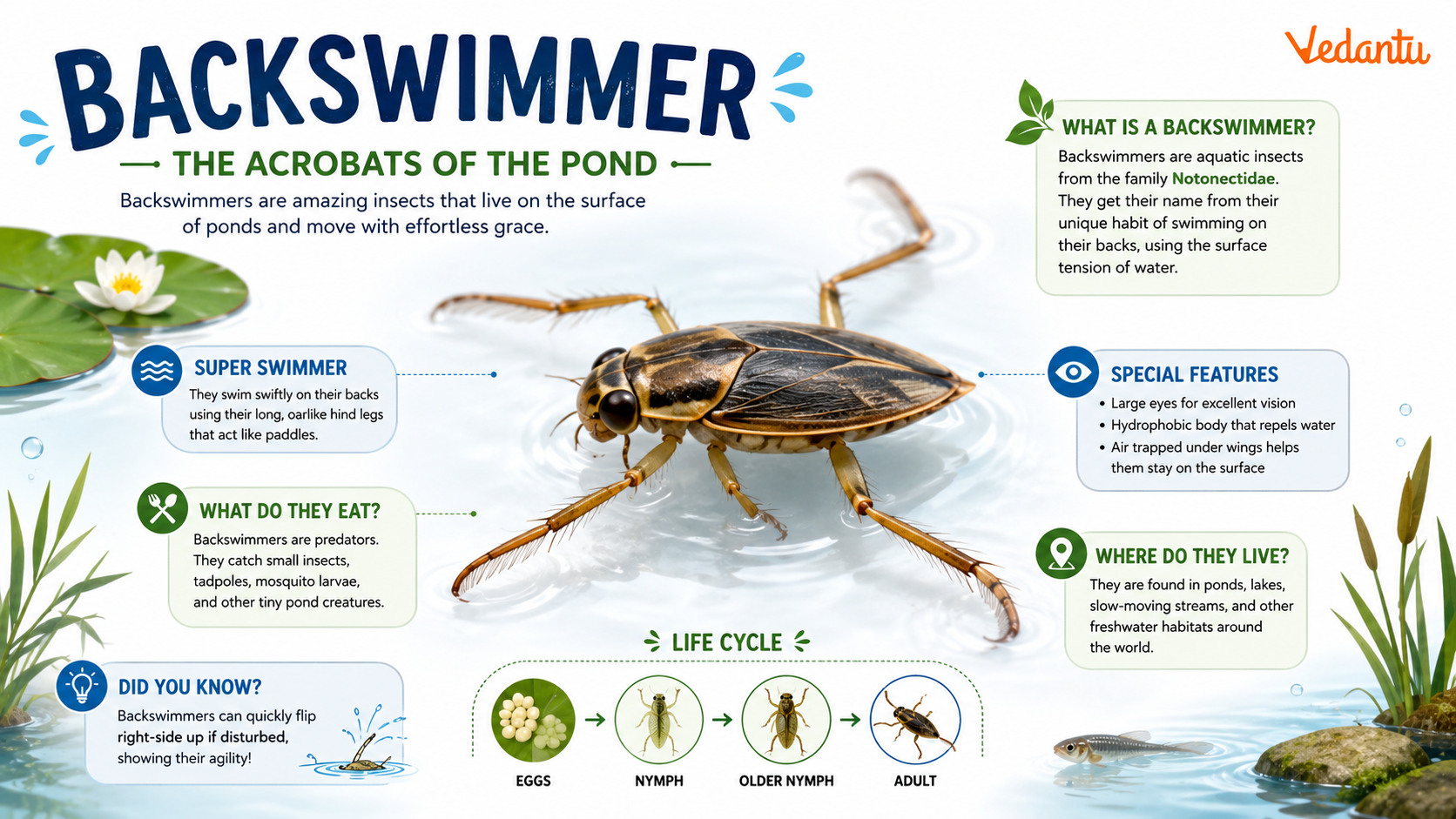
Quick Facts and Statistics
| Feature | Details |
|---|---|
| Common Name | Backswimmer |
| Scientific Family | Notonectidae |
| Animal Group | Insect |
| Size | About 1–2 cm long |
| Habitat | Ponds, lakes, marshes, slow streams |
| Diet | Small insects, tadpoles, tiny fish |
| Movement | Swims upside down using long hind legs |
| Lifespan | Several months to about 1 year |
Appearance and Physical Characteristics
- Body Shape: Long, oval, and slightly boat-shaped.
- Colour: Light brown or greenish with a pale underside.
- Size: Usually 1 to 2 centimetres long.
- Wings: Two pairs of wings folded flat over the body.
- Legs: Long, oar-like hind legs with tiny hairs for swimming.
- Eyes: Large compound eyes for spotting prey.
Backswimmer Habitat and Distribution
- Found in freshwater habitats like ponds and lakes.
- Prefers calm or slow-moving water.
- Common in many parts of the world, including Asia, Europe, Africa, and North America.
- Often seen near the water surface.
The backswimmer habitat usually includes areas with plants where it can hide and hunt. It traps an air bubble under its body to breathe while underwater.
Diet and Feeding Habits
Carnivorous (meat-eater).
Mosquito larvae, small insects, and tiny aquatic animals.
Grabs prey with strong front legs and injects digestive juices.
Controls insect populations in ponds.
Behaviour and Lifestyle
- Swims on its back near the surface.
- Uses long hind legs like oars.
- Usually solitary but may share the same pond.
- Flies at night to find new water bodies.
- Can give a painful bite if handled.
Backswimmer Life Cycle
- Egg Stage: Female lays eggs on aquatic plants.
- Nymph Stage: Young ones look like small adults but without wings.
- Molting: Nymphs shed their skin several times as they grow.
- Adult Stage: Fully developed wings and ready to reproduce.
The backswimmer life cycle shows incomplete metamorphosis, meaning there is no pupal stage like in butterflies.
What Makes the Backswimmer Special?
Importance and Role in Nature
- Helps control mosquito populations.
- Part of the freshwater food chain.
- Serves as food for fish and birds.
- Indicates a healthy freshwater ecosystem.
The importance of backswimmers in ponds is linked to maintaining balance in aquatic habitats.
Amazing Backswimmer Facts
Fun Facts for Kids
- Backswimmers look like tiny boats in water.
- They row through water like mini paddlers.
- They can float easily because of trapped air.
- They help reduce mosquito numbers.
- They are small but brave hunters!
FAQs on Backswimmer Insect: Behavior, Habitat, and Unique Traits
1. What is a backswimmer?
A backswimmer is a small aquatic insect that swims upside down on the surface of ponds and lakes.
- It belongs to the family Notonectidae
- It is also called a water boatman (true backswimmer)
- It swims on its back using long, oar-like hind legs
- It is commonly found in ponds, lakes, and slow-moving water
2. Why do backswimmers swim upside down?
Backswimmers swim upside down because it helps them spot prey easily at the water’s surface.
- Their belly faces upward to see insects above
- They use their long back legs like paddles
- This position helps them catch mosquito larvae and small insects
- It also helps them escape predators quickly
3. Where do backswimmers live?
Backswimmers live in freshwater habitats around the world.
- Found in ponds, lakes, marshes, and slow streams
- Prefer calm and still water
- Common in garden ponds and wetlands
- They are part of the freshwater ecosystem
4. What do backswimmers eat?
Backswimmers are carnivorous insects that feed on small aquatic animals.
- Eat mosquito larvae
- Feed on small fish and tadpoles
- Catch water insects and tiny crustaceans
- Use a sharp piercing mouthpart (beak) to suck body fluids
5. Do backswimmers bite humans?
Yes, backswimmers can bite humans, but they usually do so only if handled.
- The bite feels like a bee sting
- They bite in self-defense
- Their mouthpart is called a rostrum
- Bites are not dangerous but may hurt briefly
6. How do backswimmers breathe?
Backswimmers breathe air from the surface using a special air bubble.
- They trap an air bubble under their wings
- The bubble works like a tiny oxygen tank
- They come to the surface to refill air
- This helps them stay underwater longer
7. What do backswimmers look like?
Backswimmers have smooth, oval bodies designed for swimming.
- Usually silver-gray or light brown
- Long, oar-shaped hind legs
- Short front legs for catching prey
- Large eyes to see above and below water
8. How are backswimmers different from water boatmen?
Backswimmers and water boatmen are different insects, even though they look similar.
- Backswimmers swim upside down
- Water boatmen swim right side up
- Backswimmers are predators
- Water boatmen mostly eat algae and plants
9. What is the life cycle of a backswimmer?
The life cycle of a backswimmer includes egg, nymph, and adult stages.
- Females lay eggs on water plants
- Eggs hatch into nymphs
- Nymphs look like small adults without wings
- They molt several times before becoming adults
10. Why are backswimmers important to the ecosystem?
Backswimmers help control insect populations and keep freshwater habitats balanced.
- They reduce mosquito populations
- Serve as food for fish and birds
- Maintain balance in the pond food chain
- Indicate healthy freshwater environments
