



How to Identify a Bittern Bird: Habitat, Call, and Behavior Explained
The Bittern bird is a shy and secretive wetland bird famous for its excellent camouflage and deep booming call. It belongs to the heron family and is often found hiding among tall reeds and grasses near lakes, marshes, and swamps. Because it blends so well with its surroundings, spotting a Bittern is a special experience for bird watchers. Let’s explore amazing Bittern bird facts, habitat, diet, characteristics, and life cycle in a fun and simple way!
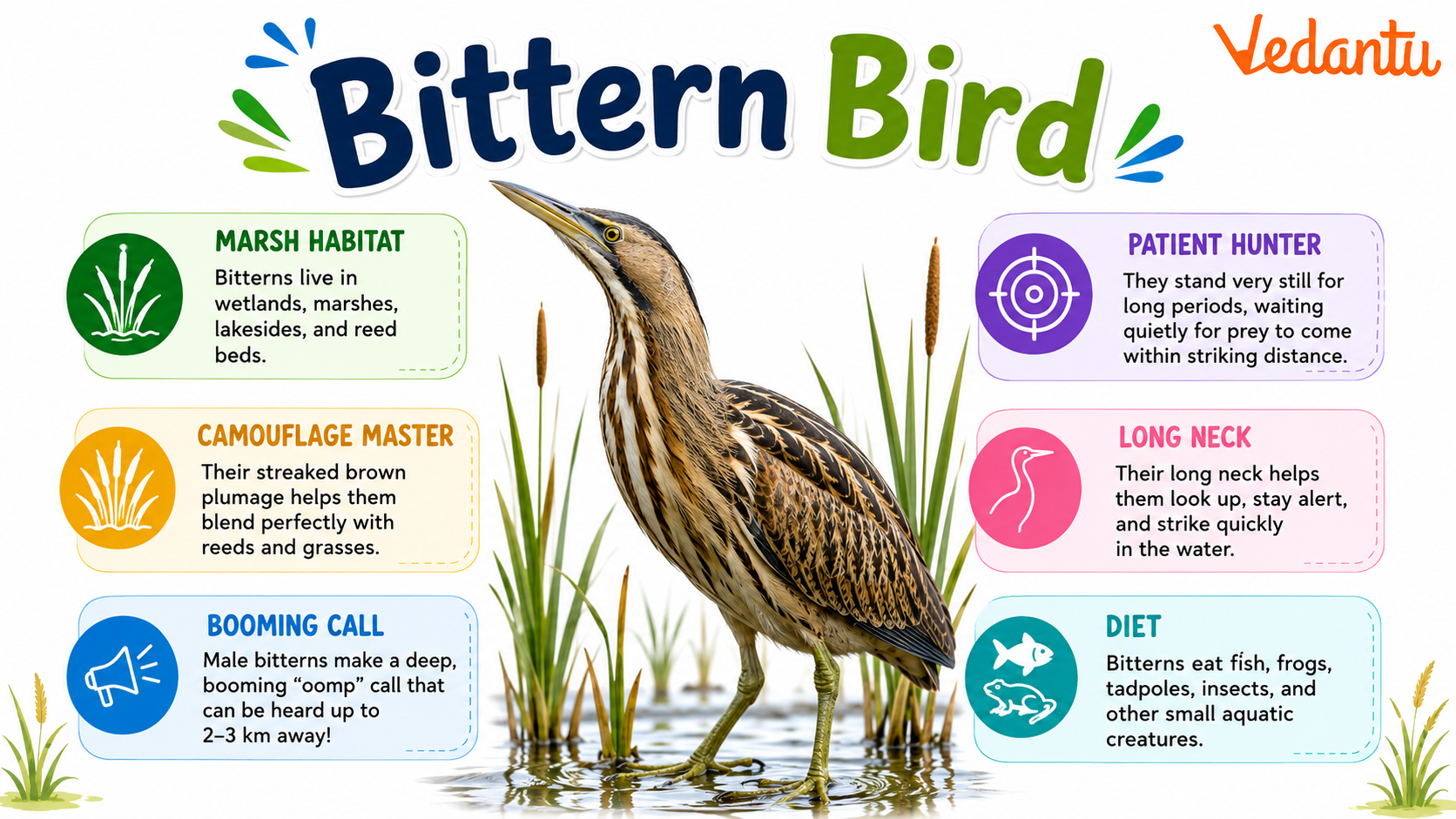
Quick Facts About Bittern Bird
| Feature | Details |
|---|---|
| Common Name | Bittern Bird |
| Scientific Genus | Botaurus (most well-known species) |
| Animal Group | Bird (Heron family) |
| Size | About 58–80 cm long |
| Wingspan | Up to 125 cm |
| Habitat | Marshes, wetlands, reed beds |
| Diet | Fish, frogs, insects, small animals |
| Conservation Status | Varies by species (some are vulnerable) |
Appearance and Physical Characteristics
- Medium to large-sized bird with a thick neck and strong body.
- Brown, buff, and cream feathers with dark streaks.
- Long, pointed yellowish beak.
- Sharp eyes placed forward for better hunting focus.
- Long legs for walking in shallow water.
One of the most special Bittern bird characteristics is its ability to stretch its neck straight up and freeze when threatened. This posture makes it look exactly like the reeds around it.
Bittern Bird Habitat and Distribution
- Lives mainly in freshwater wetlands and marshes.
- Found in Europe, Asia, Africa, Australia, and the Americas (depending on species).
- Prefers places with tall reeds and thick vegetation.
- Nests close to water in hidden reed beds.
The Bittern bird habitat is very important for its survival. Wetlands provide food, shelter, and safe nesting areas. Sadly, loss of wetlands affects many Bittern populations.
Diet and Feeding Habits
Carnivorous (meat-eating bird).
Fish, frogs, insects, worms, and small reptiles.
Stands still for long periods and strikes quickly.
Controls fish and insect populations in wetlands.
The Bittern bird diet depends on what is available in the marsh. It uses patience and sharp eyesight to catch prey in shallow water.
Behaviour and Lifestyle
- Mostly solitary and secretive.
- Active during early morning and evening.
- Flies slowly with steady wing beats.
- Prefers hiding rather than escaping quickly.
- Males make loud booming calls during breeding season.
Sound or Call
The male Bittern produces a deep, booming sound that can be heard from far away. This call helps attract females and mark territory. The sound is so deep that people sometimes compare it to the blowing of a bottle.
Life Cycle of Bittern Bird
- Egg Stage: Female lays 3–5 eggs in a hidden nest among reeds.
- Incubation: Eggs hatch after about 25–28 days.
- Chicks: Young chicks are covered with soft down feathers.
- Growth: Parents feed them small fish and insects.
- Adult Stage: Chicks learn to hunt and live independently.
The Bittern bird life cycle shows strong parental care, especially from the mother who protects and feeds the chicks.
Flight Adaptations
- Broad wings for slow but powerful flight.
- Lightweight bones like other birds.
- Strong chest muscles for lifting off from water.
- Neck tucked in during flight like herons.
What Makes the Bittern Bird Special?
Importance of Bittern Bird in Nature
- Maintains balance in wetland ecosystems.
- Controls fish, insect, and frog populations.
- Acts as an indicator of healthy wetlands.
- Encourages wetland conservation efforts.
Amazing Bittern Bird Facts
Fun Facts for Kids
- A Bittern looks like a piece of dry grass when it hides!
- It likes to live where frogs and fish are plenty.
- Its call sounds like someone blowing across a bottle.
- It walks slowly and carefully in water.
- Seeing one in the wild is considered lucky by bird watchers.
FAQs on Bittern Bird: Complete Guide to This Secretive Wetland Hunter
1. What is a Bittern bird?
A Bittern bird is a shy, long-necked wading bird that lives in wetlands and belongs to the heron family (Ardeidae).
- It is known for its striped brown feathers.
- It has a thick neck and pointed beak.
- It is related to herons and egrets.
- It is famous for its deep, booming call.
2. Where do Bittern birds live?
The Bittern bird habitat includes freshwater wetlands, marshes, and reed beds around the world.
- They live in marshes and swamps.
- They prefer thick reeds and tall grasses.
- Some species live in North America, Europe, Asia, Africa, and Australia.
- They hide in wetland vegetation to stay safe.
3. What does a Bittern bird eat?
A Bittern bird diet mainly consists of small animals found in wetlands.
- Fish
- Frogs
- Insects
- Small reptiles
- Crustaceans like crayfish
4. Why is the Bittern bird called the “booming bird”?
The Bittern bird is called the “booming bird” because of its loud, deep call that sounds like a foghorn.
- The male makes a low booming sound during breeding season.
- The sound can travel long distances across wetlands.
- This call helps attract a mate.
- It is one of the loudest bird calls in marsh habitats.
5. How does a Bittern bird hide from predators?
A Bittern bird uses amazing camouflage to hide from predators.
- It stands very still among reeds.
- It stretches its neck upward.
- Its brown striped feathers blend with tall grasses.
- This behavior is called the reed mimic pose.
6. Are Bittern birds endangered?
Some Bittern species are endangered due to habitat loss, while others are stable.
- Wetland destruction reduces nesting areas.
- Pollution affects their food supply.
- Conservation programs protect reed beds and marshes.
- The Great Bittern has recovered in some countries.
7. What are the different types of Bittern birds?
There are several species of Bittern birds found around the world.
- American Bittern
- Great Bittern
- Least Bittern
- Australasian Bittern
- Little Bittern
8. How big is a Bittern bird?
The size of a Bittern bird depends on the species, but most are medium-sized wading birds.
- Length: about 23–34 inches (60–85 cm) for larger species.
- Smaller species like the Least Bittern are much shorter.
- They have long legs and thick necks.
- They weigh between 1–4 pounds.
9. When do Bittern birds breed?
The Bittern breeding season usually happens in spring and early summer.
- Males make booming calls to attract females.
- Nests are built in thick reeds.
- Females lay 3–5 eggs.
- Chicks are cared for in hidden marsh nests.
10. Why are wetlands important for Bittern birds?
Wetlands are essential for Bittern birds because they provide food, shelter, and nesting sites.
- Wetlands supply fish and insects.
- Thick reeds protect nests from predators.
- Clean water keeps the ecosystem healthy.
- Conserving wetlands helps many marsh birds survive.
