



What Do Wasps Eat, Where Do They Live, and Why Do They Sting?
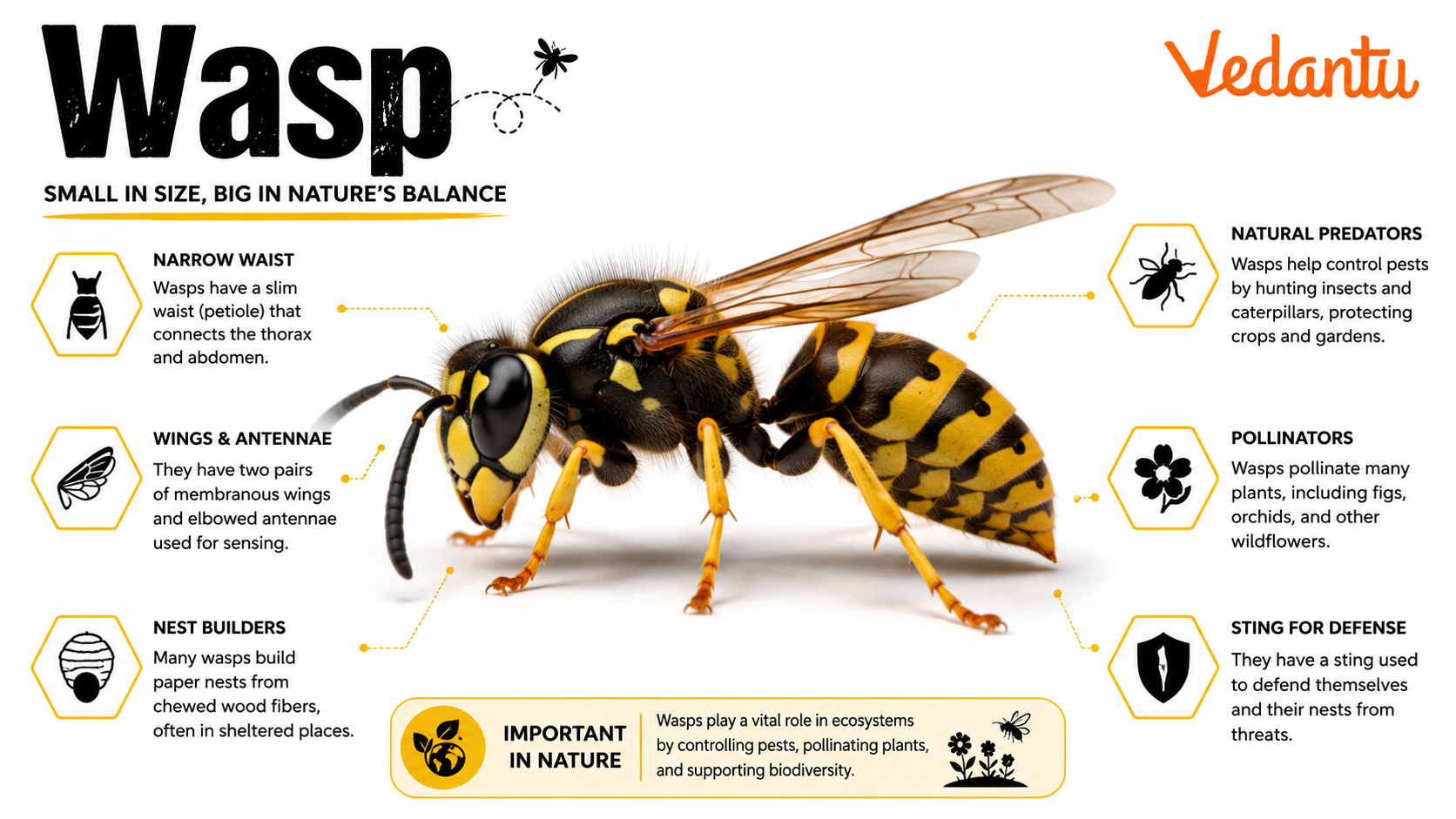
Quick Facts About Wasp
| Feature | Details |
|---|---|
| Common Name | Wasp |
| Animal Group | Insect |
| Scientific Order | Hymenoptera |
| Body Length | 1 to 3 cm (varies by species) |
| Diet | Insects, nectar, fruits |
| Habitat | Gardens, forests, grasslands, urban areas |
| Lifespan | Few weeks to 1 year (queen lives longer) |
| Special Feature | Can sting multiple times |
Appearance and Physical Characteristics
- Six legs and two pairs of transparent wings
- Long antennae to sense surroundings
- Sharp stinger at the end of the abdomen
- Large compound eyes
- Smooth body (unlike hairy bees)
Wasp Habitat and Distribution
- Forests and woodlands
- Gardens and farms
- Grasslands
- Urban buildings and rooftops
Some wasps build paper-like nests from chewed wood fibers. These nests may hang from trees, roofs, or even underground depending on the species.
Wasp Diet and Feeding Habits
- Eat caterpillars, flies, and other insects
- Drink nectar from flowers
- Feed on fruits and sugary foods
Adult wasps often hunt insects to feed their larvae. Because they eat many harmful insects, wasps are important natural pest controllers.
Behaviour and Lifestyle
- Some species live alone (solitary wasps)
- Others live in large colonies (social wasps)
- Very protective of their nests
- Active during the daytime
- Communicate using chemicals called pheromones
Wasp Life Cycle
- Egg: The queen lays eggs inside nest cells.
- Larva: The egg hatches into a worm-like larva.
- Pupa: The larva forms a cocoon and changes inside.
- Adult: A fully developed wasp emerges.
This complete metamorphosis makes the wasp life cycle similar to that of bees and butterflies.
What Makes Wasps Special?
Types of Wasps
- Paper Wasps: Build umbrella-shaped nests.
- Yellowjackets: Aggressive and often found near food.
- Hornets: Large and powerful social wasps.
- Solitary Wasps: Live and hunt alone.
Importance and Role in Nature
Amazing Wasp Facts
- Wasps can recognize nestmates.
- Some wasps are metallic blue or green.
- They can fly at speeds up to 12–15 km/h.
- The queen survives winter in some species.
- Not all wasps are aggressive.
- Some species are tiny—less than 1 mm long.
Fun Facts for Kids
FAQs on Wasp Guide: Types, Behavior, and Fascinating Facts
1. What is a wasp?
A wasp is a flying insect known for its slim body, narrow waist, and ability to sting.
- Wasps belong to the insect order Hymenoptera, the same group as bees and ants.
- They have smooth bodies (not fuzzy like bees).
- Most wasps have bright colors like yellow and black.
- They can sting to protect themselves or their nests.
- Common types include paper wasps, yellowjackets, and hornets.
2. Are wasps dangerous to humans?
Most wasps are not dangerous unless they feel threatened.
- They sting when protecting their nest.
- A wasp sting can cause pain, redness, and swelling.
- Some people may have an allergic reaction to stings.
- Unlike bees, many wasps can sting more than once.
- Staying calm helps prevent attacks.
3. What do wasps eat?
Wasps eat a mix of sugary foods and other insects.
- Adult wasps drink nectar from flowers.
- They enjoy sweet foods like fruit and juice.
- Many wasps hunt caterpillars, flies, and spiders.
- They feed insects to their young larvae.
- This makes wasps helpful for pest control in gardens.
4. How are wasps different from bees?
Wasps and bees look similar but have important differences.
- Wasps have smooth, shiny bodies, while bees are fuzzy.
- Bees mainly eat pollen and nectar; wasps also eat other insects.
- Wasps have a slimmer waist.
- Bees usually sting once; wasps can sting multiple times.
- Bees are major pollinators, while wasps are both pollinators and hunters.
5. Where do wasps live?
Wasps build nests in many different places depending on the species.
- Paper wasps make umbrella-shaped nests under roofs.
- Yellowjackets often build nests underground.
- Hornets create large hanging nests in trees.
- Some wasps live alone and do not build big colonies.
- They are found on every continent except Antarctica.
6. What is the life cycle of a wasp?
The wasp life cycle has four main stages.
- Egg – The queen lays eggs in the nest.
- Larva – The egg hatches into a worm-like larva.
- Pupa – The larva changes inside a protective case.
- Adult wasp – A fully grown wasp emerges.
- This process is called complete metamorphosis.
7. Why are wasps important to the environment?
Wasps play an important role in keeping nature balanced.
- They control harmful insects as natural predators.
- Some species help with pollination.
- They support healthy ecosystems.
- Farmers benefit from wasps reducing crop pests.
- They are part of the food chain for birds and animals.
8. Do all wasps live in groups?
Not all wasps live in colonies; some prefer to live alone.
- Social wasps live in groups with a queen and workers.
- Solitary wasps build small nests by themselves.
- Solitary wasps are usually less aggressive.
- Examples include mud daubers.
- Both types are important for insect control.
9. How can you avoid getting stung by a wasp?
You can avoid a wasp sting by staying calm and careful outdoors.
- Do not swat or wave your arms at a wasp.
- Avoid bright clothing and strong perfumes.
- Keep food and drinks covered outside.
- Stay away from visible wasp nests.
- Move slowly if a wasp comes near you.
10. What should you do if a wasp stings you?
If a wasp stings you, quick care can reduce pain and swelling.
- Wash the area with soap and water.
- Apply a cold pack to reduce swelling.
- Use anti-itch cream if needed.
- Watch for signs of allergic reaction like trouble breathing.
- Seek medical help if symptoms are severe.
