



Why Bloodhounds Have the Best Sense of Smell in the Dog World
The Bloodhound is a famous dog breed known for its powerful nose and tracking skills. It is one of the best scent-tracking dogs in the world. Bloodhounds are gentle, friendly, and hardworking animals that are often used by police and rescue teams. Their long ears, wrinkled face, and droopy eyes make them look serious, but they are loving and loyal companions. Let’s explore amazing Bloodhound facts, habitat, diet, characteristics, and more!
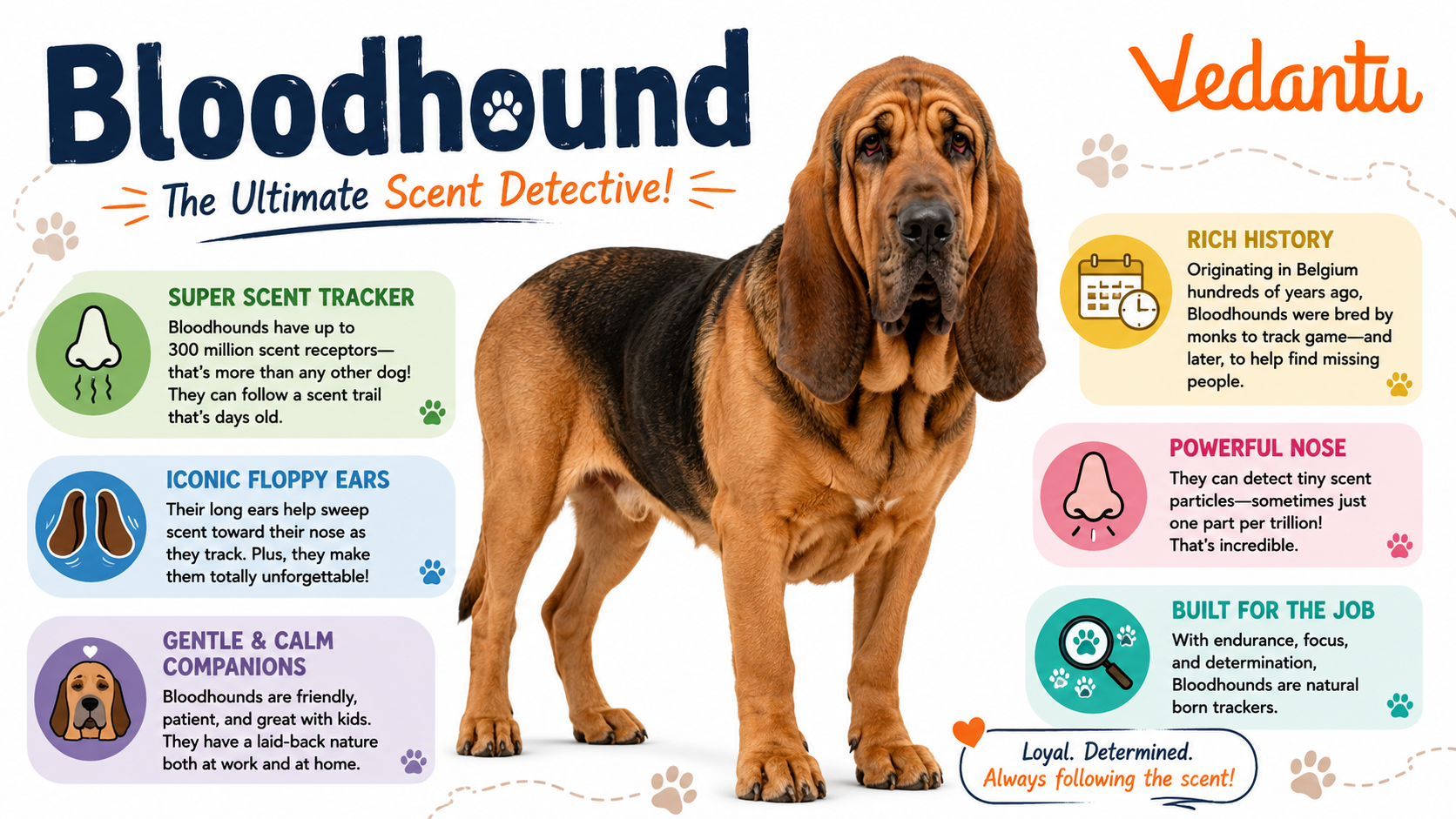
Quick Facts About Bloodhound
| Feature | Details |
|---|---|
| Common Name | Bloodhound |
| Scientific Name | Canis lupus familiaris |
| Animal Group | Mammal (Dog Breed) |
| Height | 58–69 cm |
| Weight | 36–50 kg |
| Lifespan | 10–12 years |
| Diet | Omnivorous (Dog food, meat-based diet) |
| Special Feature | Outstanding scent-tracking ability |
| Origin | Belgium and France |
Appearance and Physical Characteristics
- Large and strong body with a deep chest.
- Very long, droopy ears.
- Loose, wrinkled skin around the face and neck.
- Short and dense coat.
- Common colours: black & tan, liver & tan, or red.
- Big nose with millions of scent receptors.
Habitat and Distribution
Bloodhounds are domestic dogs, so they live with humans. They can adapt to different environments but need space and exercise.
- Originally bred in Europe (Belgium and France).
- Now found all over the world.
- Prefer homes with large yards.
- Can live in cities if given daily long walks.
Bloodhound Diet and Feeding Habits
The Bloodhound diet is specially designed to keep this active and strong dog healthy.
Omnivorous (mainly high-quality dog food with meat).
Meat, chicken, fish, and balanced dry or wet dog food.
Eats 2–3 meals per day depending on age.
Needs plenty of clean water daily.
Behaviour and Lifestyle
- Very friendly and gentle with families.
- Good with children if trained properly.
- Strong tracking instinct — may follow smells for long distances.
- Can be stubborn but responds well to patient training.
- Active and needs regular exercise.
Life Cycle of a Bloodhound
- Puppy Stage: Born in litters of 6–10 puppies. Completely dependent on the mother.
- Young Dog: Learns basic training and social skills.
- Adult Stage: Fully grown by 2–3 years. Ready for tracking work or family life.
- Senior Stage: Around 8+ years, may slow down but remains loyal and loving.
What Makes the Bloodhound Special?
Has around 230 million scent receptors!
Can follow scents that are several days old.
Tracking results are accepted as evidence in some courts.
Helps find missing people and criminals.
Temperament and Domestic Life
- Calm and affectionate at home.
- Needs early training and socialisation.
- Not aggressive but very determined.
- Requires daily exercise and mental stimulation.
- May drool due to loose lips.
Importance of Bloodhounds
Used for criminal investigations.
Finds lost hikers and missing persons.
Loyal family pet.
Helps scientists study scent detection.
Amazing Bloodhound Facts
- A Bloodhound can track a scent trail over 200 km long.
- The breed is over 1,000 years old.
- Their nose is considered the most powerful among dog breeds.
- They were once used by kings and nobles for hunting.
- Their wrinkles help trap scent particles.
- They have a deep, loud howl.
- They can focus on a smell even in crowded places.
Interesting Facts About Bloodhound
- The name “Bloodhound” comes from “blooded hound,” meaning purebred.
- Their sense of smell is better than many modern machines.
- They can become so focused on a scent that they ignore commands.
- Despite their serious look, they are very gentle dogs.
Fun Facts for Kids
FAQs on Bloodhound Dog Breed Guide: History, Personality & Care
1. What is a Bloodhound?
A Bloodhound is a large scent hound dog famous for its powerful sense of smell and tracking ability.
- Belongs to the hound group of dogs
- Known for tracking people and animals
- Has long ears and loose, wrinkled skin
- Often used in search and rescue missions
2. Why are Bloodhounds famous for their sense of smell?
Bloodhounds are famous because they have one of the strongest noses in the dog world.
- Have around 300 million scent receptors
- Can follow a scent trail that is days old
- Their long ears help trap scent particles
- Wrinkled skin holds smells close to the nose
3. What does a Bloodhound look like?
A Bloodhound is a large dog with droopy ears and loose skin.
- Long, floppy ears
- Wrinkled face and neck
- Strong, muscular body
- Short coat in colors like black and tan, liver and tan, or red
4. Are Bloodhounds good family dogs?
Yes, Bloodhounds can be gentle and loving family pets.
- Friendly and patient with children
- Usually good with other dogs
- Calm but sometimes stubborn
- Need lots of exercise and space
5. How big do Bloodhounds get?
Bloodhounds are large dogs that grow quite tall and heavy.
- Height: about 23–27 inches tall
- Weight: between 80–110 pounds
- Males are usually larger than females
6. What were Bloodhounds originally bred for?
Bloodhounds were originally bred for tracking scents during hunts.
- Developed in medieval Europe
- Used to track deer and wild boar
- Later used to track missing people
- Now assist in police and rescue work
7. Do Bloodhounds bark a lot?
Bloodhounds do not bark constantly, but they can howl loudly.
- Known for a deep, loud bay sound
- May howl when excited or bored
- Need exercise to prevent noisy behavior
8. How long do Bloodhounds live?
Bloodhounds usually live between 10 and 12 years.
- Need regular vet checkups
- Require healthy food and exercise
- Can face health issues like hip problems
9. Are Bloodhounds easy to train?
Bloodhounds are smart but can be stubborn during training.
- Very intelligent and focused on scents
- Respond well to positive rewards
- May ignore commands if they smell something interesting
10. How are Bloodhounds used in search and rescue?
Bloodhounds are used in search and rescue because they can follow human scent trails.
- Track missing people over long distances
- Help police solve crimes
- Work in forests, cities, and disaster areas
- Their scent evidence can be used in court
